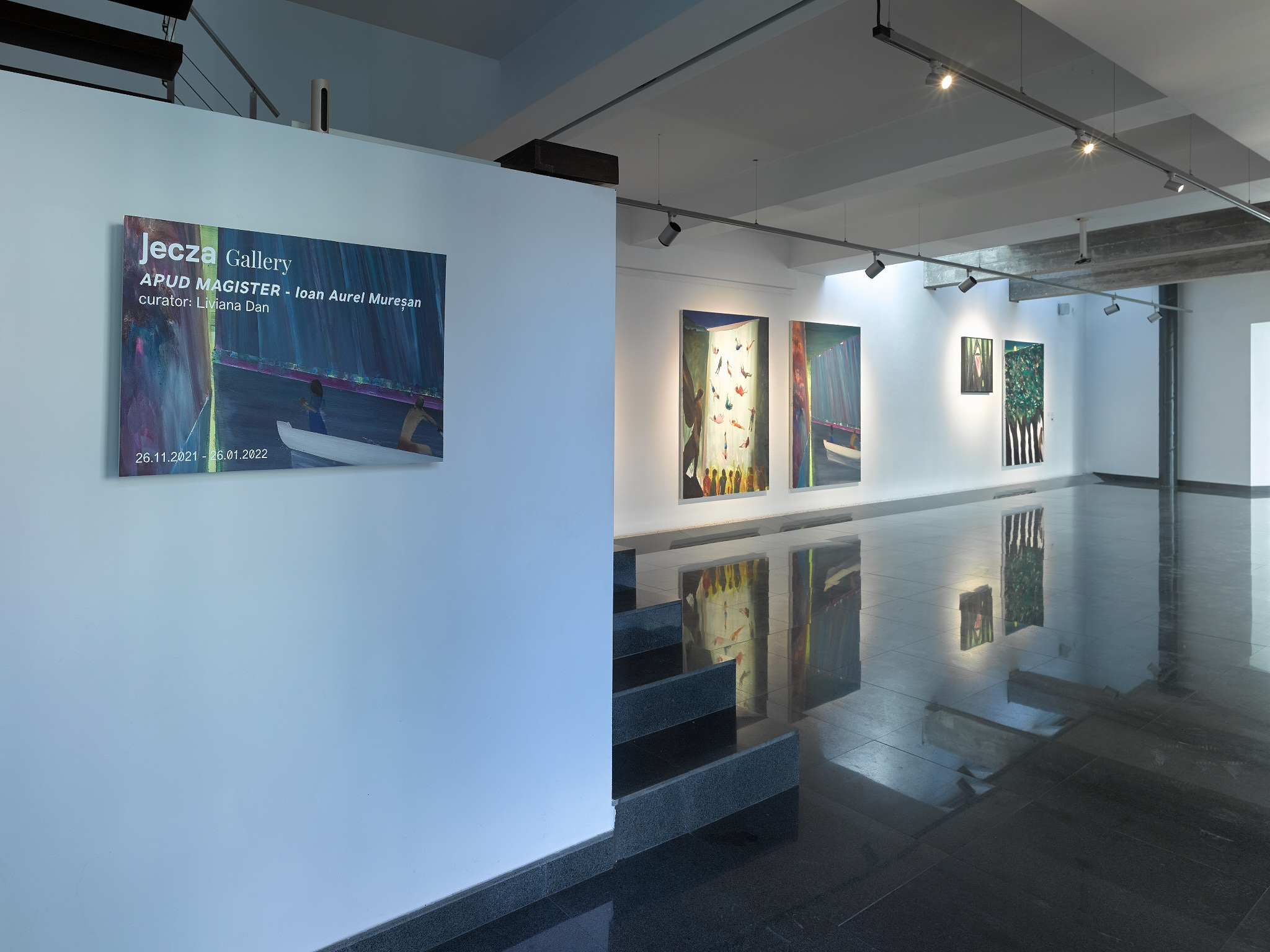
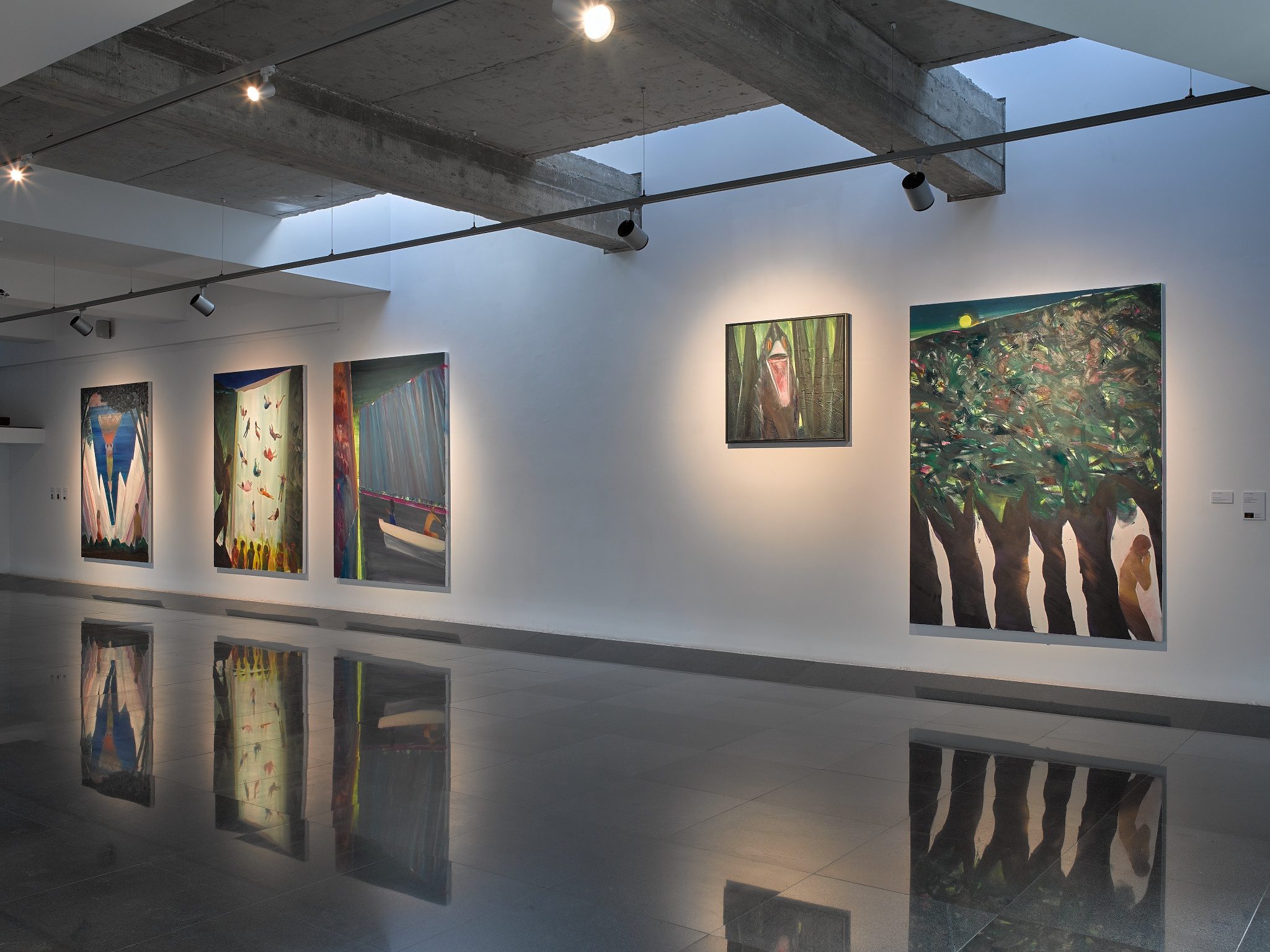
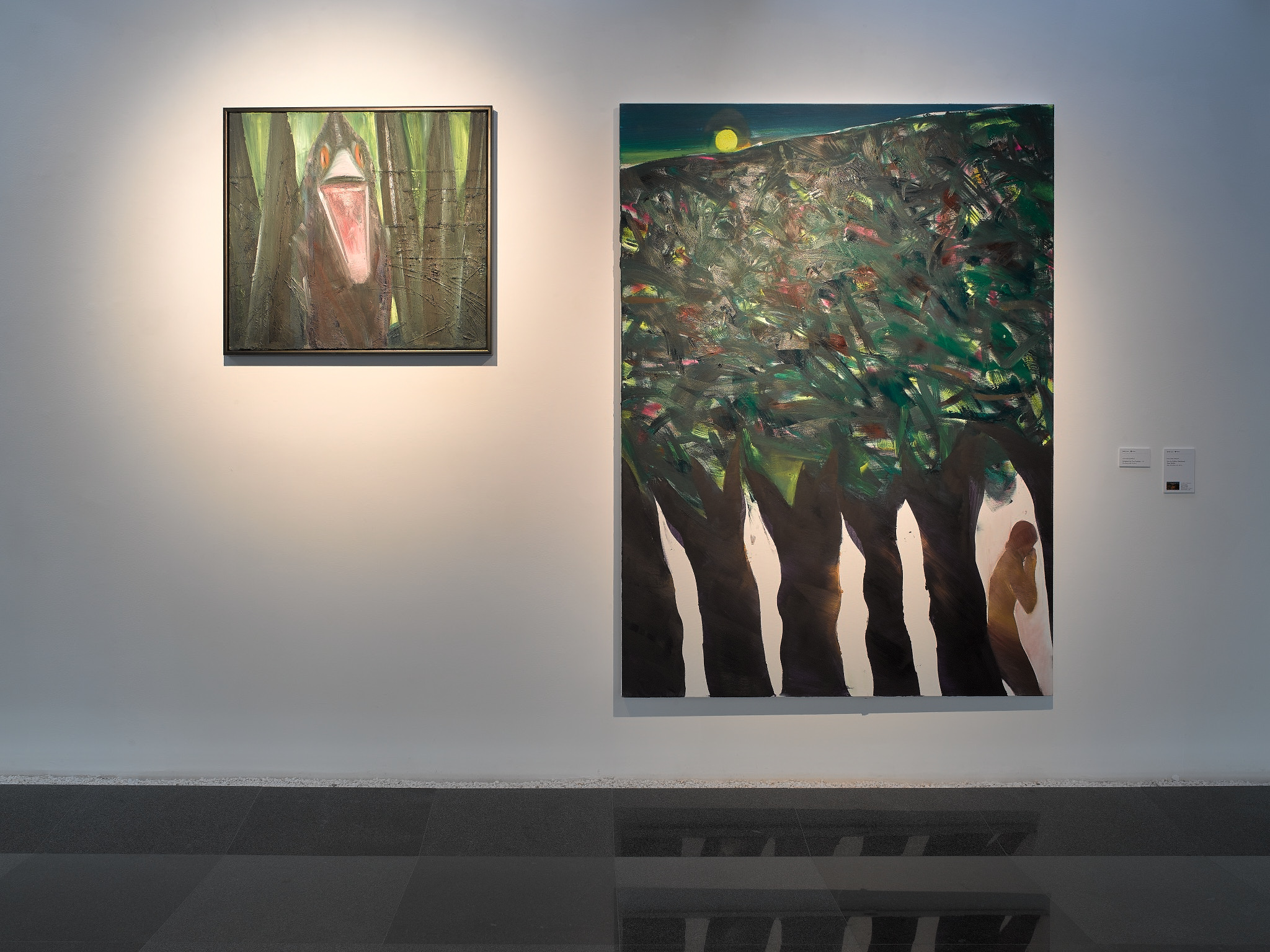
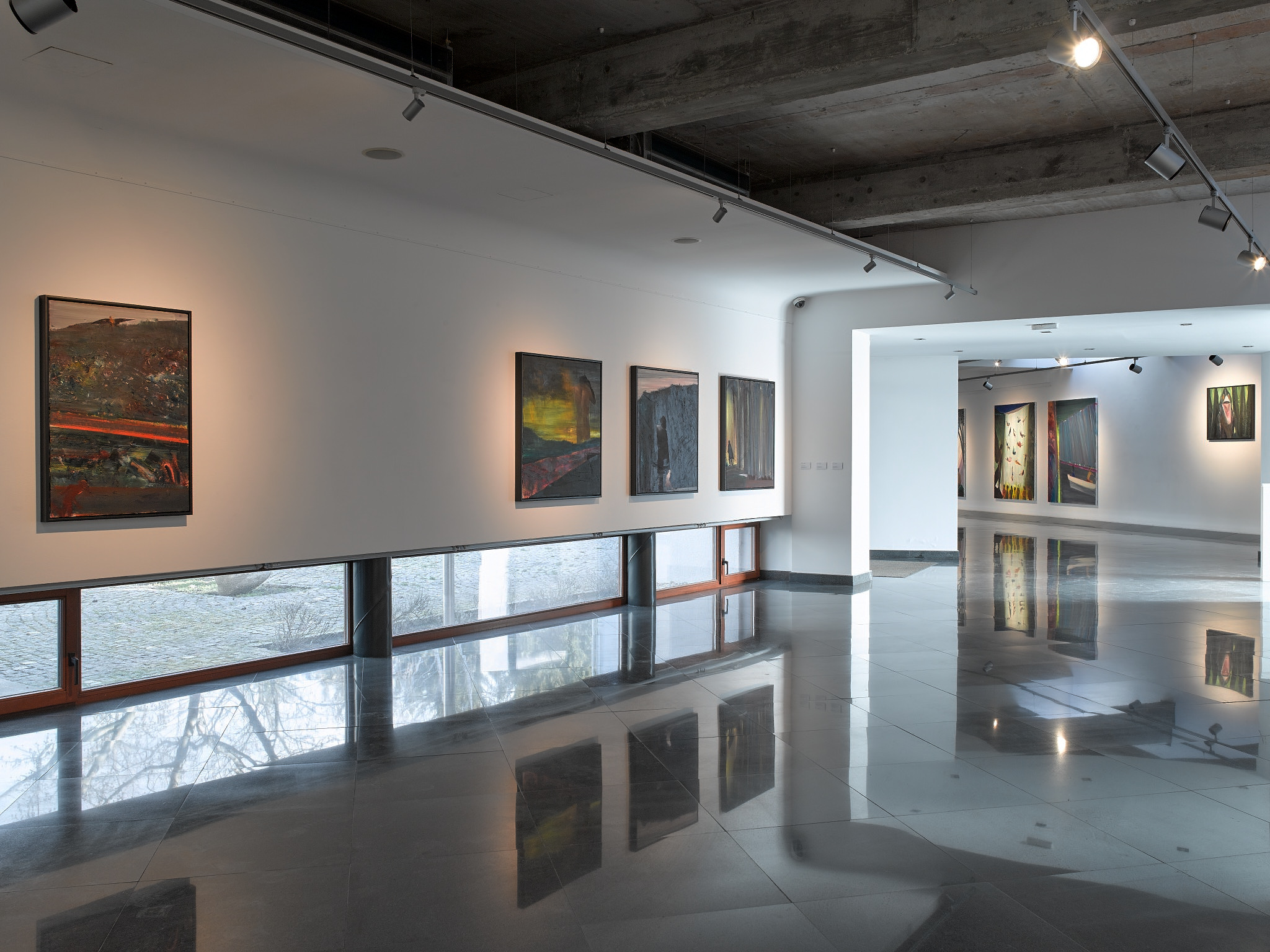
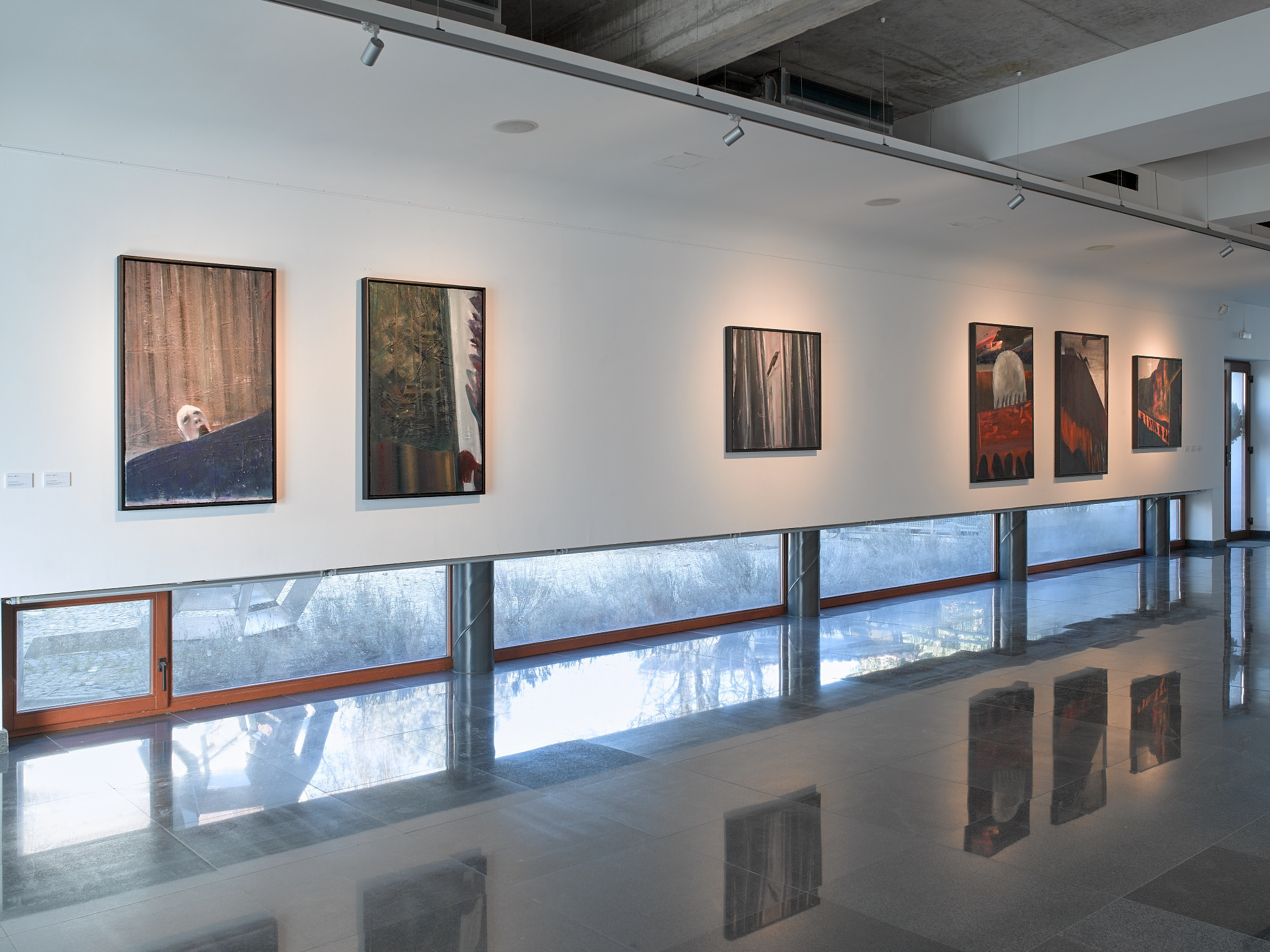
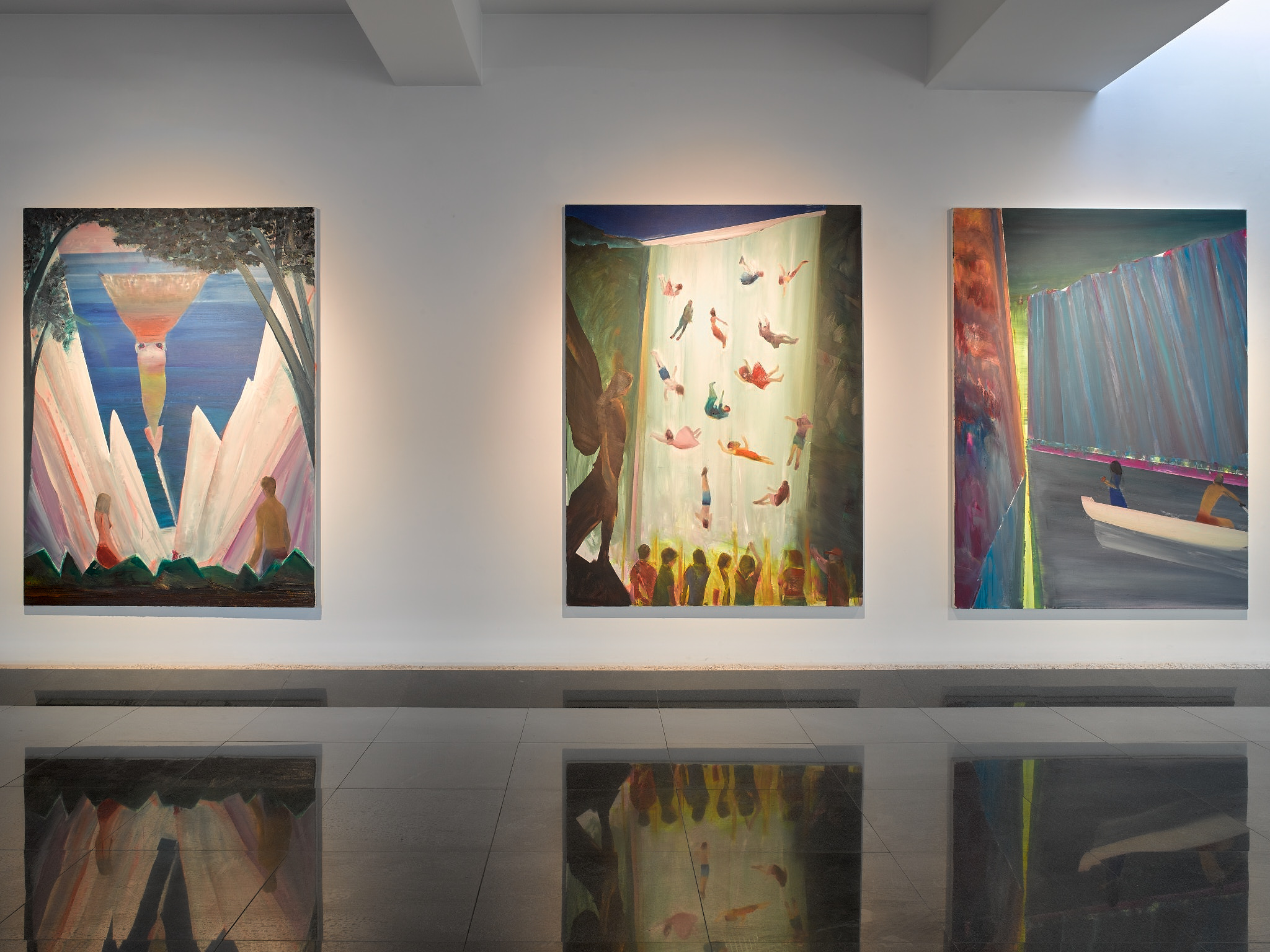
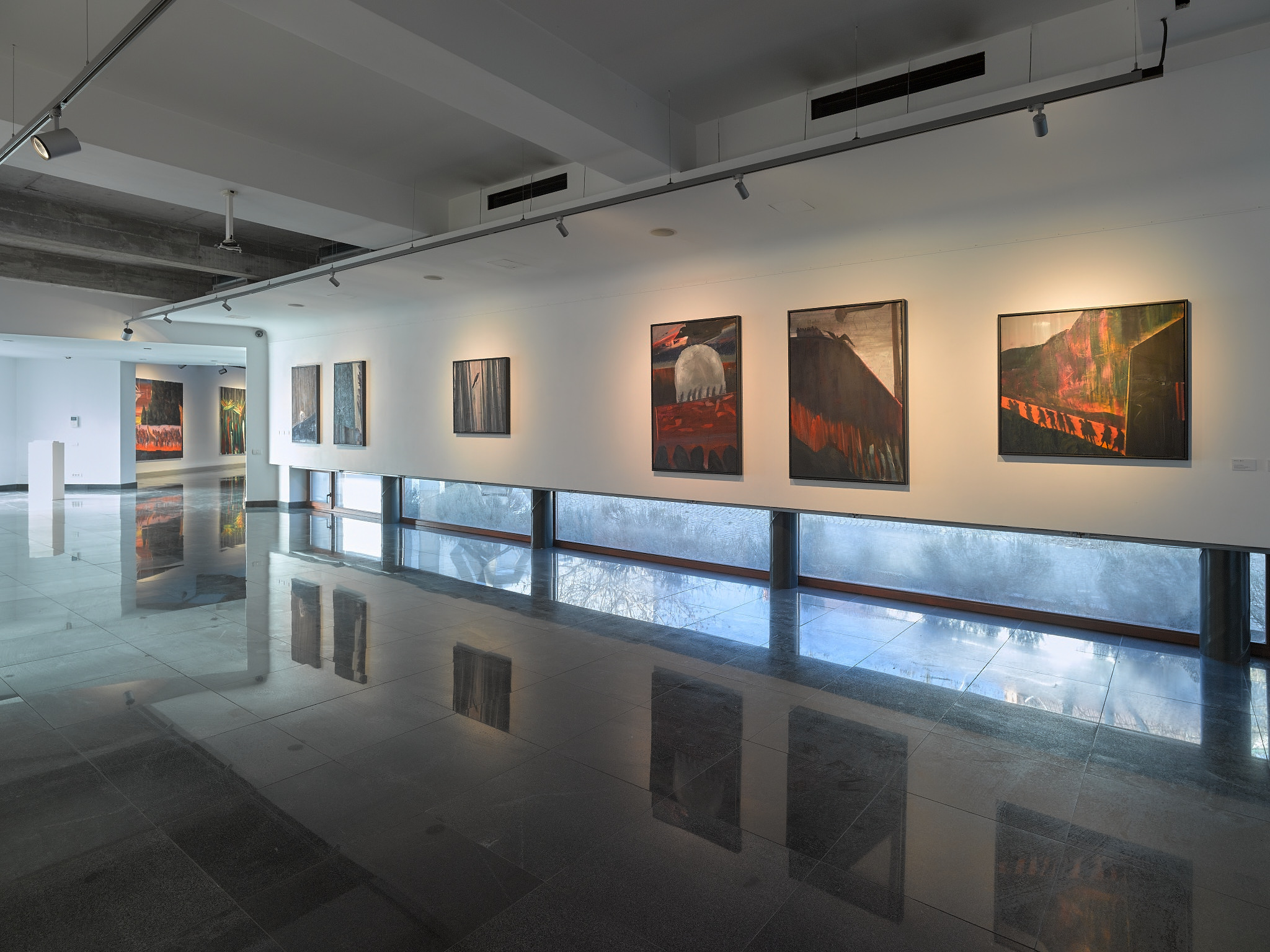
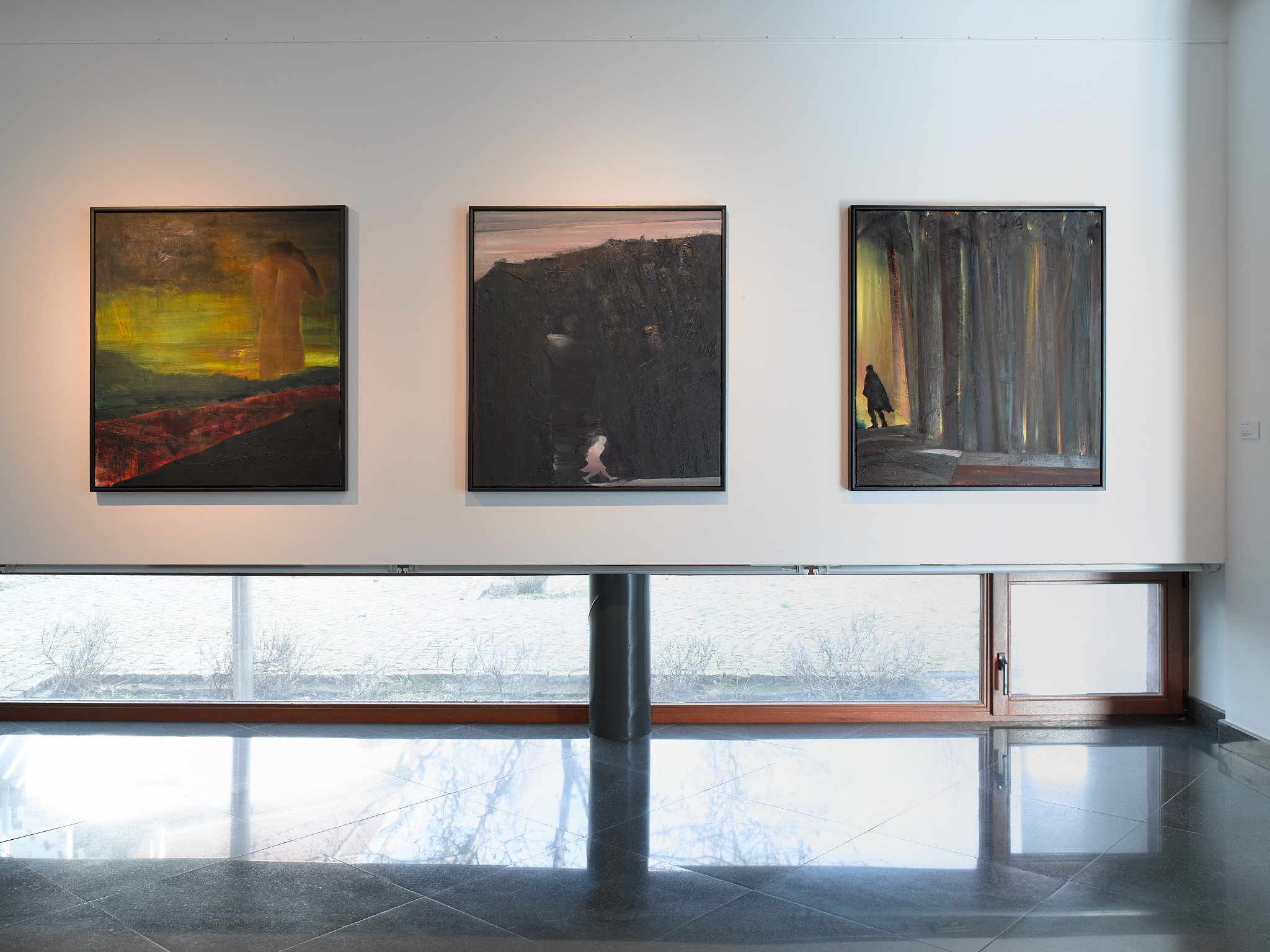
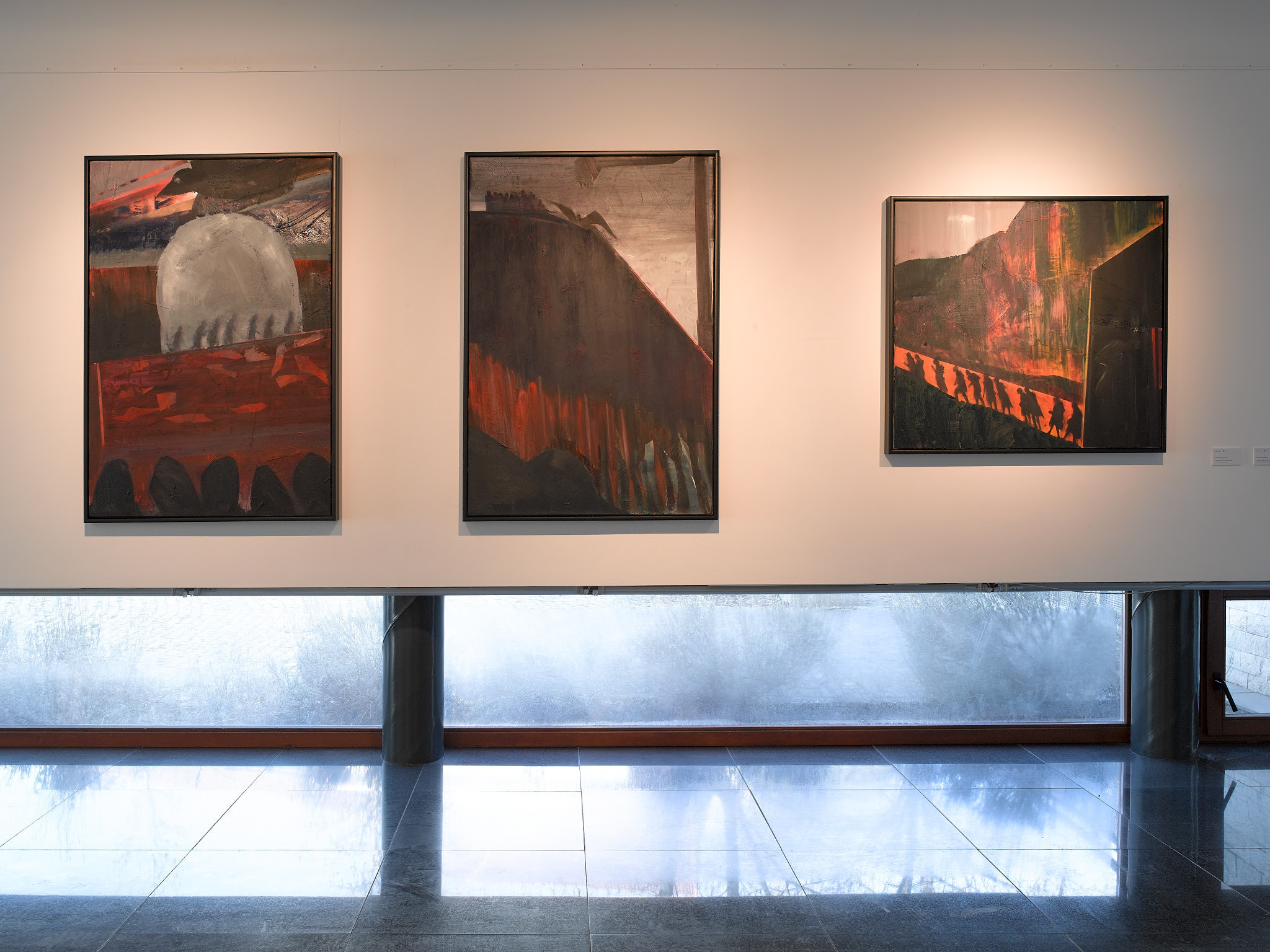
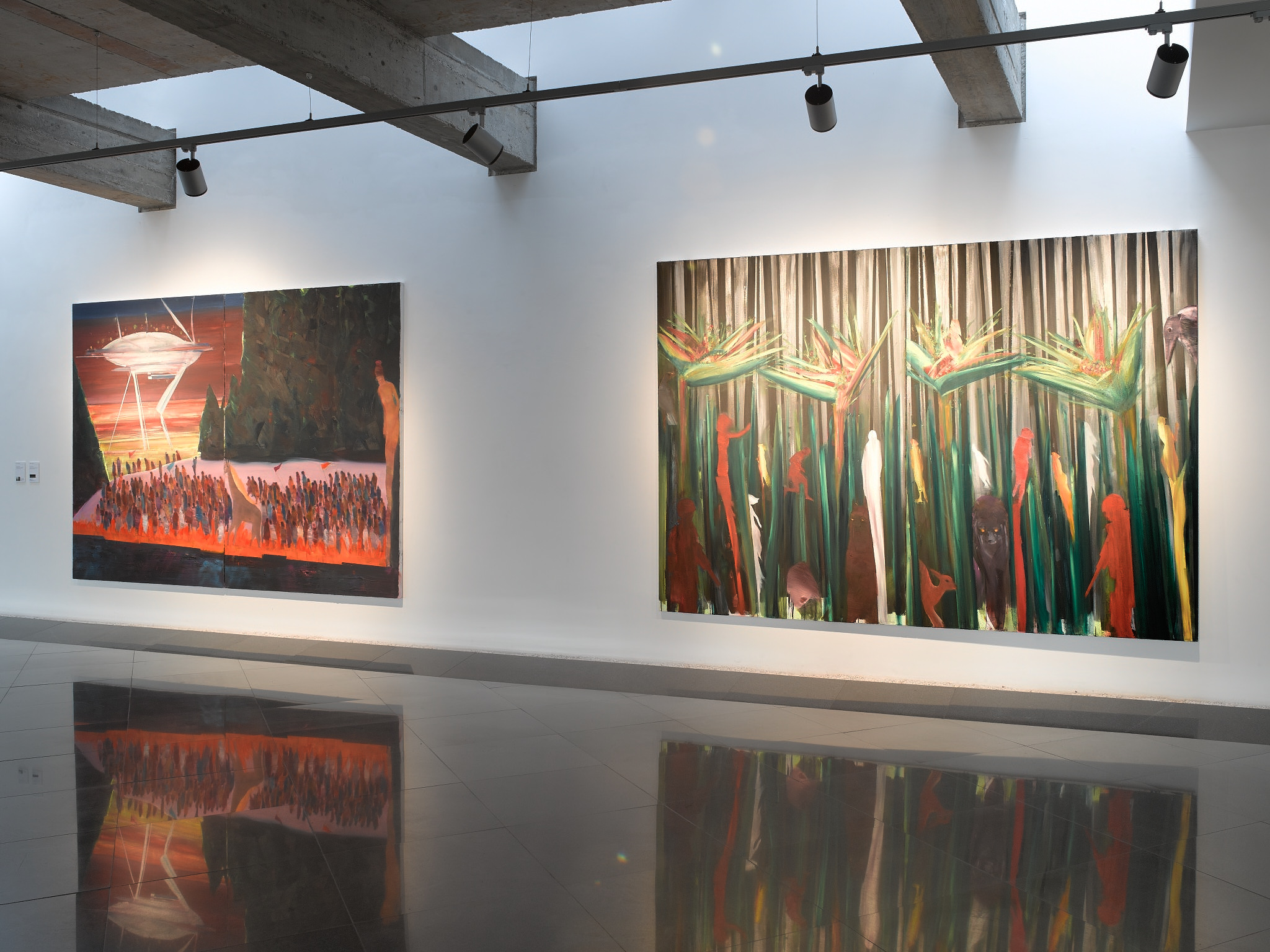
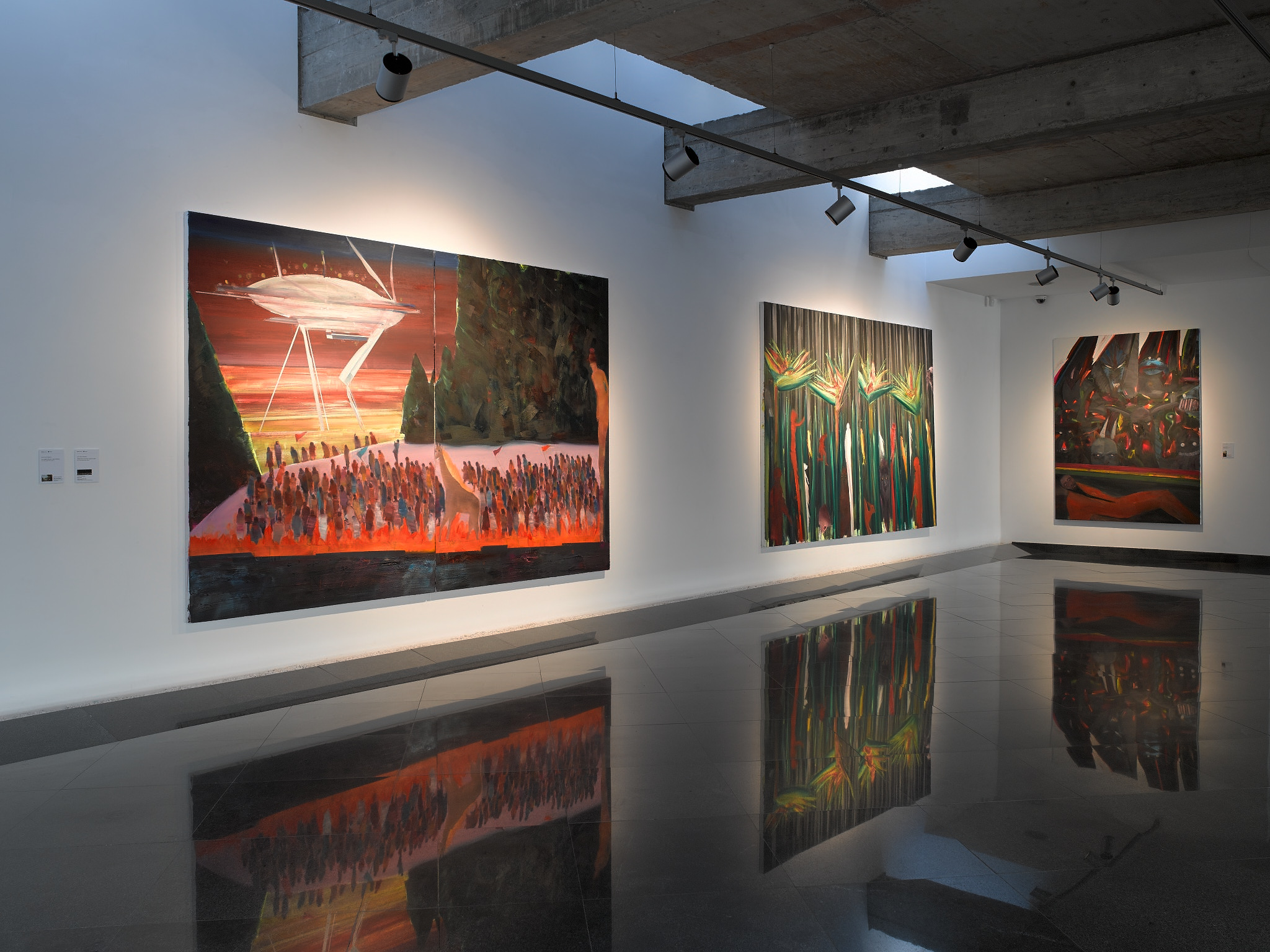
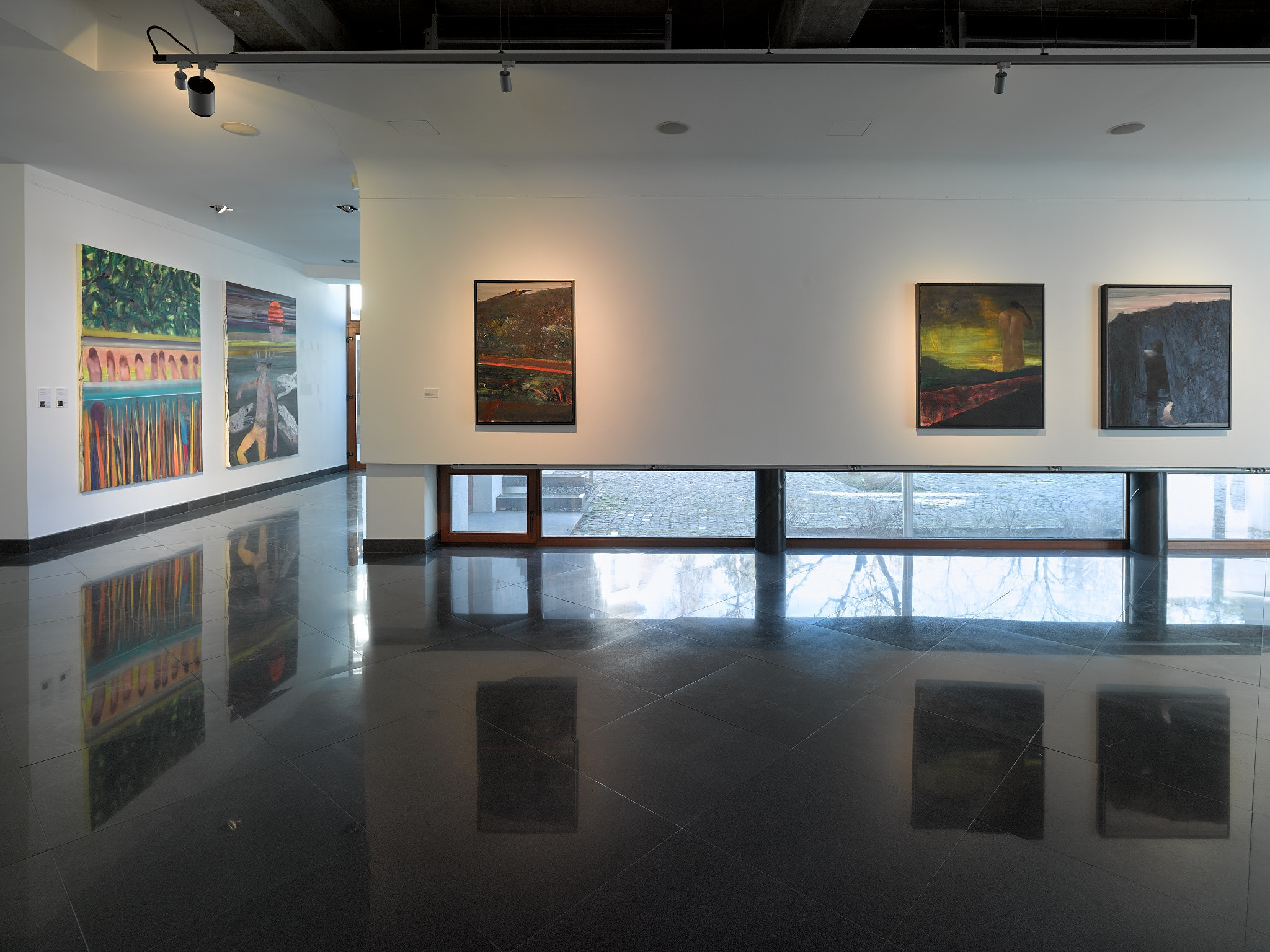
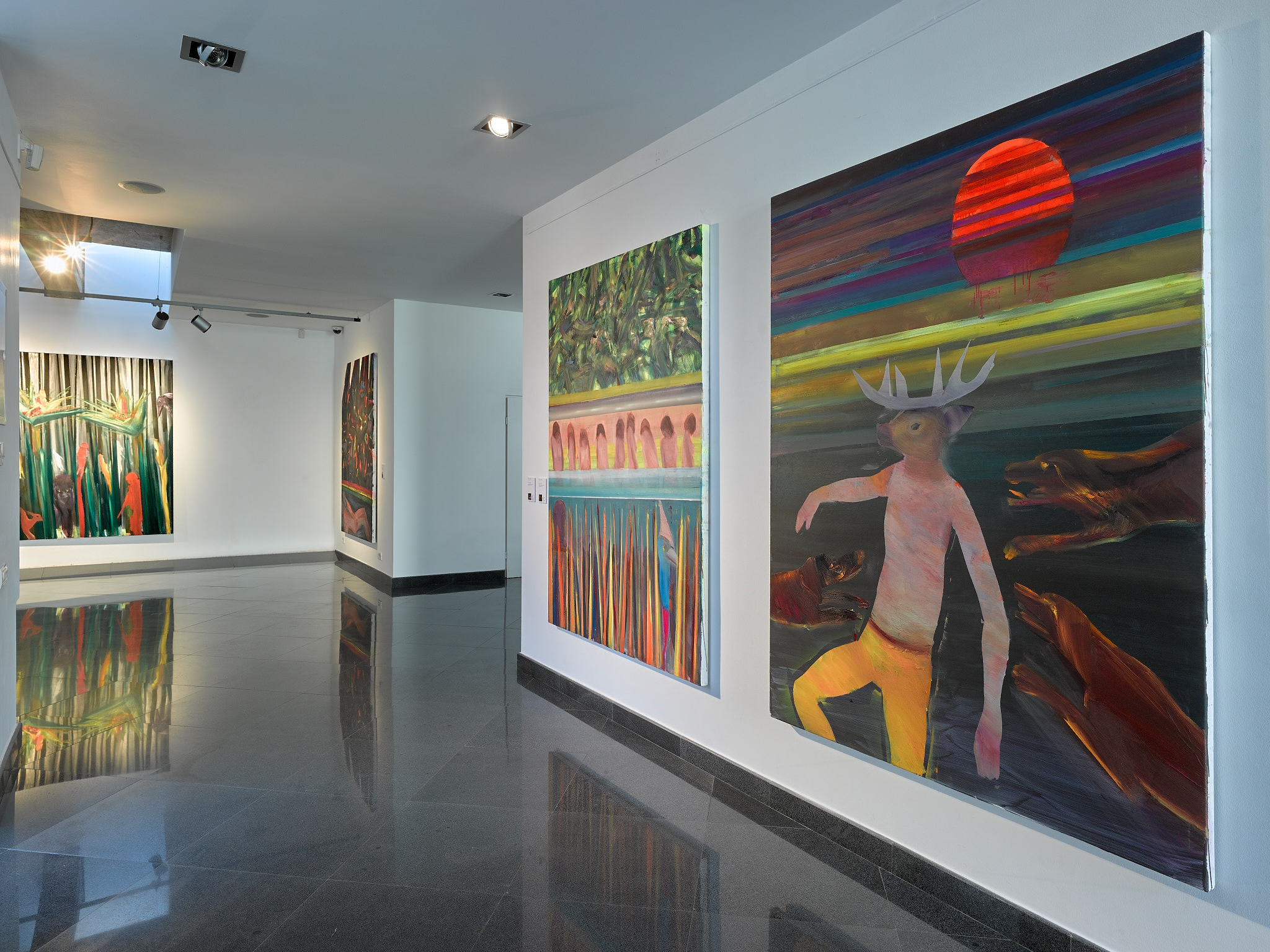
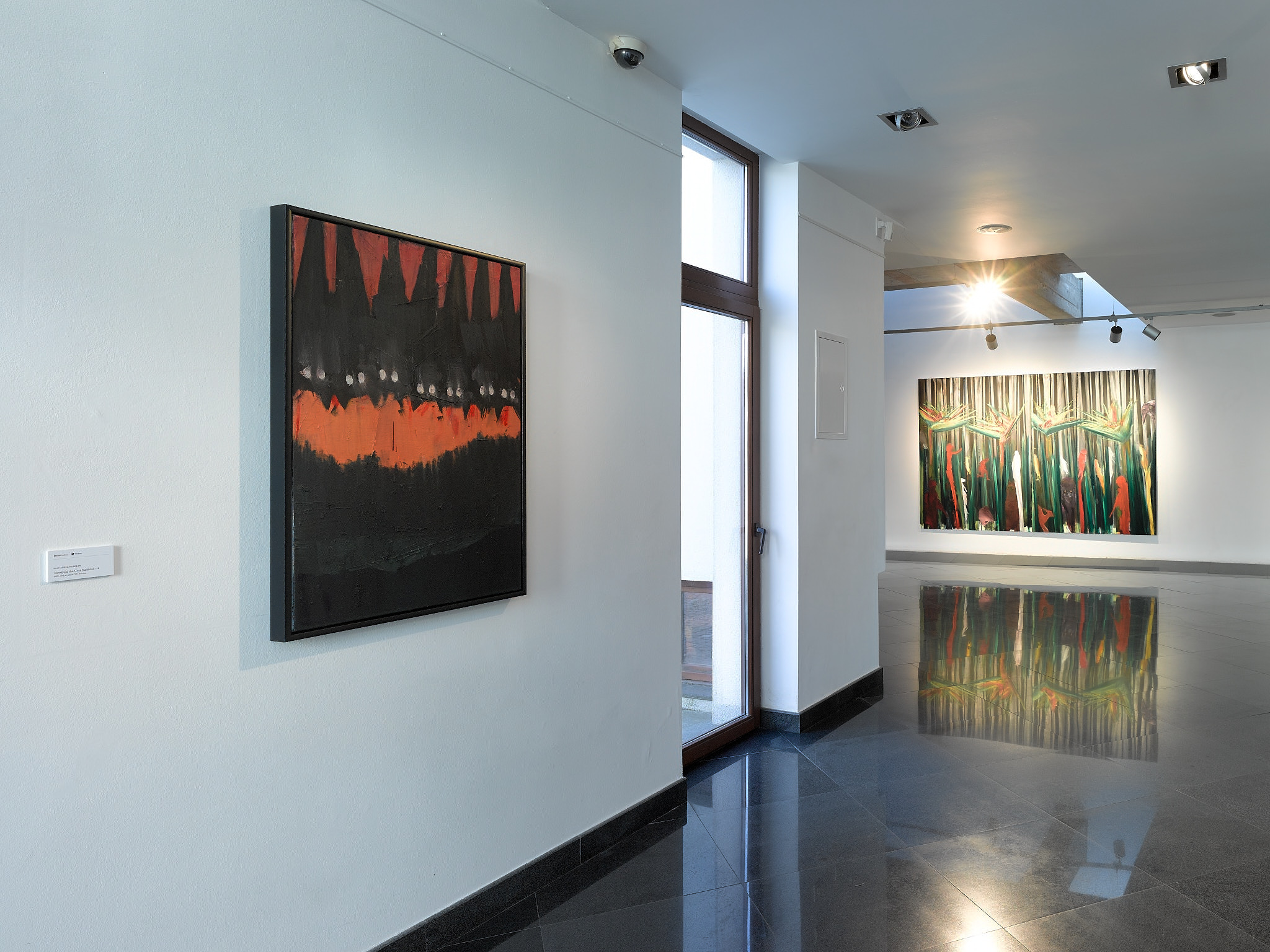
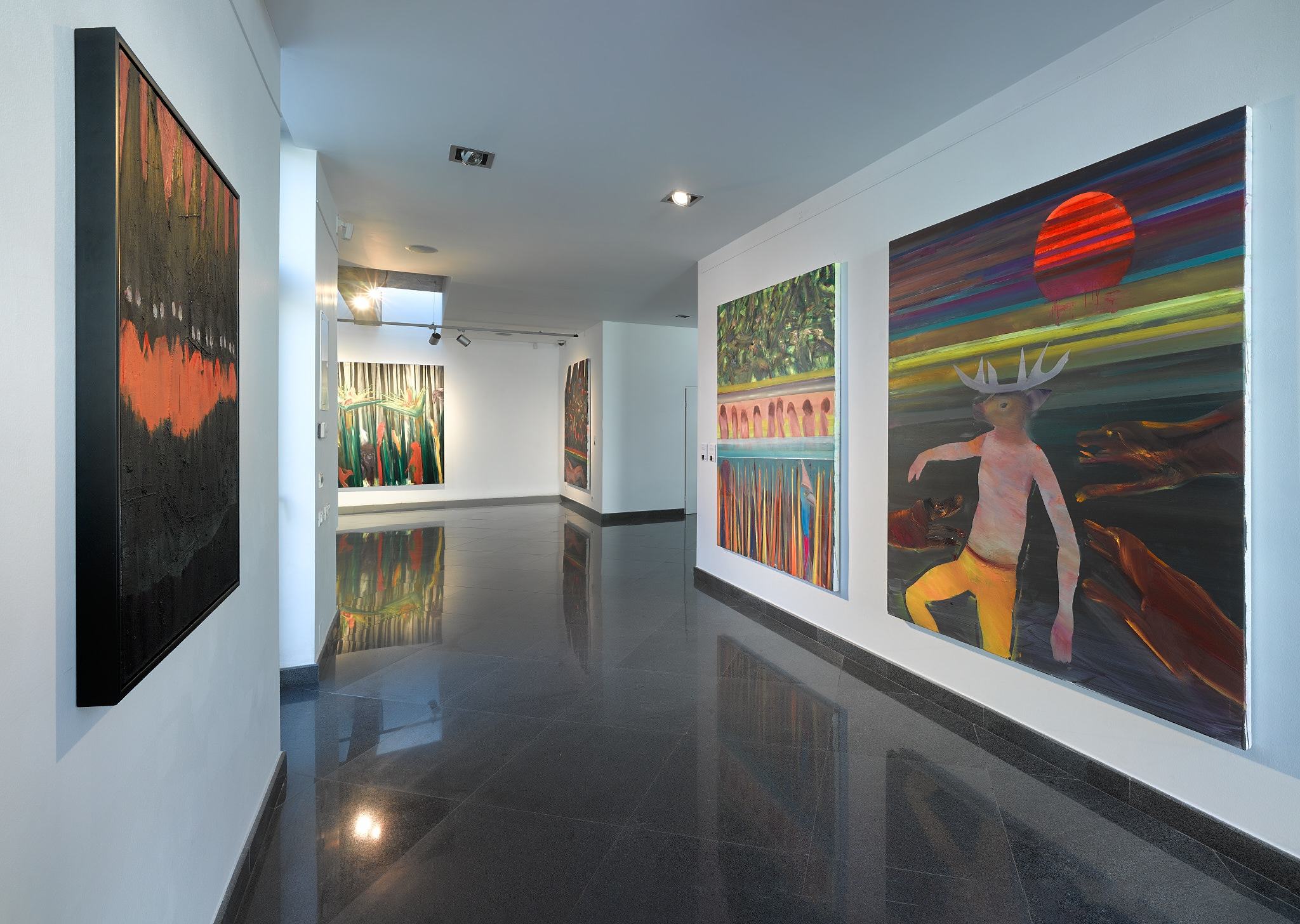
Speaking of the journey in the mirror, which relates Ioan Aurel Mureșan’s own artistic discourse to his forerunners, the art critic Ramona Novicov notes:
„Apud Magister is a wonderful attempt to build a water lock between the spirit that has animated the art of the last centuries and the spirit of the contemporary art.
Highly reflexive spirit, molded by a vast visual and literary culture, Ioan Aurel Mureșan was naturally attracted by the company of the painters from turbulent times of history, when the great eras of the triumphant image came to a problematic end. The world he ventured into, holding firmly the reins of his own artistry and storytelling skills, was that of the painters of the interval, hard to classify, the tenebrous, decadent, visionary type. (...). As a matter of fact, Apud Magister is but a vast and intimate critical commentary, a steep diving into the birth moment of the painterly concept, where the transmutation of the genuine idea into another language is possible.” (Excerpt from the introductory text Tizian, Fragonard, Duchamp and All That Jazz).
The exhibition is accompanied by a *catalogue (anchor of the catalogue Apud Magister from the Bibliography), functioning as a double diary that records on the one hand the painterly experience, that is the work in progress of the creation and on the other, the reception experience.
The curator Livian Dan calls this type of exercise in the mirror the Diary-Project:
“From March 17, 2020, to May 31, 2021, Ioan Aurel Mureșan paints 22 paintings from the series called ‘Apud magister’. The references are famous: Tizian, Fragonard, Caspar Davis Friedrich, Grünewald, Rubens, Watteau. . .. The choice to turn towards a classical past that is very much alive under the surface.
Over the same period, Sorina Jecza writes daily about these works – a fantasy on painting, a fantasy for painting.
It’s about two parallel diaries.” (Excerpt from the afterword of the catalogue, Jurnalul, nostalgia roz și eternitatea. Sorina Jecza iubește poezia).
The multiple plays follow a script typical of the Post-Modernism Ioan Aurel Mureșan holds so dear.