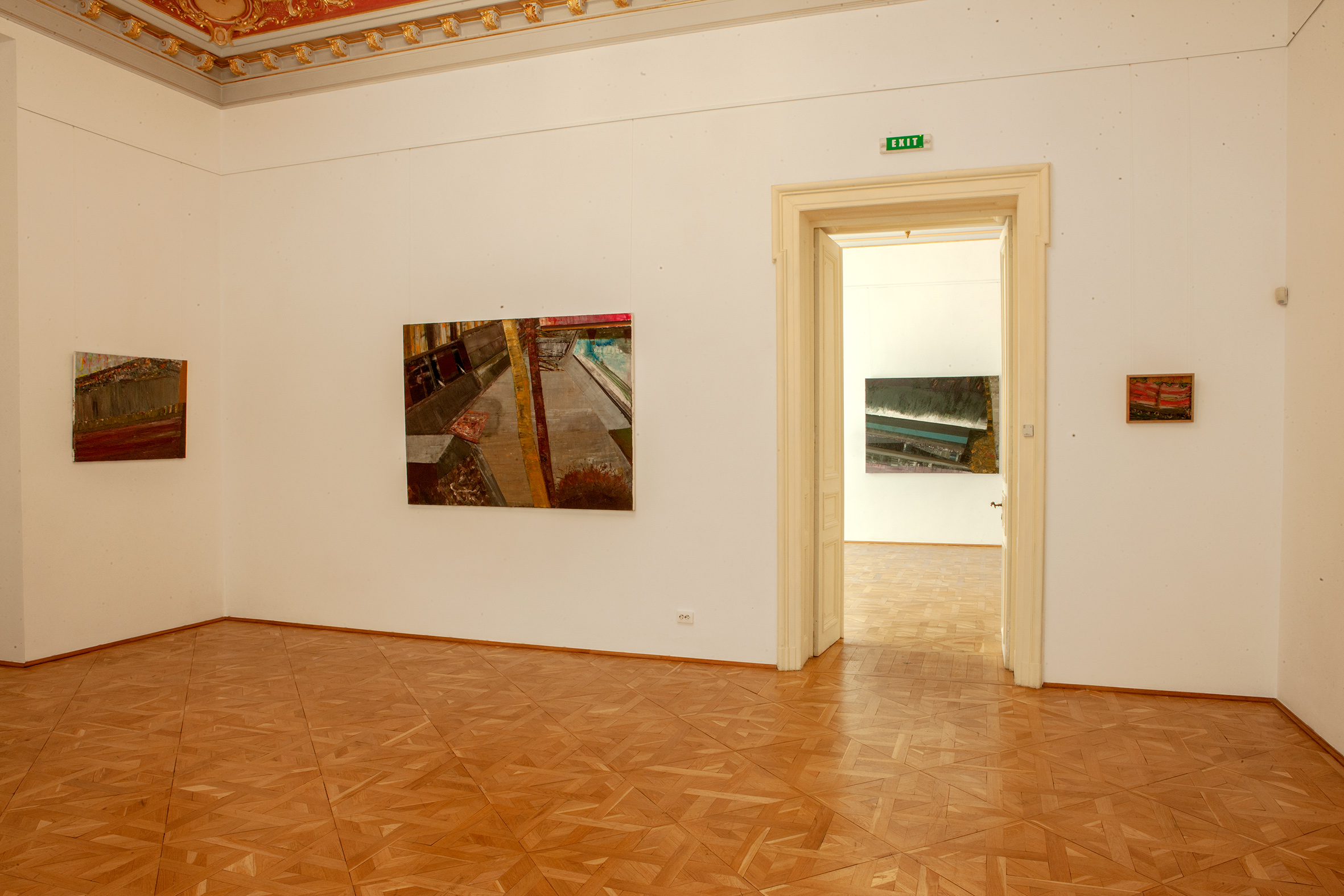
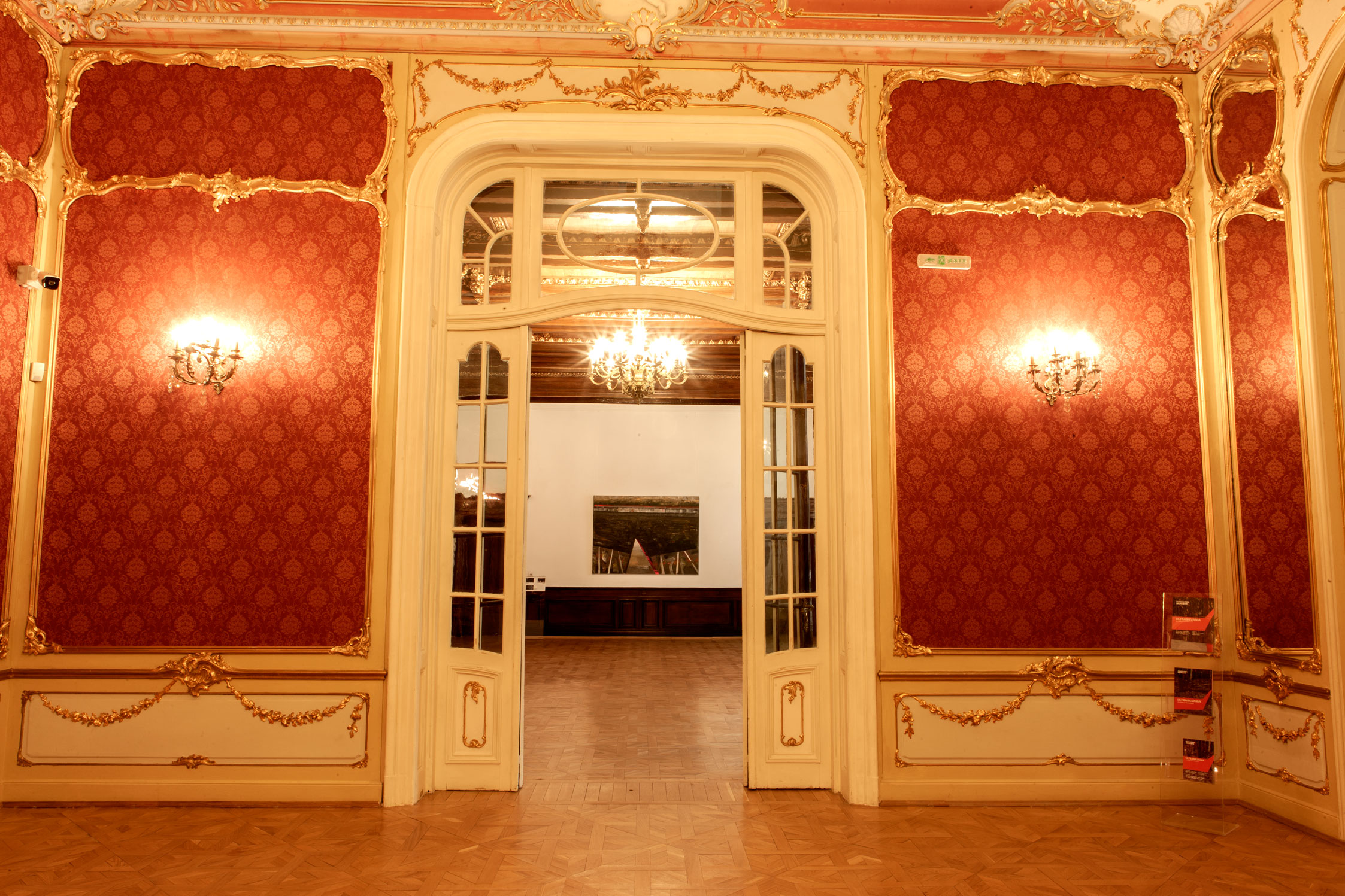
The title Ultrasilvaniamust be read in the light of the semantic play proposed by the artist to enhance meaning. The discourse in an invitation to the geography of an “ultra”-reality, that speaks of the self of the artist. The name Transylvania – biographical reference to the artist’s travels – is deconstructed, the prefix trans- from the Latin etymology being replaced with ultra-, which highlights the meaning of “intense”, “exceptional”, “to a great extent”. The Transylvanian landscape, translated into the language of painting, become ultrasilvanThe outcome is a dense, concentrated, almost informal expressivity of the painting. The ultrasylvanian landscapes belong equally to an exterior and an interior space. Their essence resides in an almost excessive (enhanced by the particle ultra-) intensity of the interior geography, overloaded with meaning, restless and dense, to the benefit of Painting.
The subtitle of the exhibition – Painting as pharmakon – introduces the second plane hinted by the artist. The film Călătoria (https://youtu.be/HY3fWY76_hUbrings Ioan Aurel Mureșan’s voice in the physical space of the exhibition, recounting the story of the avatars of the journey that ends in the exhibited paintings.
In this regard, the exhibition is not just an exhibition but rather a lucid and merciless self-disclosure that questions the artist as a whole being, as driver of creativity, in a discourse on limits, resilience, catalysts, on how the energies are constantly reconfigured. The process of re-enactment, of reconstructing the way to the self, is explored by the rational means of self-analysis, creating a secondary register in relation to painting, which adds depth and gravity to the first. The created interval delineates the space that spotlights the painting as pharmakon.
In the larger picture of Ioan Aurel Mureșan’s creation, what gradually evolves from the exploration of painting from the physical angle of an expressivity marked by conceptual rigor to the explosive freeing of the imaginary, the cycle Ultrasilvania (2013-2014), on view at the museum from Craiova, illustrates the stylistic and formative revival that came after the period when creation was put on hold.