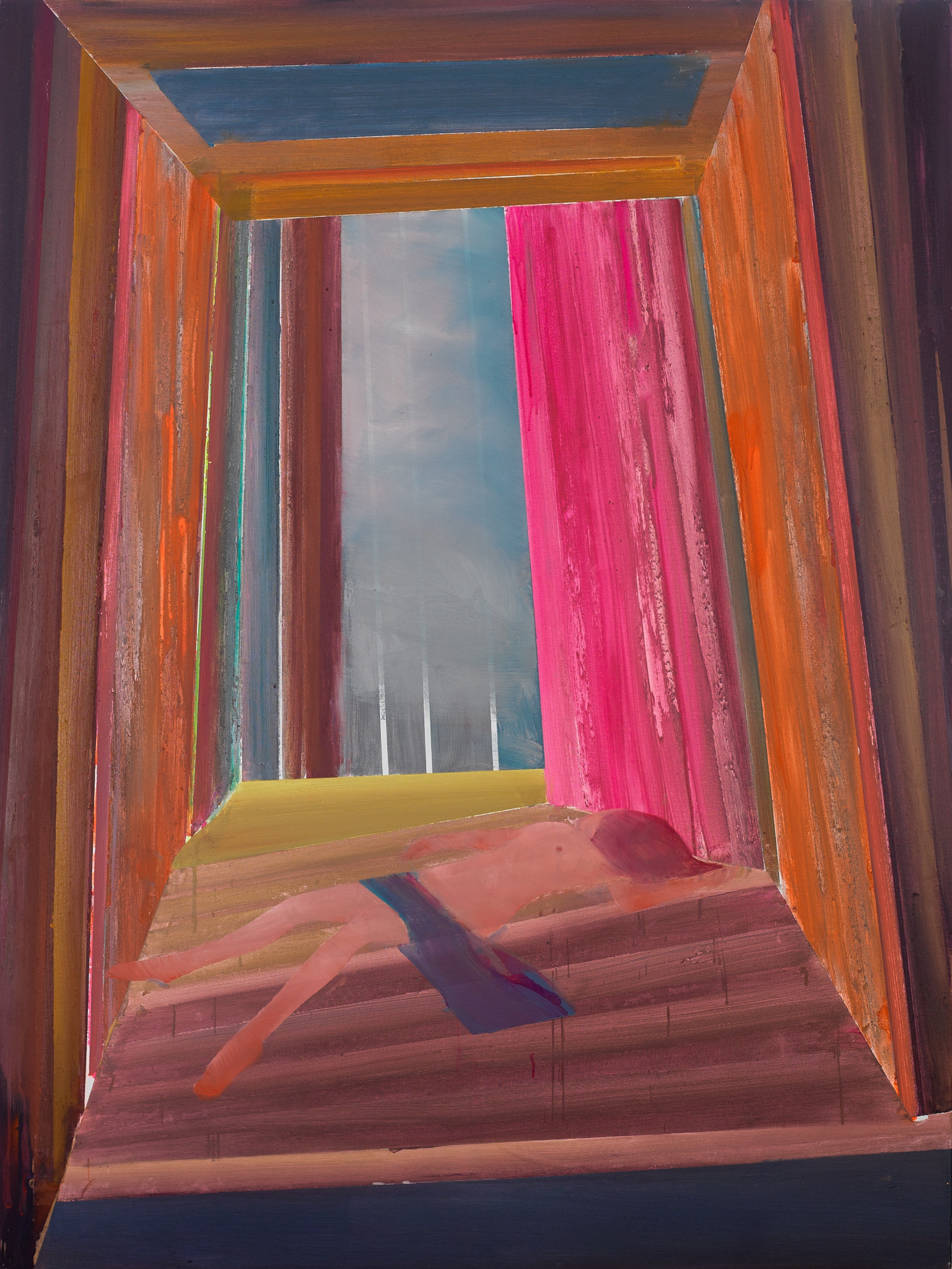
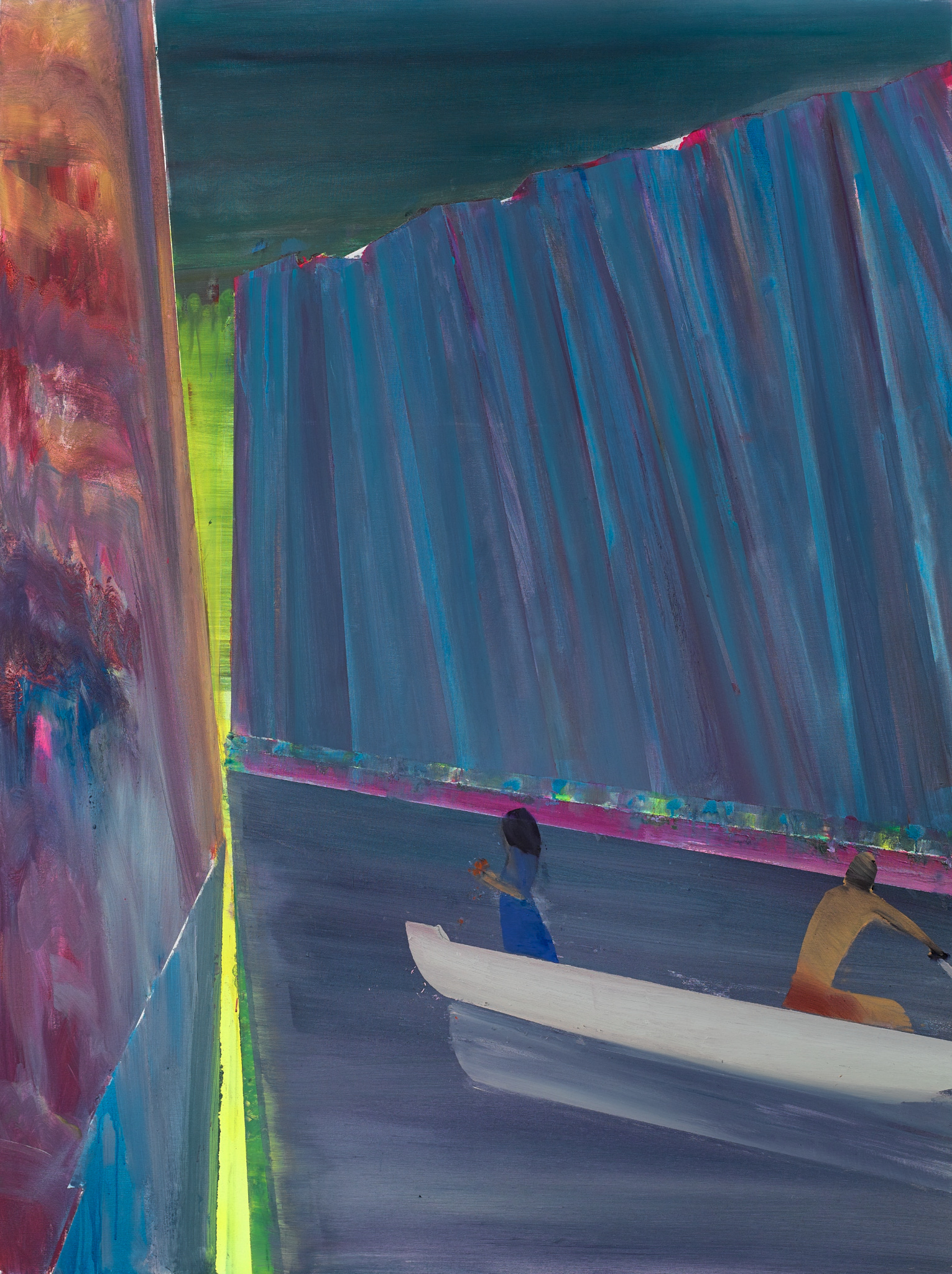
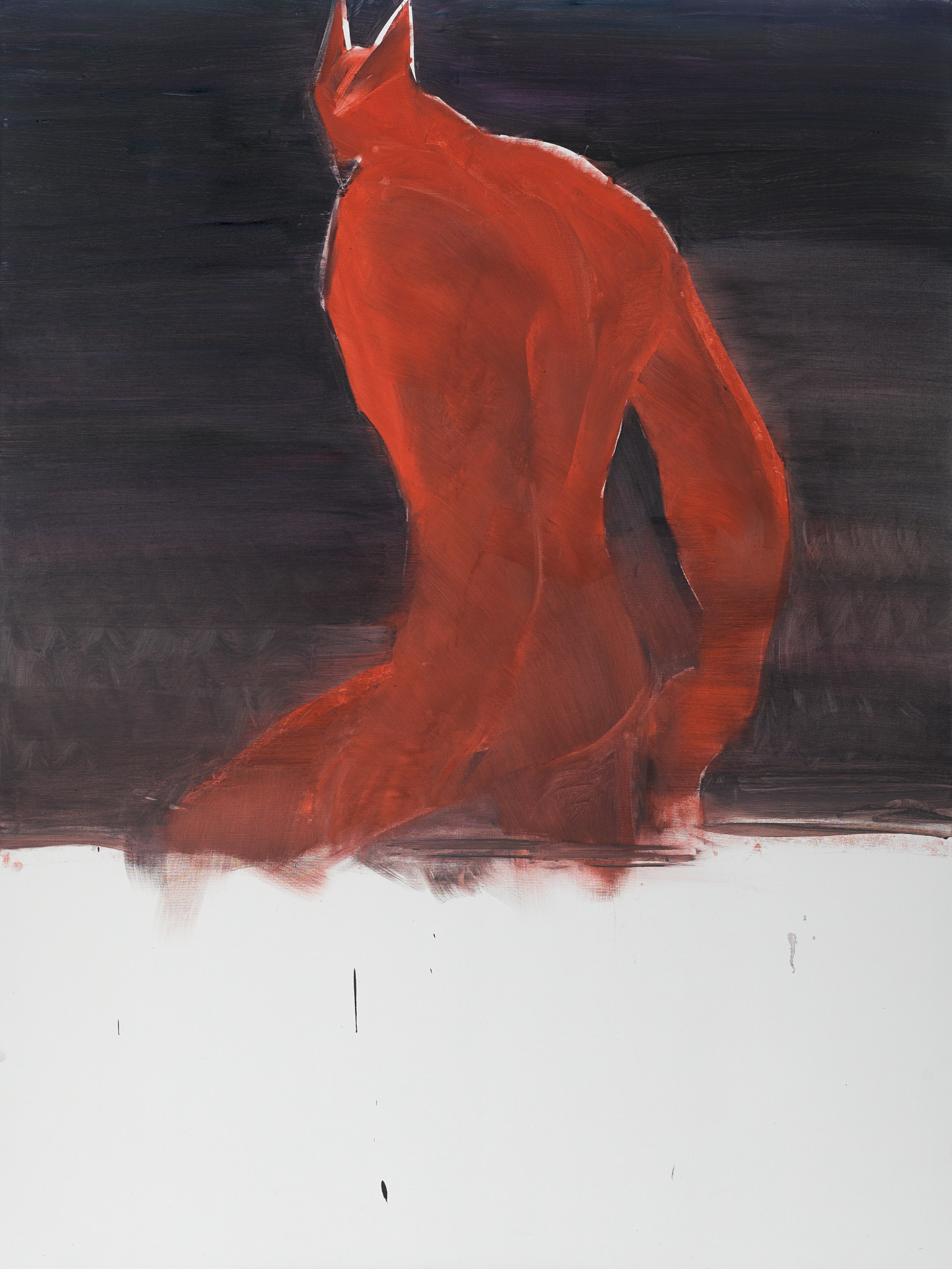
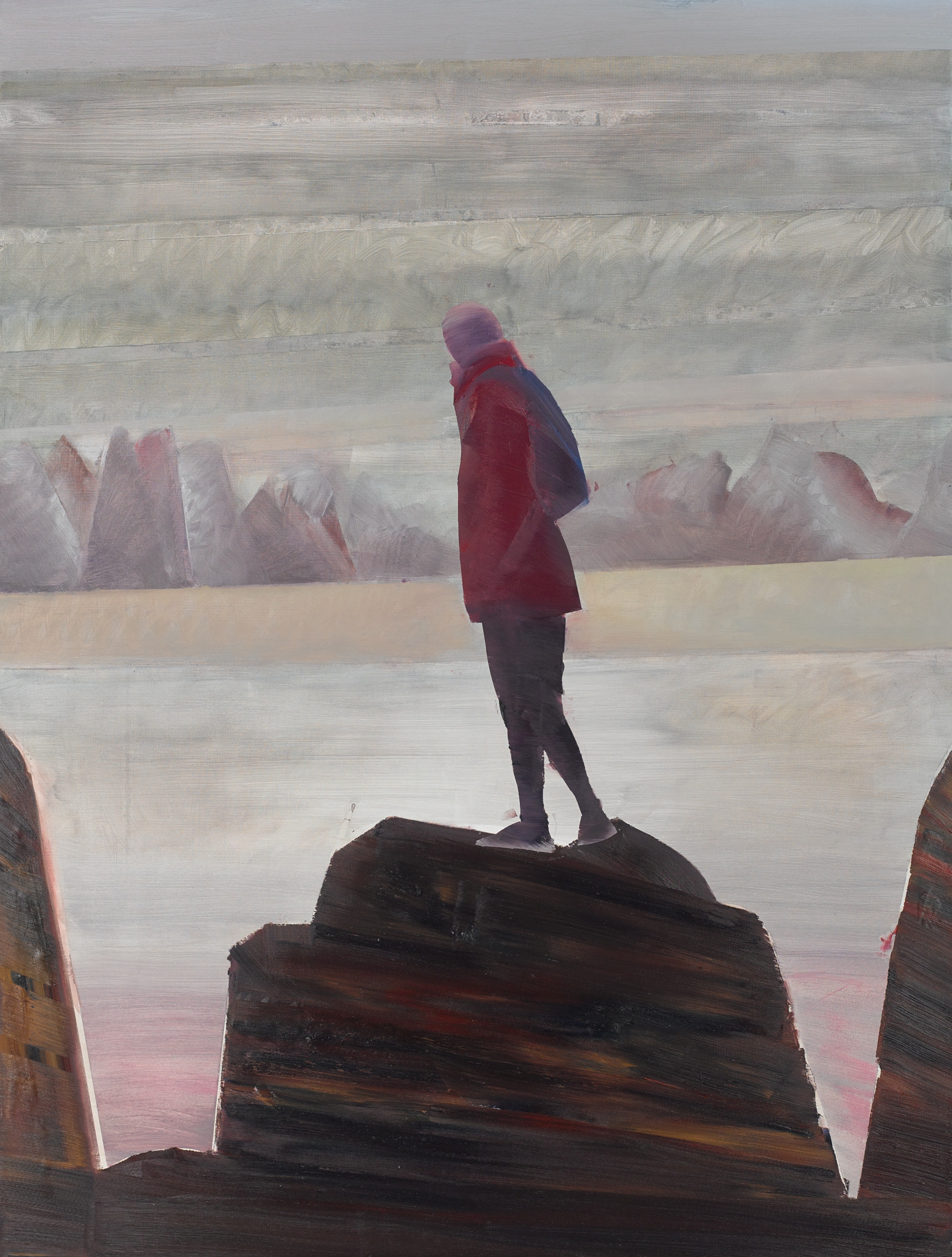
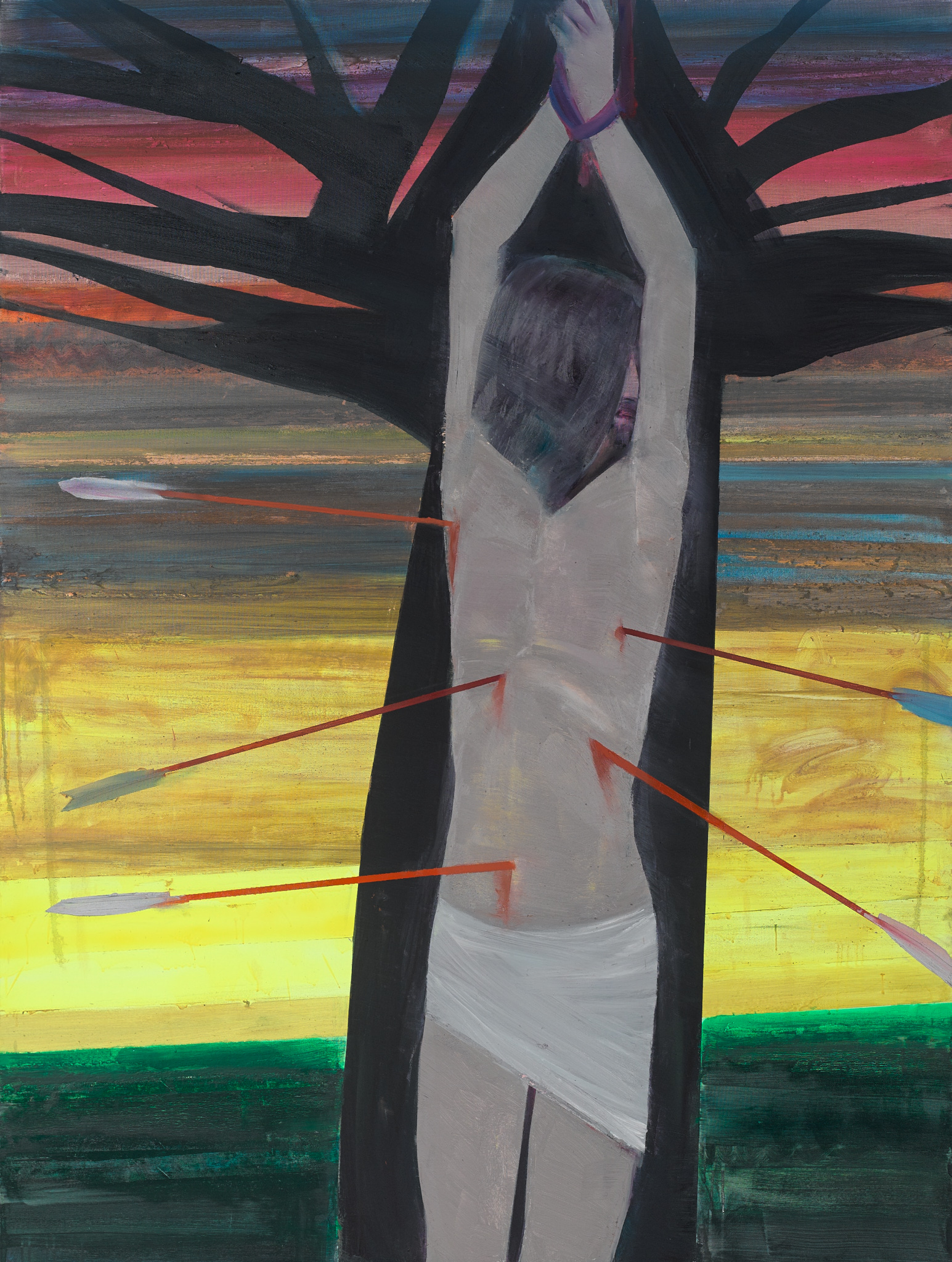
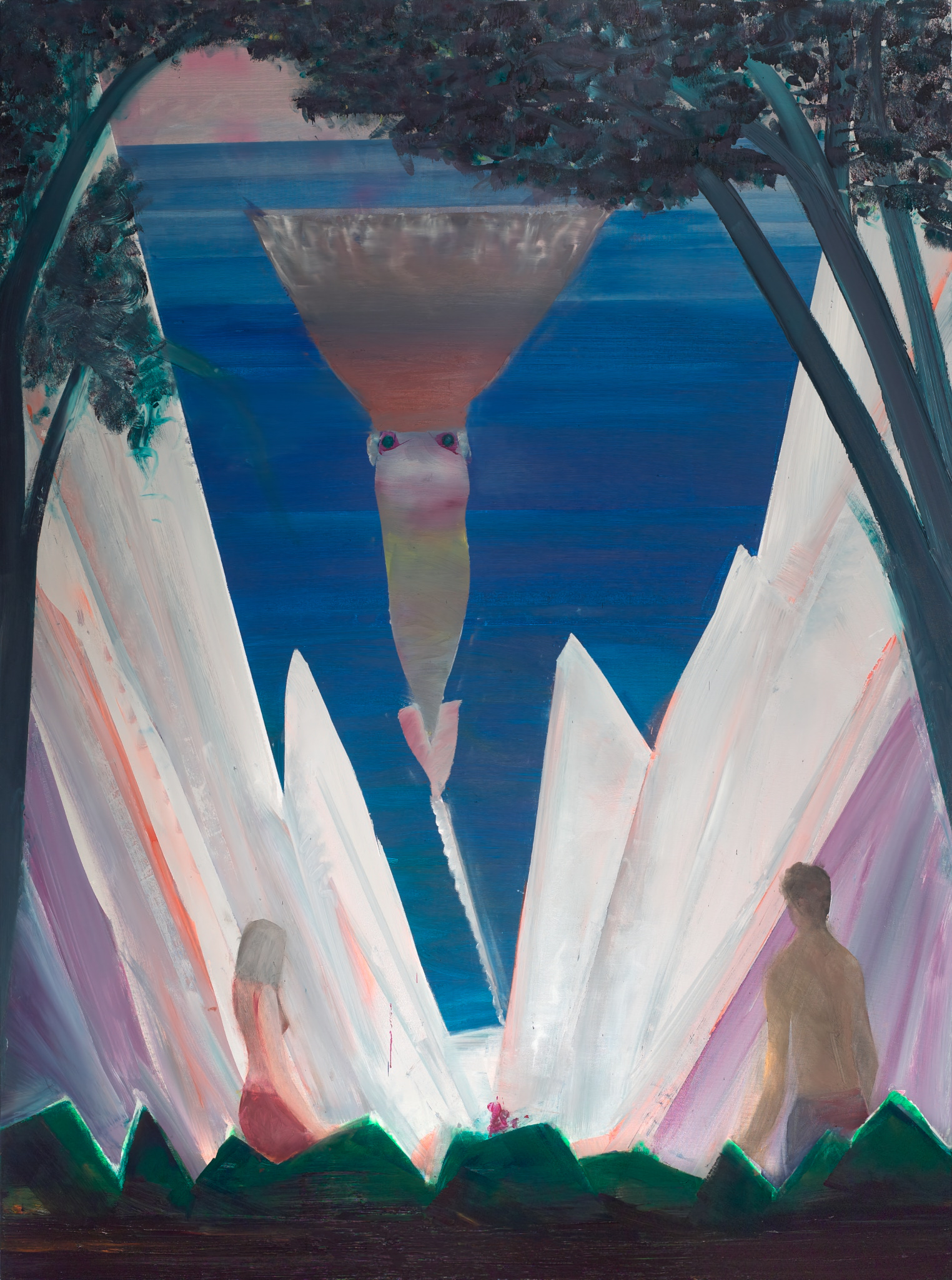
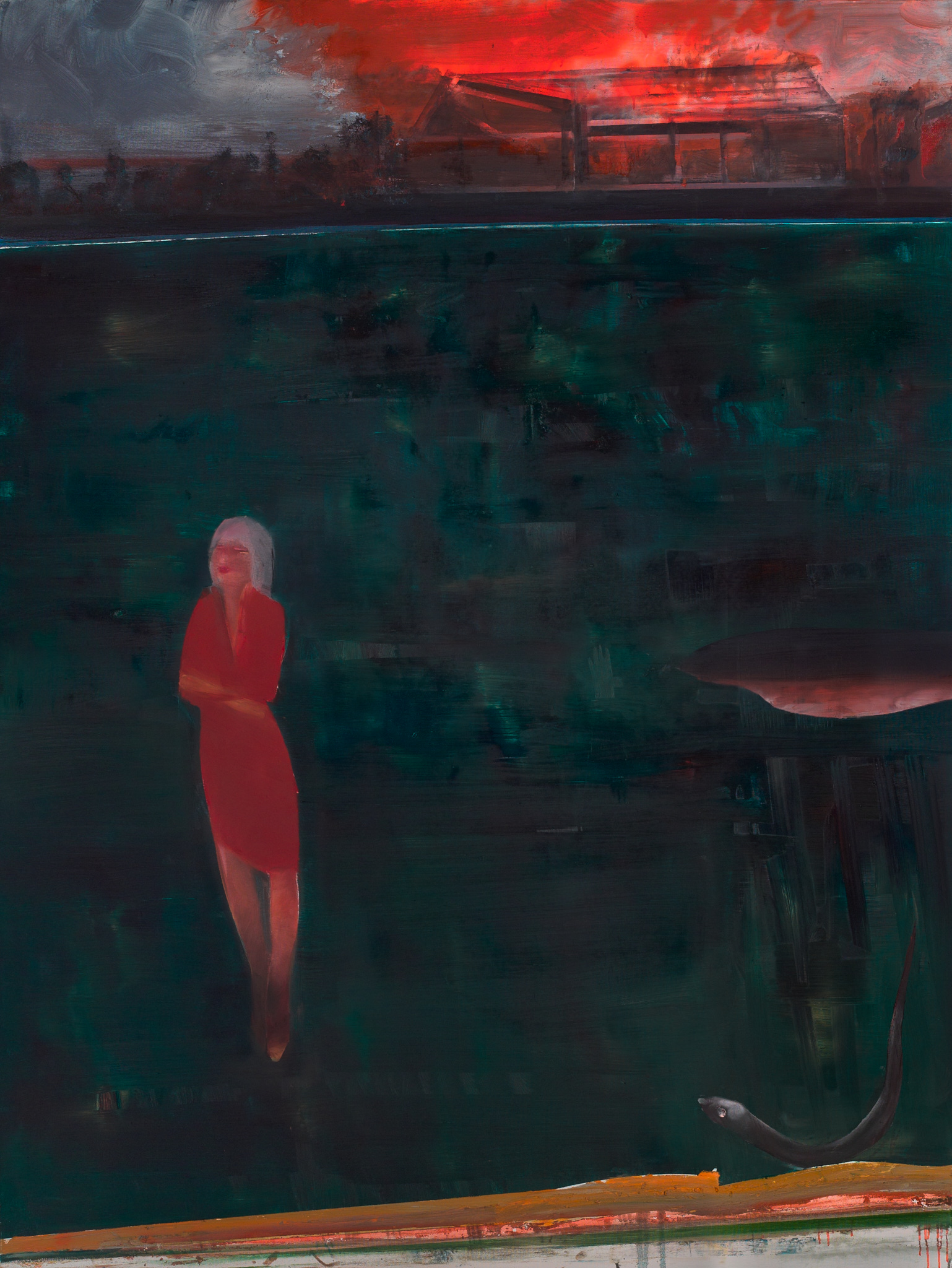
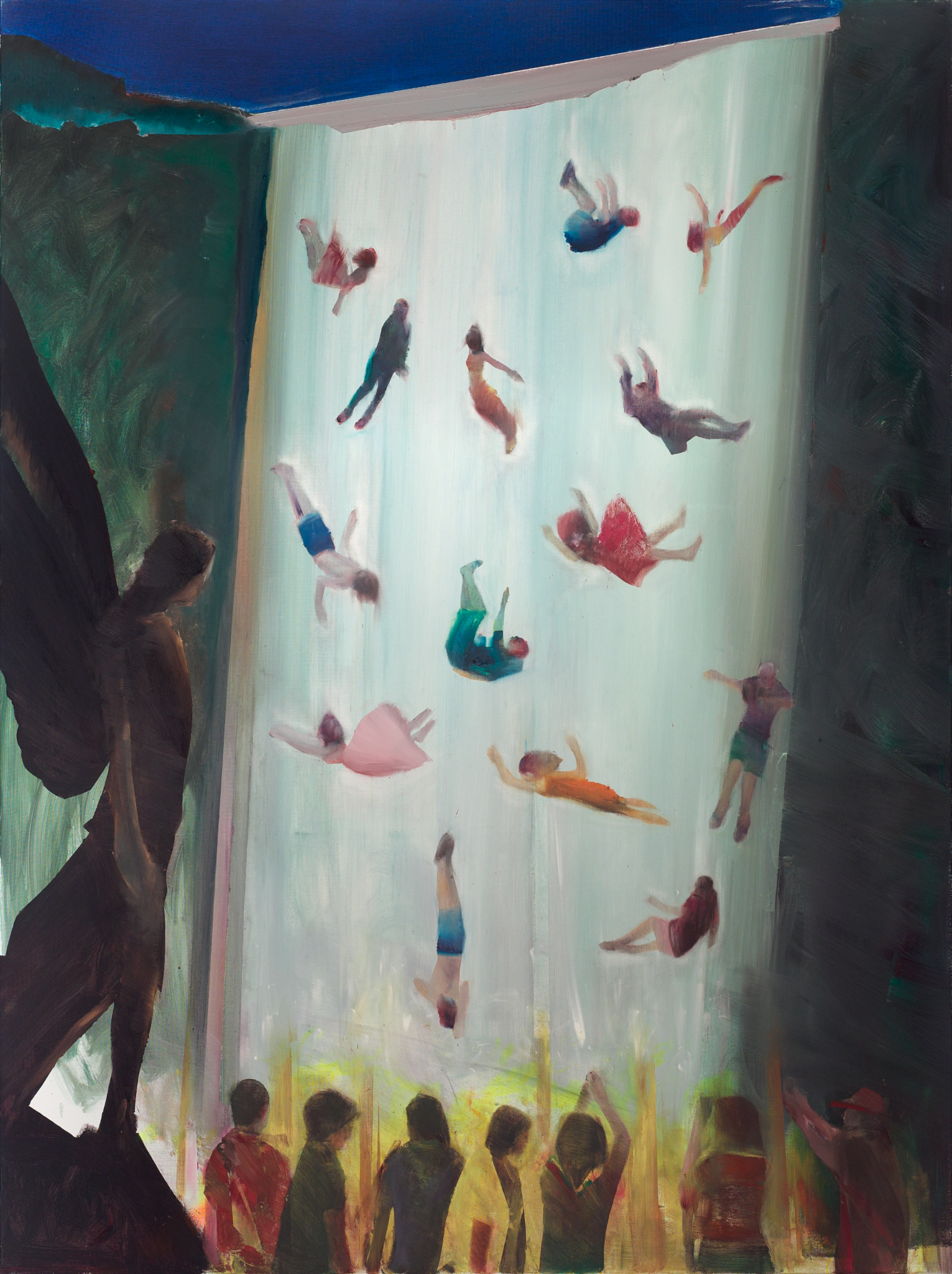
” Apud Magister is a wonderful attempt to build a water lock between the spirit that has animated the art of the last centuries and the spirit of the contemporary art. How do you translate into the contemporary visual language messages that, encrypted in methods, techniques, and historical visions, can no longer find their way into the imaginary of nowadays? How can you enter the Circle of Grand Masters, from all the times and places they might have come from?
Highly reflexive spirit, molded by a vast visual and literary culture, Ioan Aurel Mureșan was naturally attracted by the company of the painters from turbulent times of history, when the great eras of the triumphant image came to a problematic end. The world he ventured into, holding firmly the reins of his own artistry and storytelling skills, was that of the painters of the interval, hard to classify, the tenebrous, decadent, visionary type. It’s no surprise that the dialogue starts with Titian and Giorgione. By conjuring them up, Mureșan is reminding us that mannerism manifest itself as key phenomenon of counterculture of the modern spirit seduced by the critical commentary. As a matter of fact, Apud Magister is but a vast and intimate critical commentary, a steep diving into the birth moment of the painterly concept, where the transmutation of the genuine idea into another language is possible.
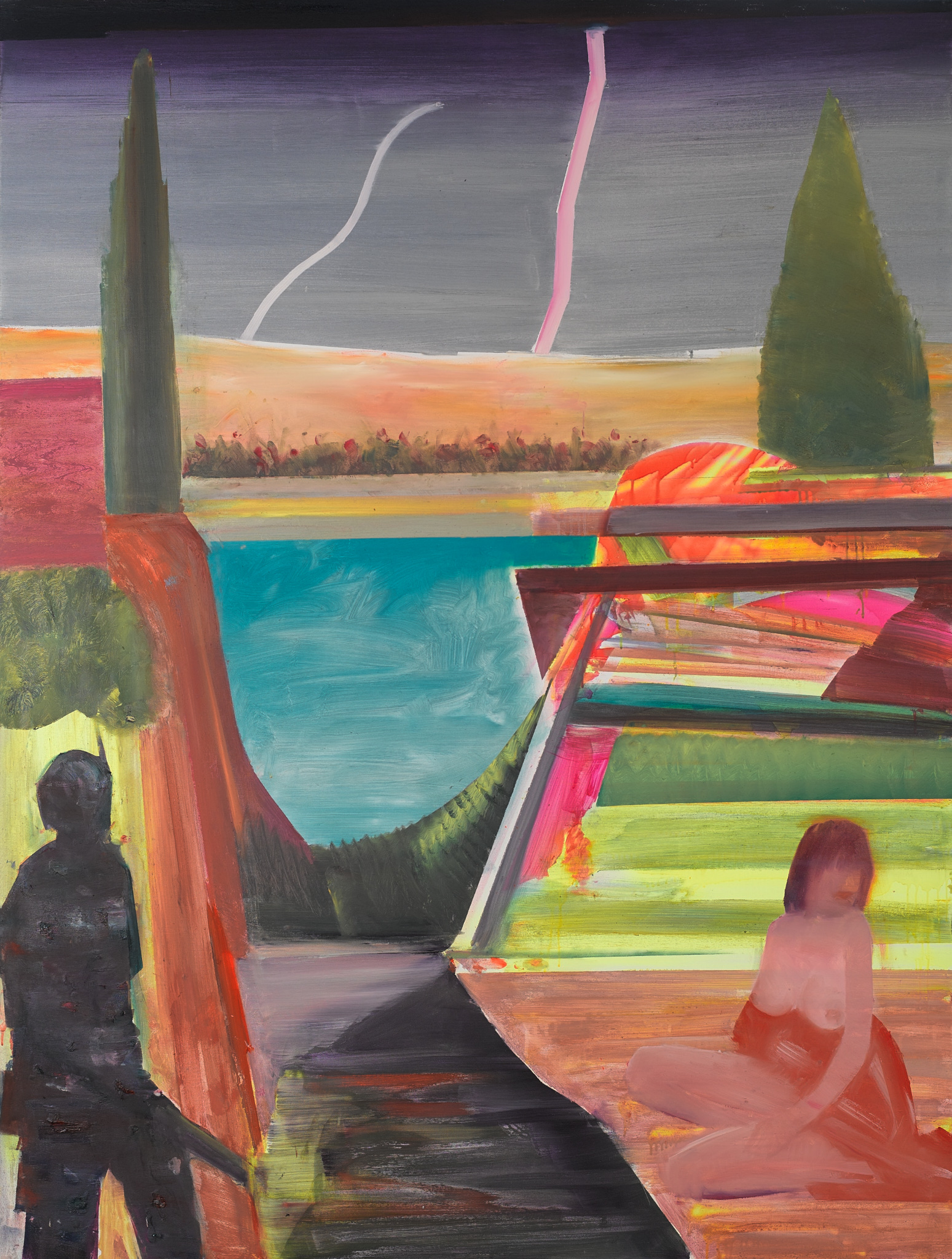
In the Tempest, applying the filter of the 21st century over the Giorgione’s mannerist filter (himself a critic of the Renaissance), Mureșan presents to the contemporary view the naked hypostasis of the schema of the paintings, stripping it off both the vertigo of perspective and the aura of chiaroscuro. In the good tradition of mannerism, he keeps its eccentric composition, with its center devoid of any painterly events and the vanishing point dissolving into a dramatic background, but amplifies even more the ambiguity of the characters, ab initio mysterious: he is a martial shadow, she is a nymph in a chrysalid. Like in a zodiac, their abstract projection remains visible in the blades of the two lightnings, distinct energies bound by the same sky. Beyond spatial ruptures, beyond temporal syncope, everything contracts and flees to a background plane, purely abstract – therefore, eternal, and immutable. The two of them have become incandescent filaments on an ominous sky of the beginning or the end of the world. What love story can aspire to more?
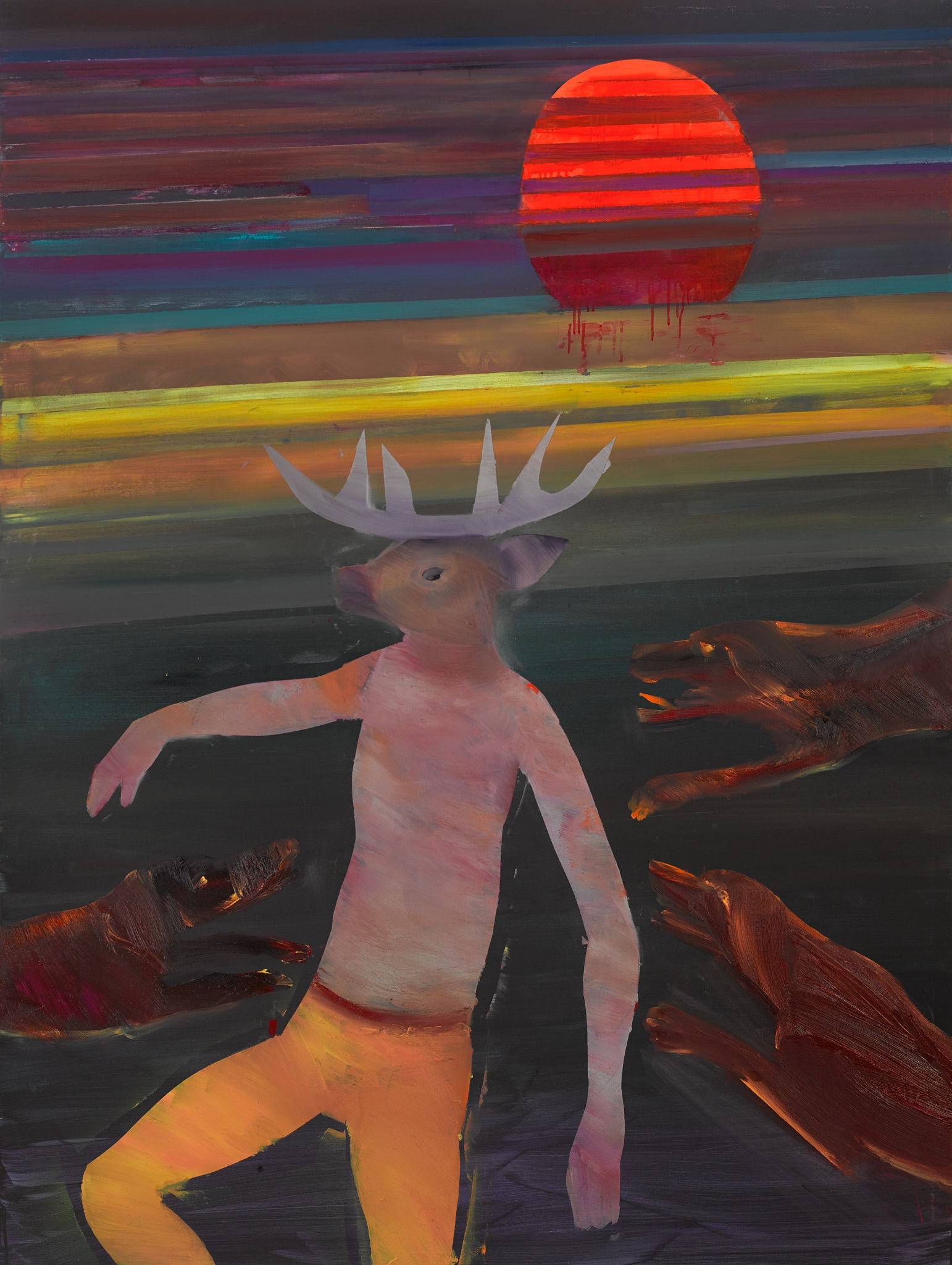
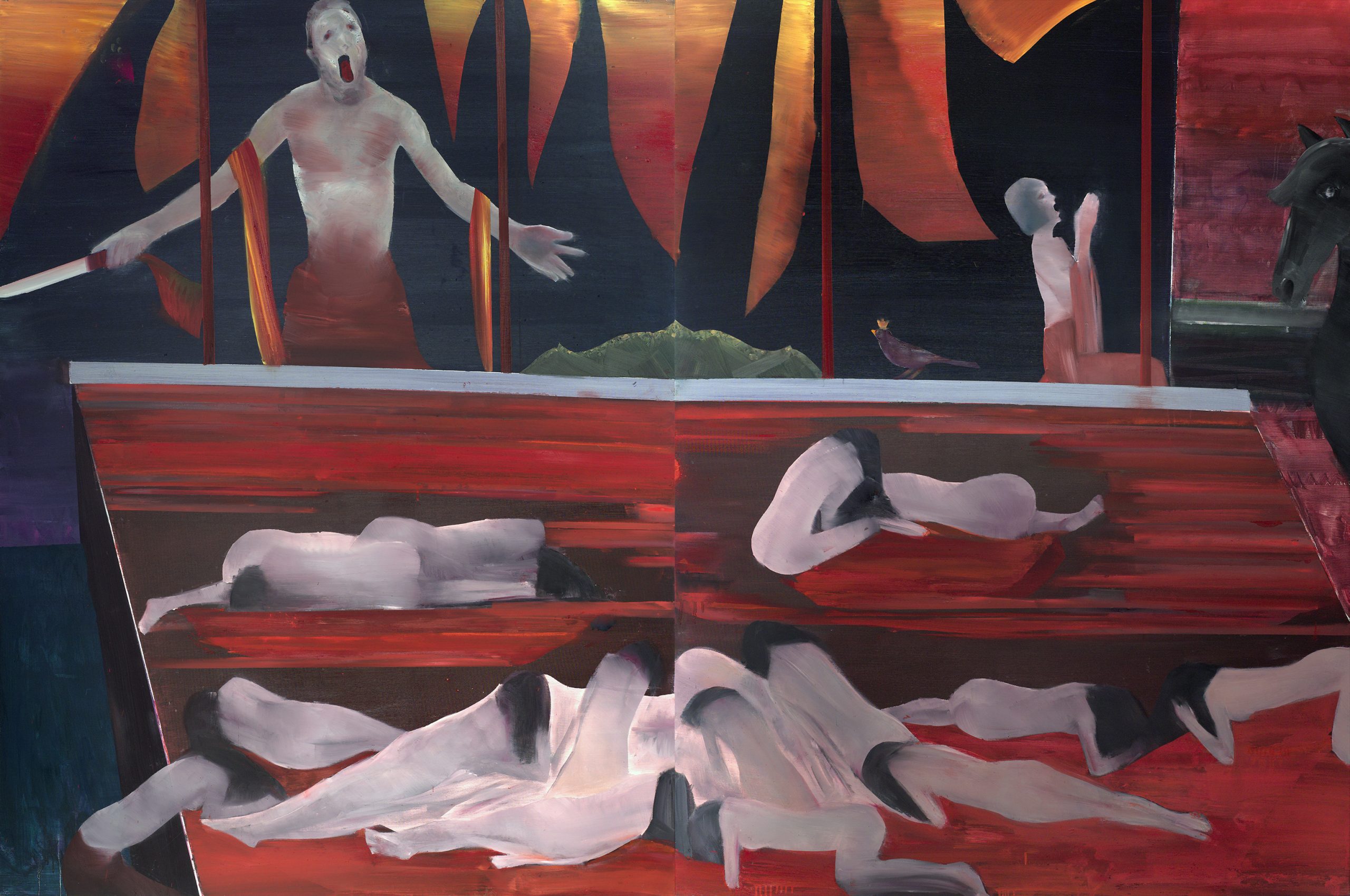
But it is not the Tempest that opens the d’après series, but Acteon, one of the most dramatic characters of the mannerist imaginary. Titian depicts both states of his destiny, entering the game of metamorphoses, of the limits of the visual world, of the subtle heroism and the wrath of the gods.
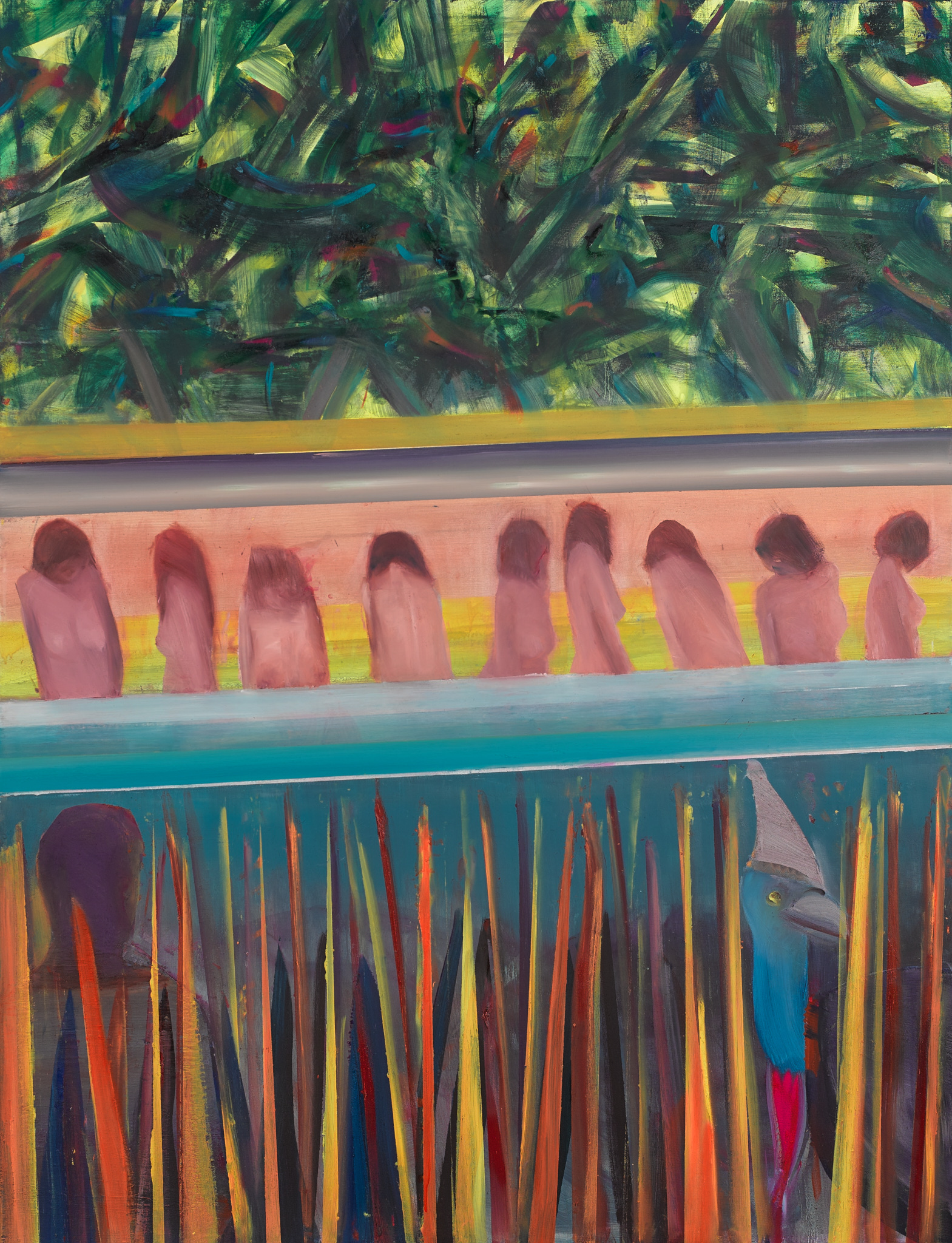
Acteon and the Vials of Rose Water
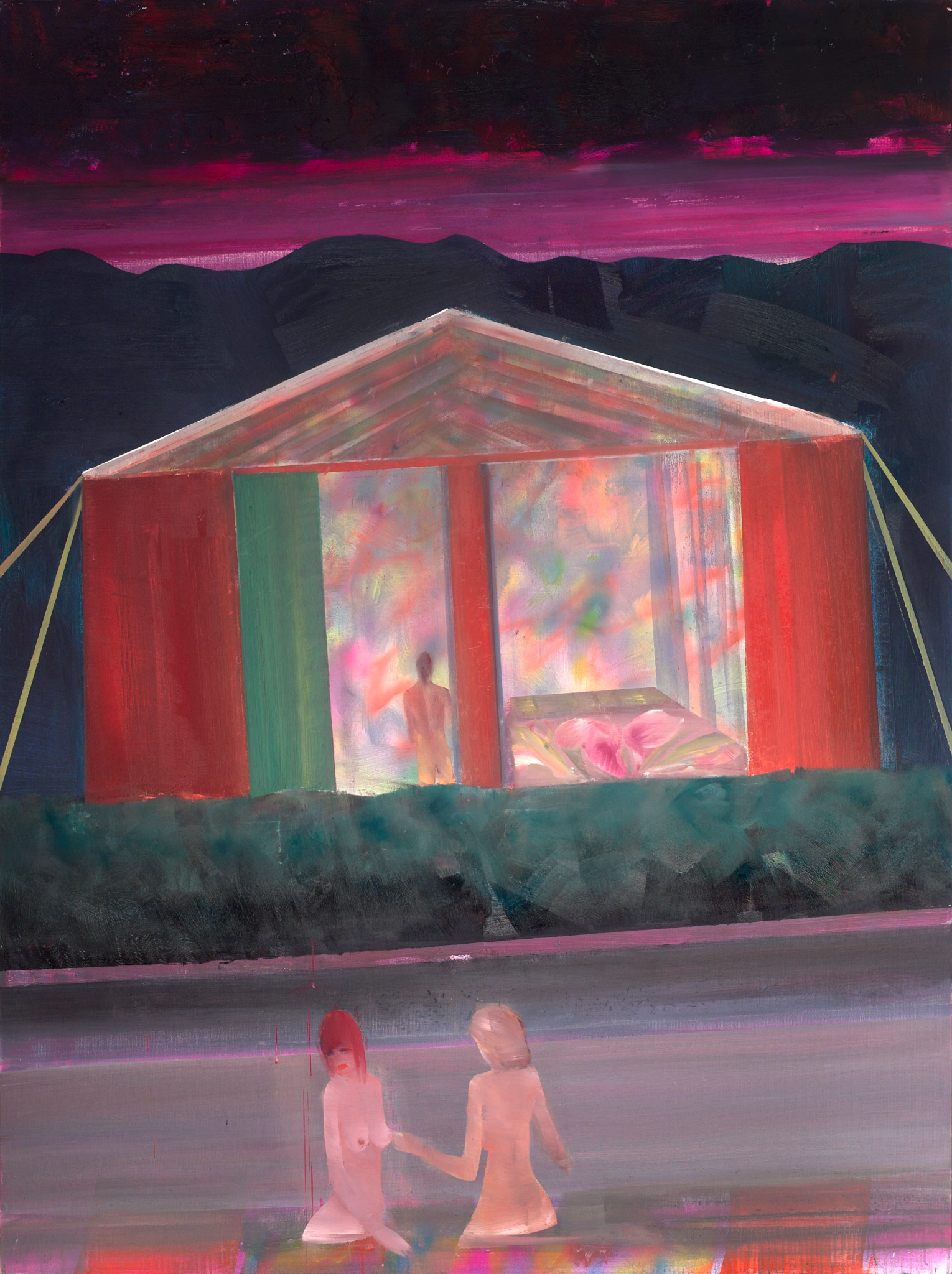
To Titian, Acteon appears as a symbol of the destructive relationship Eros – Thanatos, when the two forces collide, prancing tangentially. Wave against wave, power against power. Titian painted the bodies of the nymphs and of their goddess as communicating vessels, winding retorts sliding among penumbras. Descended abruptly and accidentally into the image, the young shepherd stirred the waters of eternal beauty with his mortal gaze, and so, the moment he stepped behind the curtain of mystery, his figure already entered the shadow of death. Knowing too well, like any deity, that mystery marks the ultimate limit of knowledge, Diana must kill him for breaching this dangerous line, even if he did it with absolute innocence. Acteon becomes therefore one of the victims of the mysterious power of the gaze. But, at the same time, loved and redeemed by the painters, he also becomes one of its heroes.
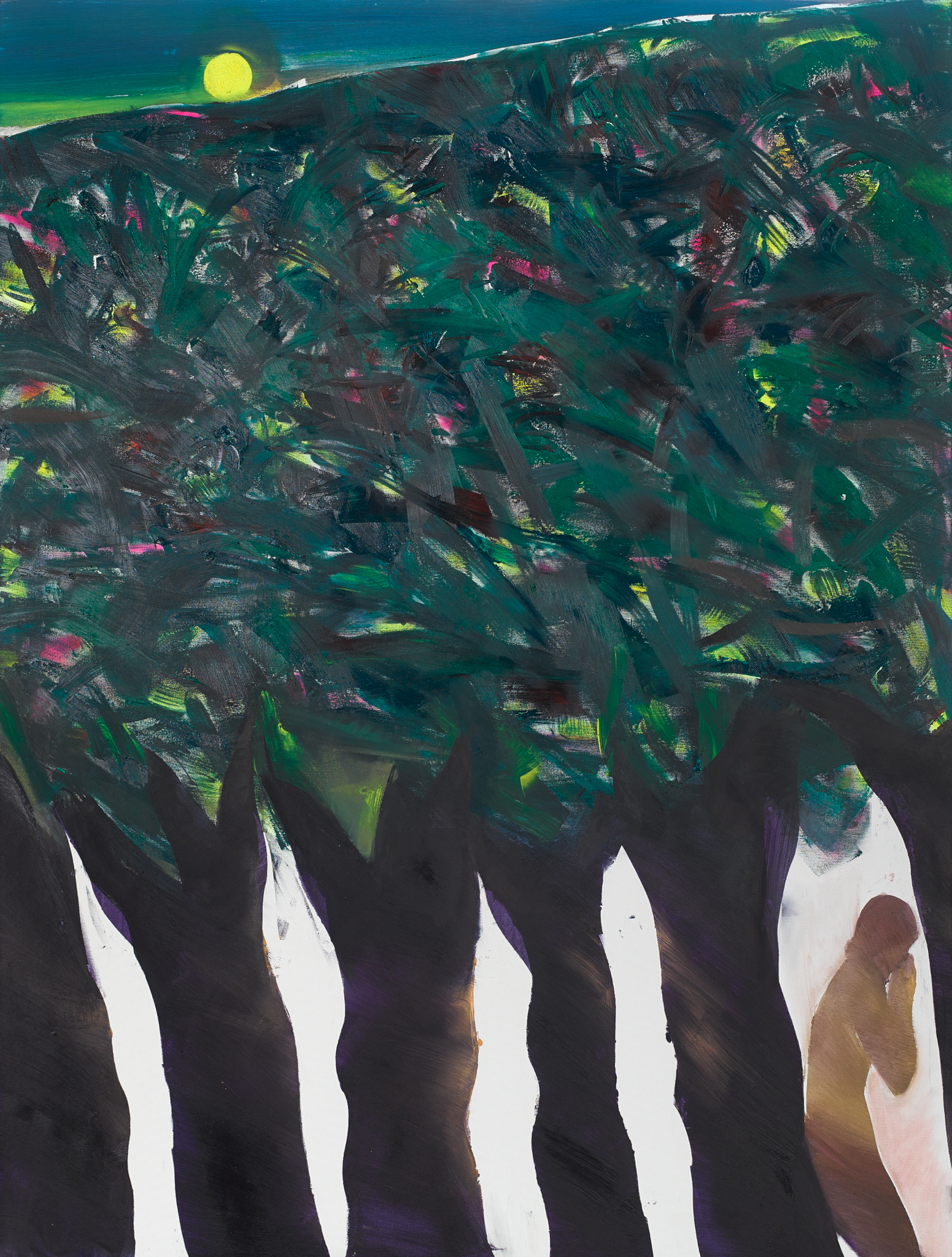
This mysterious power of gazing intrigues any artistic sensibility. Painters, by definition, are the most prone to respond to this provocation. Up to which point are we allowed to look, up to which point can we come closer with our fragile senses to the obscure forces of the world, why and how does this transcendent censorship, as Lucian Blaga called it, work? Ioan Aurel Mureșan resumes with a sort of feverishness the theme of Acteon, but he strips it off the garment of sensuality, leaving the impression that he knows how to activate the third eye, the ophidian eye. Looking through it, the image becomes colder, more conceptual, like an elixir cooled in retorts, annihilating the soft penumbras of the Venetian mannerism. In Mureșan’s d’après, the bodies are rigorously and impersonally composed in the slit opened by the horizontals of the central register, rhythmically distributed like the items in a shop window. Passed through the filters and retorts of Erotikonia, the sweetness was distilled, the bucolic river became an ice blade, the bodies of the nymphs were turned into vials of rose waters, chrysalids turning their backs, like playing cards before the start of the game. The goddess is still among them, not manifesting so far as eidolon. Stage after stage, day after day, the image has progressively frozen, was restructured in ever more clear, ever more dramatic, more elongated, more dematerialized lines and registers. The hot air of the penumbras has become ever clearer and more rarefied, the image more silent and crystallized, as the spirit of Luxuria has left this sacrificial place. Beyond the forest of steel, the man with the shadowy face is also silent, for he knows that the cloak of innocence has remained clung in the spears of the other world.
Grazie, Maestro
The announced death of Acteon is an act that, by the will of the author, is suspended, as there isn’t any more a where for it to happen. The pardoning takes place by the crystallization of the form in the vacuum, in a perfect freeze-frame. The time came to the standstill of now, that has no history. Like in Pontormo’s visions, the forms lose their gravity, the physical laws no longer having the power to nail them into the earthly frames. Without causality, therefore, without the relationship between an event and the other, the sacrifice can no longer be performed, as it doesn’t have any sense anymore. Diana can no longer enter the space devoid of time, she can no longer act directly in the world of the mortals. The goddess remains on the outside, not incarnated, present only in her celestial, abstract form, of magnetic field. By suspending the time and space, by taken the breath of life from them, and, consequently, the breath of death, the painter redeems Acteon. Masterfully using the flashforward, Mureșan brings the condemned in a protective painterly field, where neither gods, nor death can enter.
Blow-up
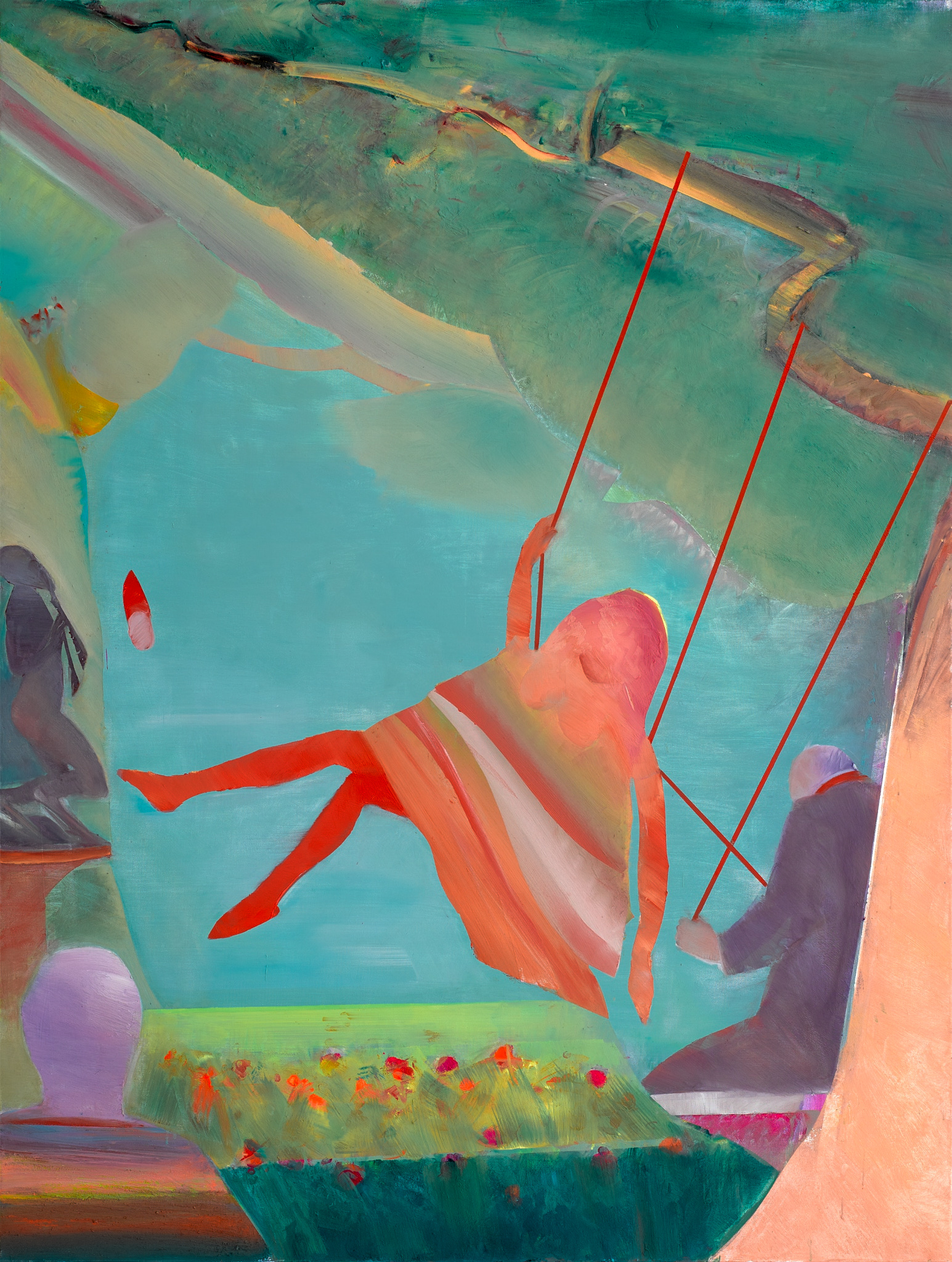
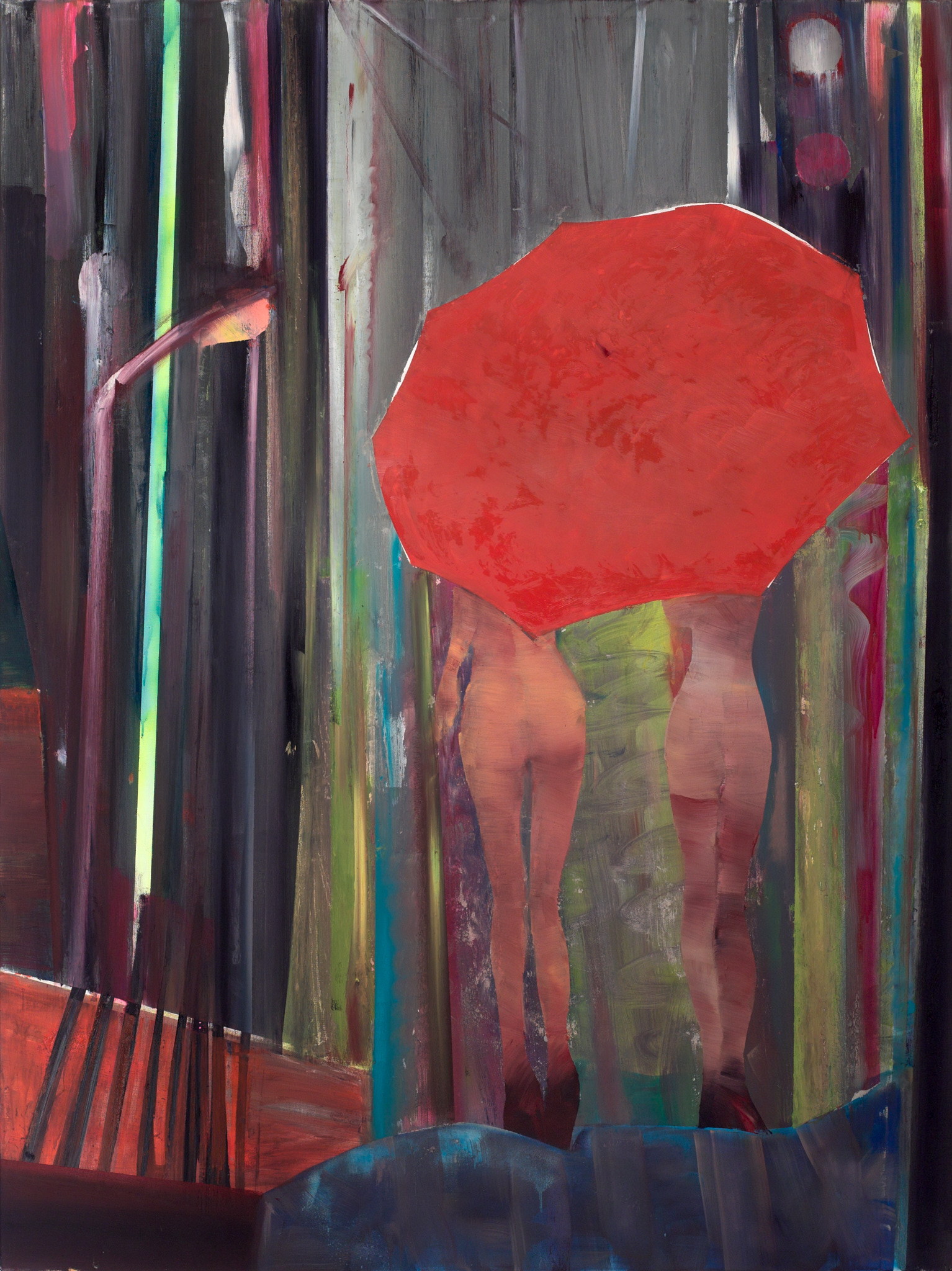
The interpretation of Fragonard’s Swing makes a voltaic arc between the libertine Rococo and the exuberance of the Swinging Sixties era. The stage director is ever present in the image, paying attention to every detail, every gesture, every scenography plane. This time, the gaze no longer carries deadly taboos, like in the mannerist imaginary, abandoning itself instead to the discovery of the whirling dessous, the eye being magnetically attracted by the sex appeal of the underwear. In the painterly space tensed by dynamic lines of force, Mureșan brings on stage the bell miniskirt, turned again into a dazzling character by its neon color. The new look imposed by the electric red erupts in the green vegetation, whose presence reminds of the rustling park of Antonioni’s film Blow-Up. The apex of the mouth-watering insolences is reached in the freeze-frame where the red shoe, thrown in the air right under the nose of the faun with the double flute, awakens, by a fit of laughter, the sleeping senses of the Greek and Roman Antiquity.
The Recourse to the Method. Pink is the New Black.
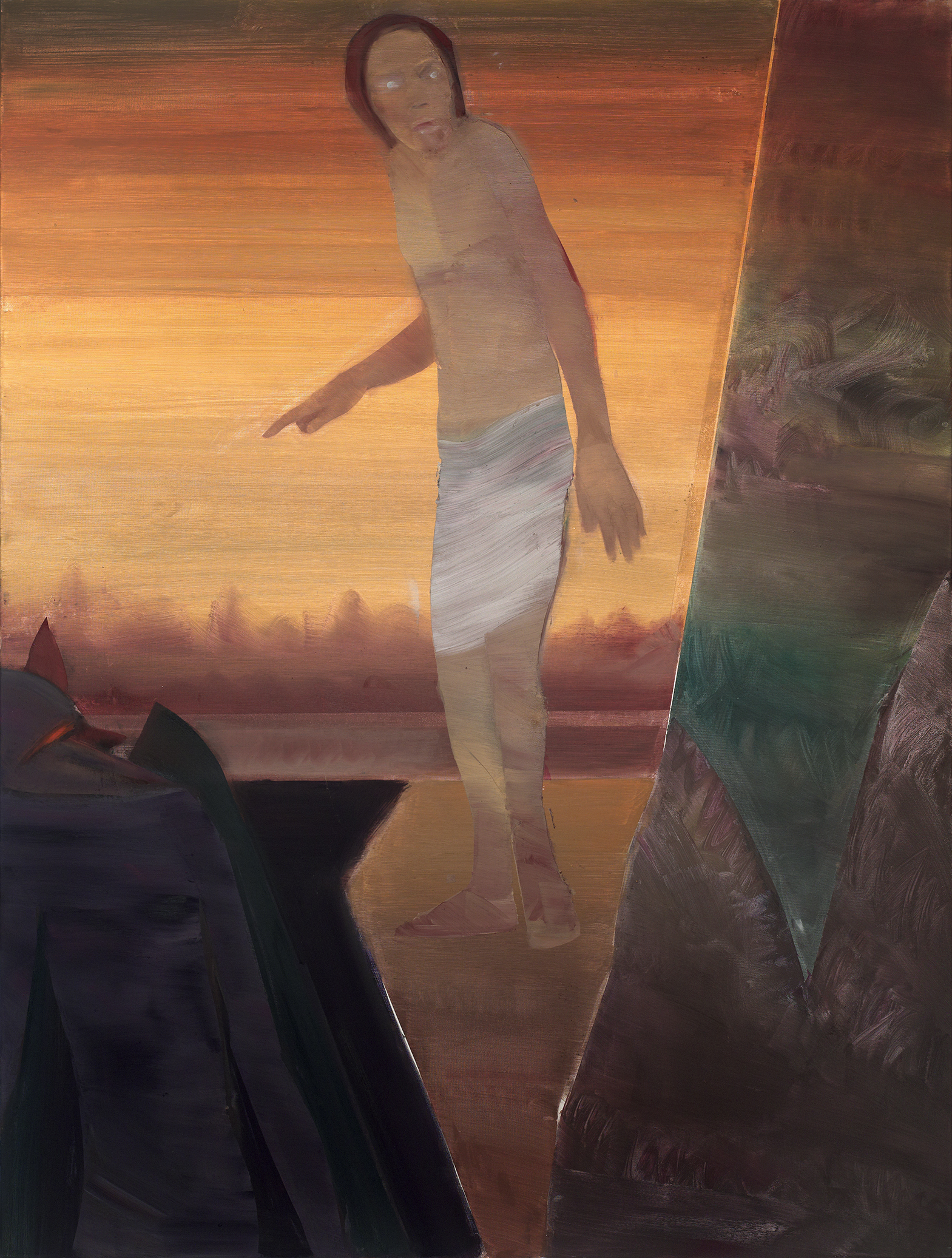
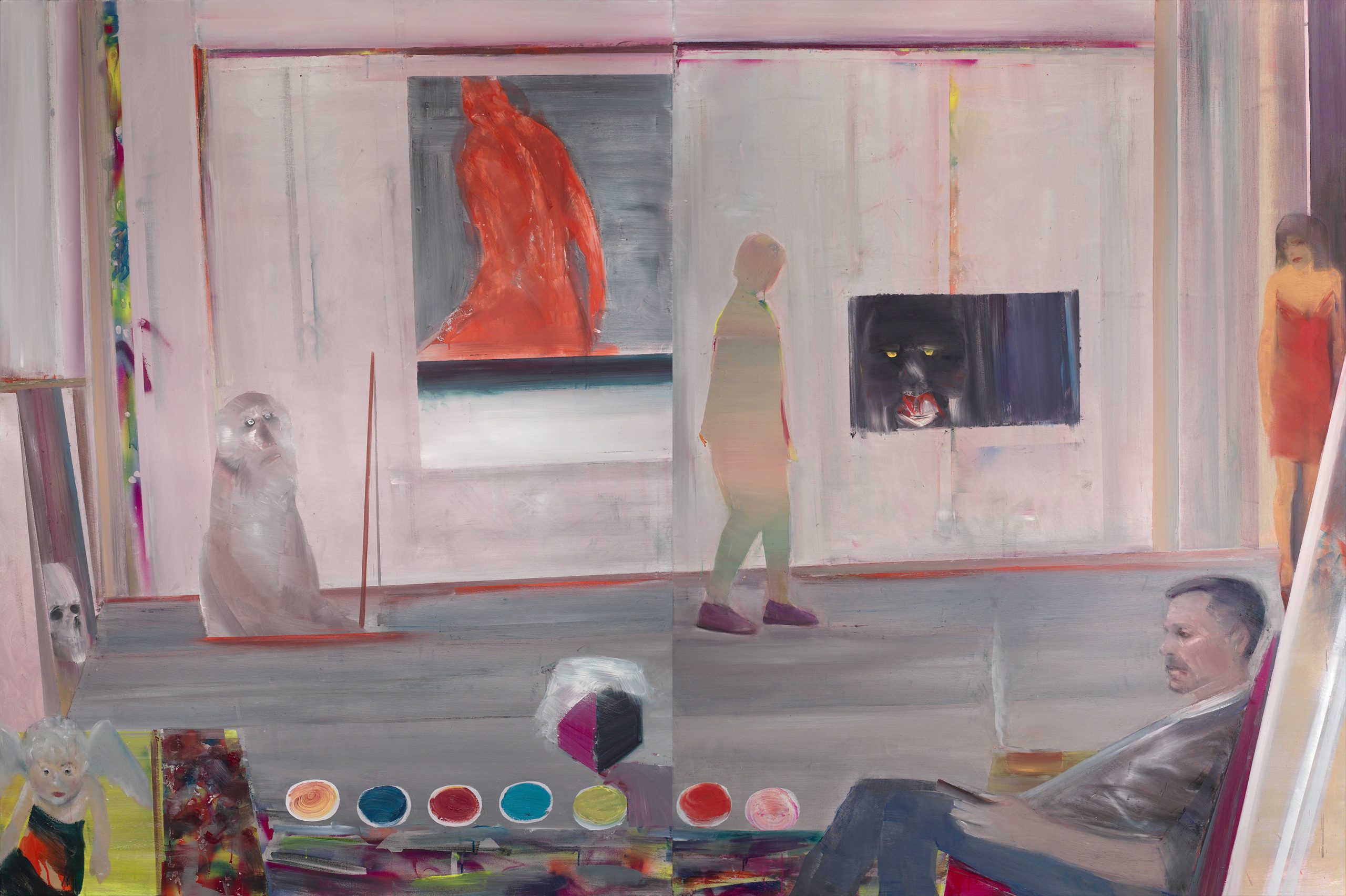
With Duchamp, the algorithm applied in the previous paintings becomes obvious. Duchamp quantifies the flux of movement, he freezes and objectifies it in distinct frames, emptying it of sensuality, but also amplifying it to the infinite through the repetitive rhythm. Thus, the image unveils its alchemy: the starting point is a d’après (photographic experiments, in this case), the process is one of cooling and fragmenting the image into suspended modules or units of time and space. The breaking of causal relationships by the fragmentation of the original image into freeze-frames, its re-composition in an exit formula to a new story, this time translated into a contemporary visual language. Pink is the new black. Mureșan uses this algorithm method to process the d’après into a flat design, irrespective of the chosen theme, ensuring the new image a sufficiently high enough grade of abstraction and, simultaneously, a sufficient grade of figurative seduction.
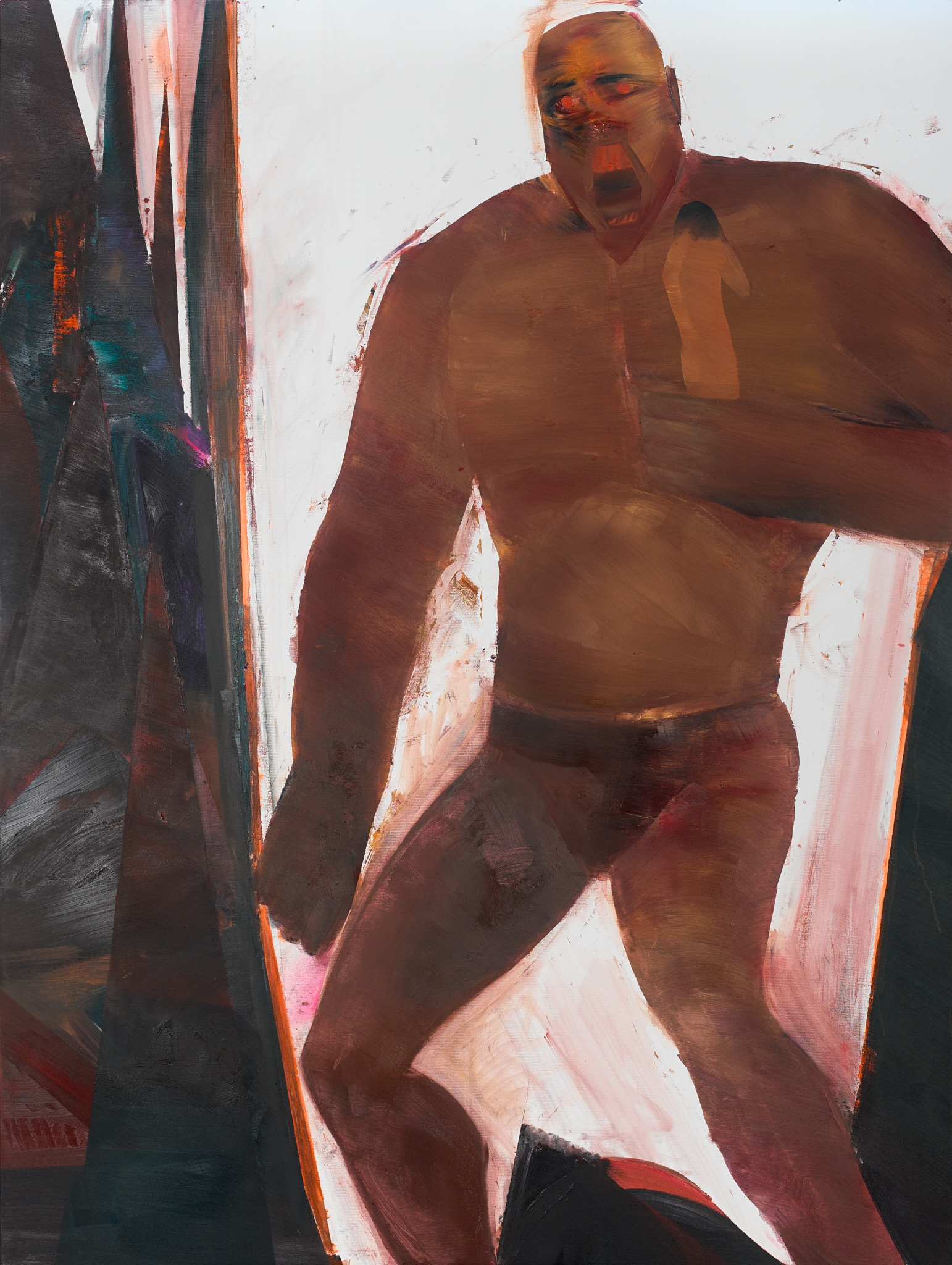
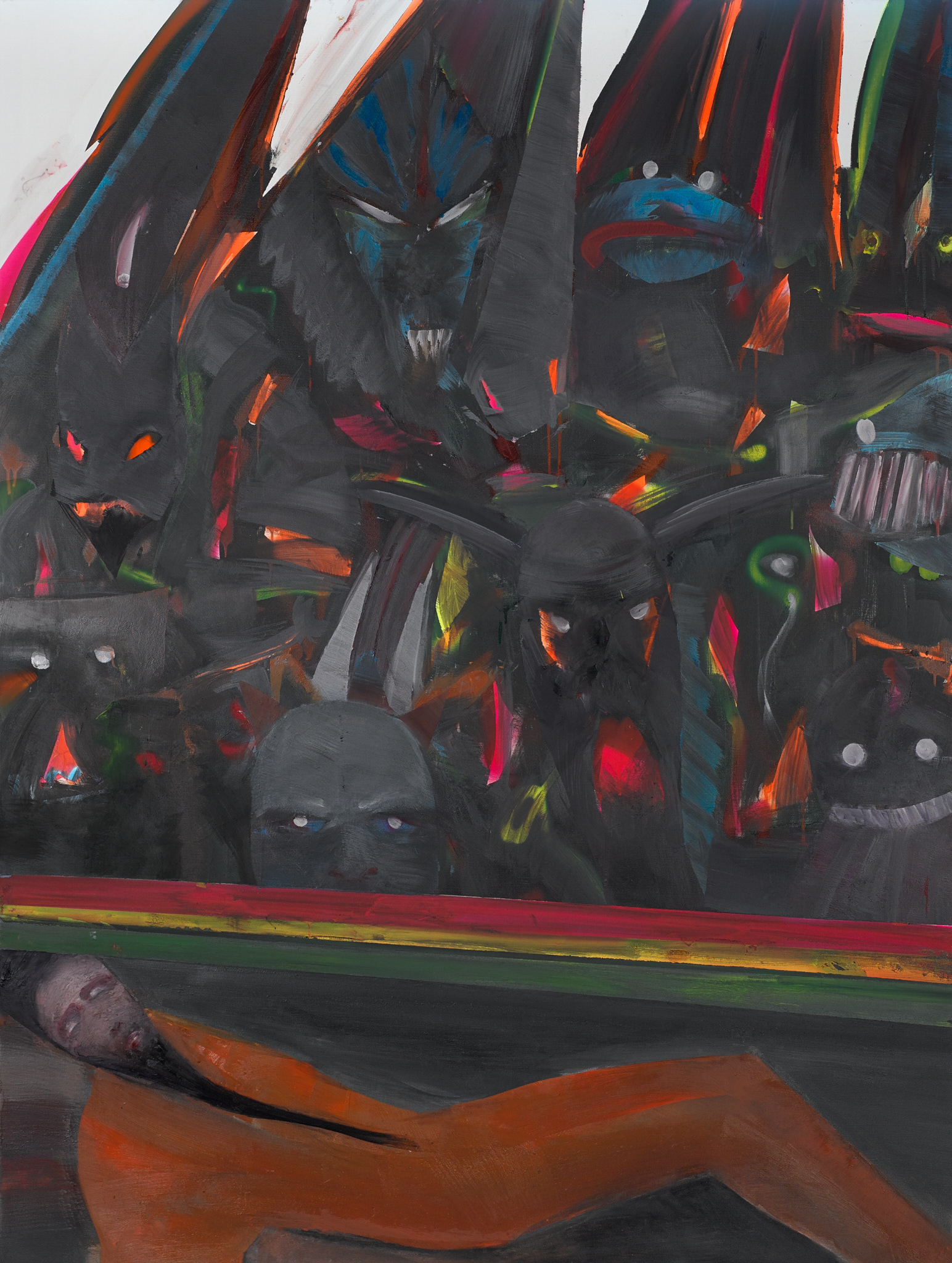
Nonetheless, undeterred by methods, models, and constants, his painting constantly breaks its own mold, sliding toward new worlds that show up from the darkness of others, even more deep, more unpredictable, more encrypted. The dark abyss where the images of the wondrous encounters with the Great Masters end could be the premise of a new adventure beyond the image”.