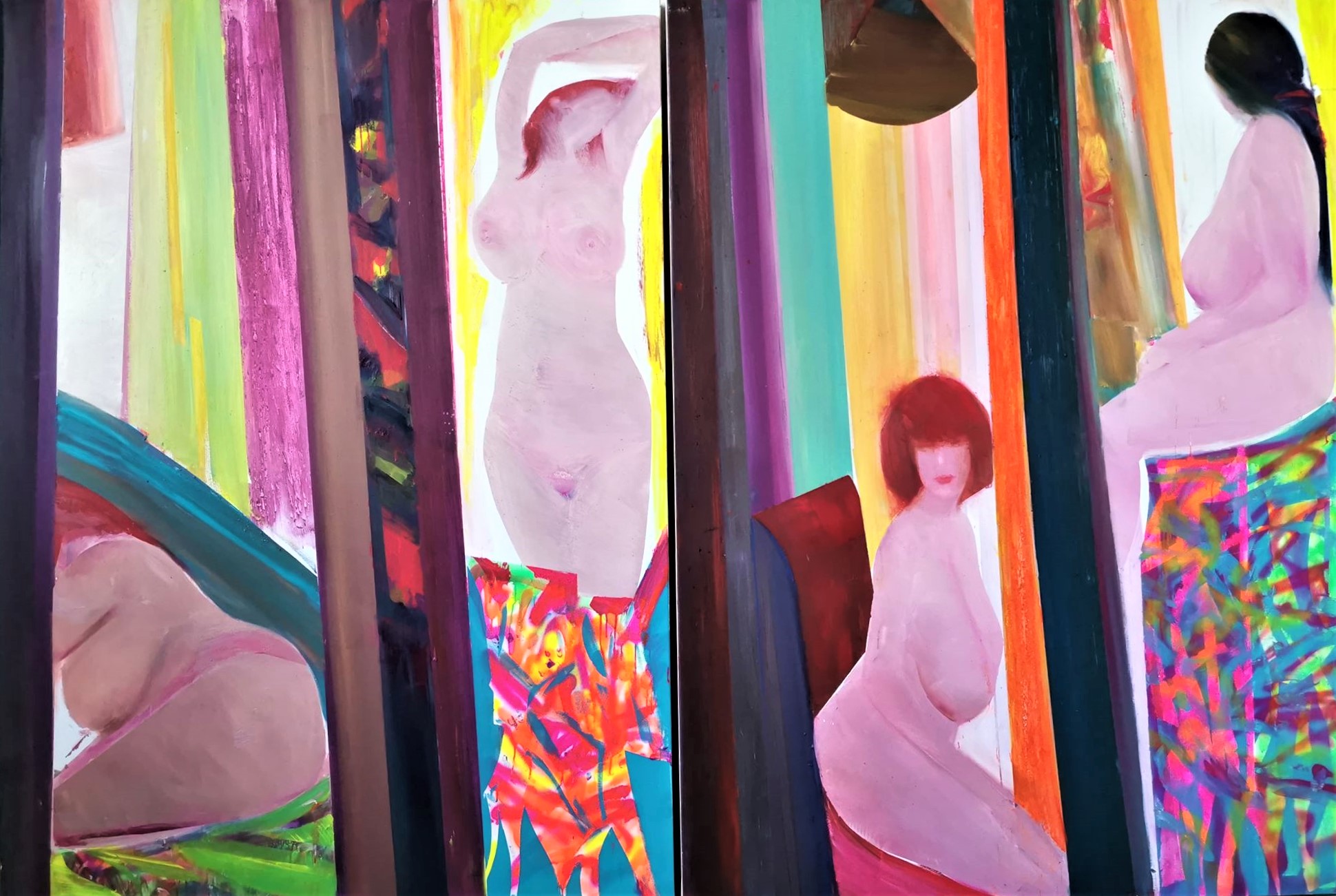
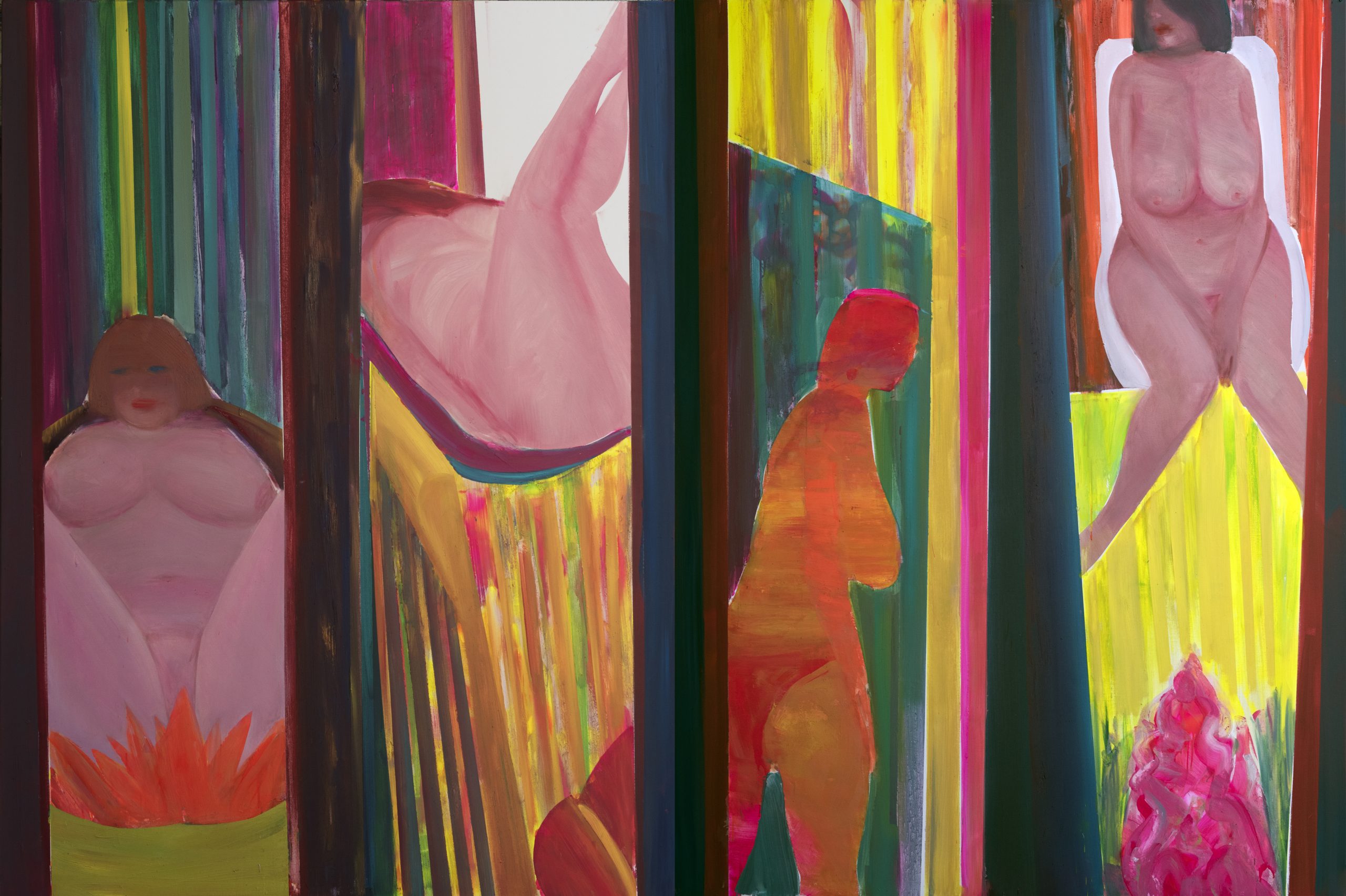
2018-2019: Erotikonia

Home » The work » Painting » 2018-2019: Erotikonia

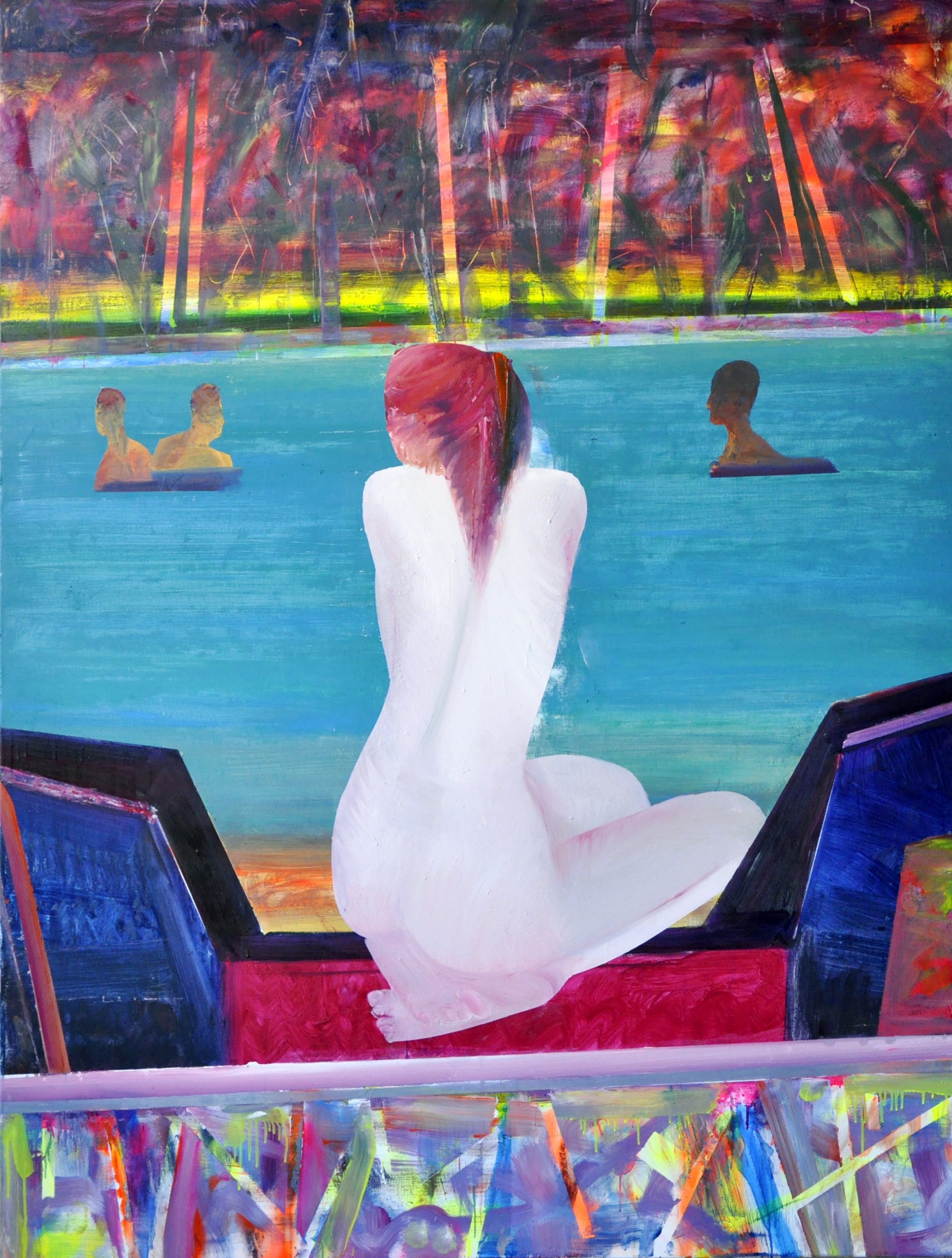
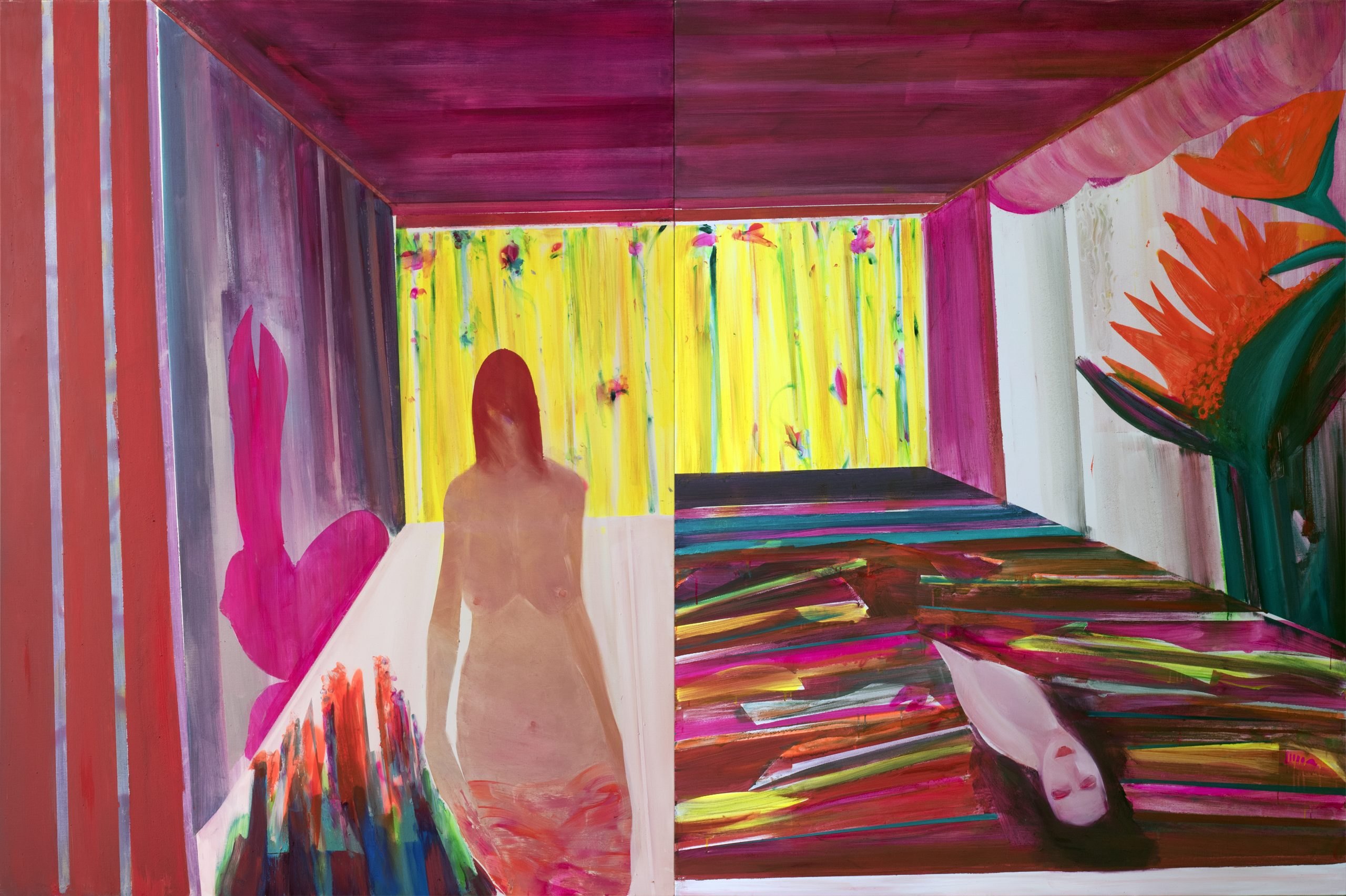
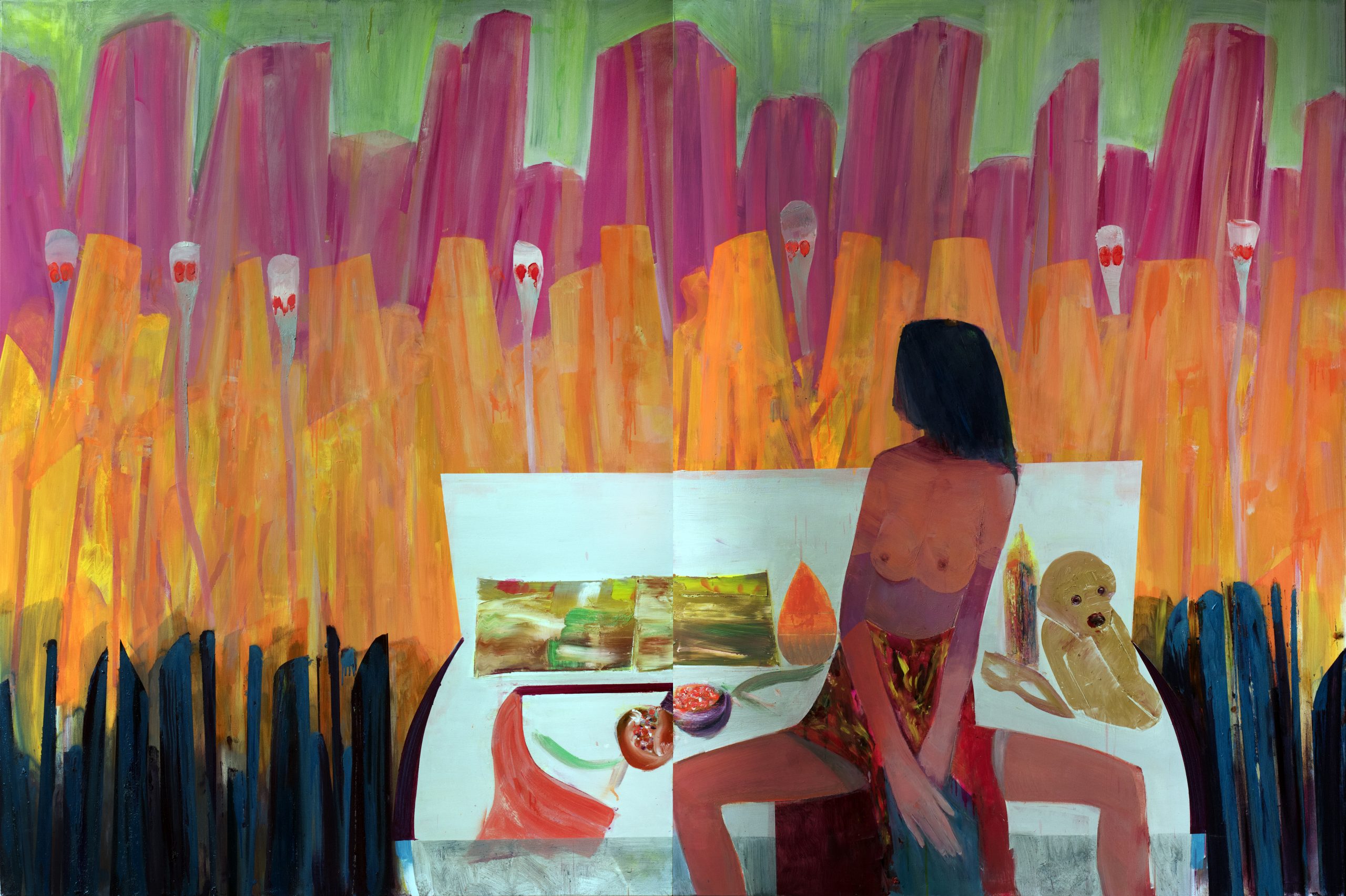
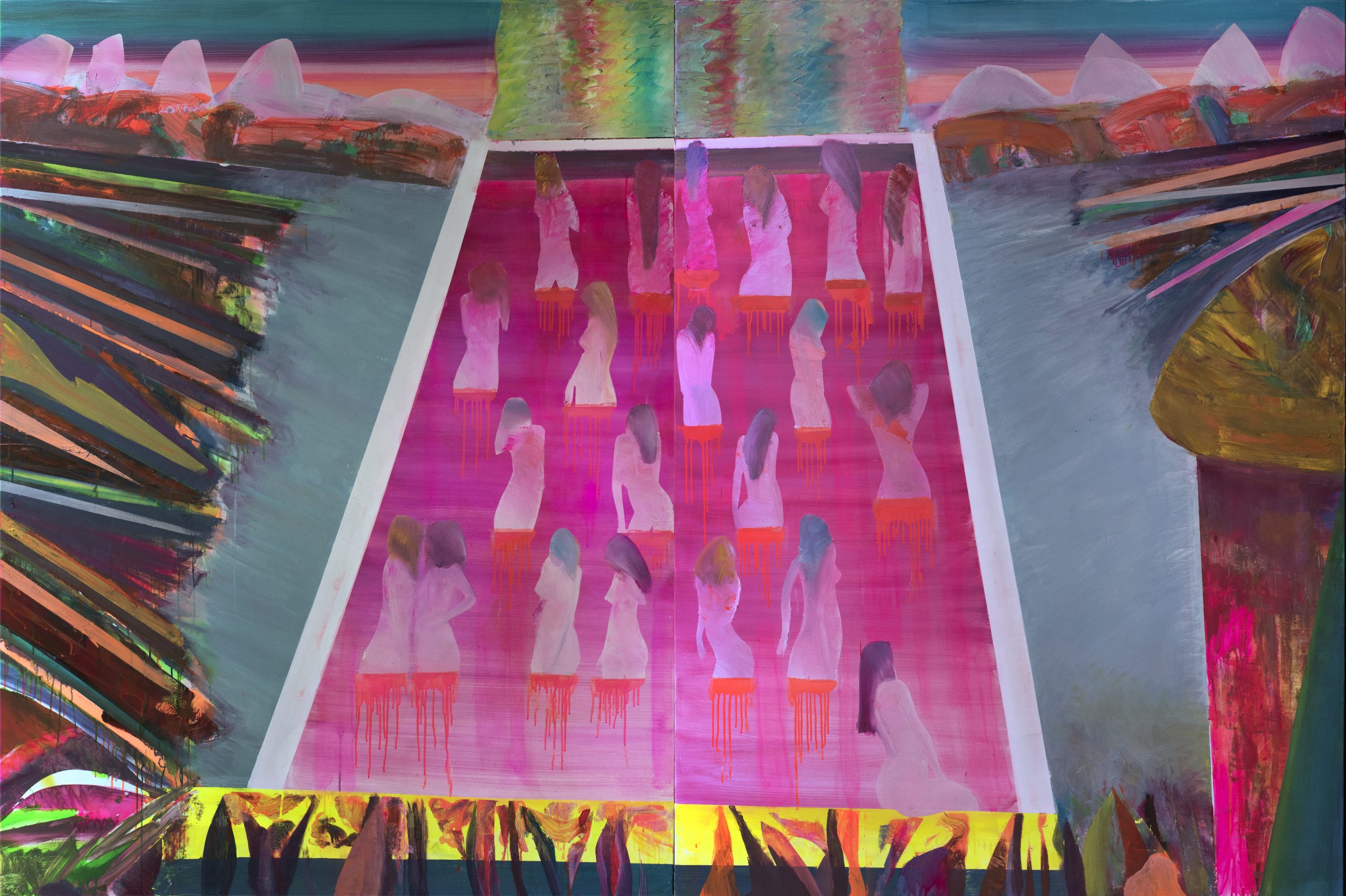
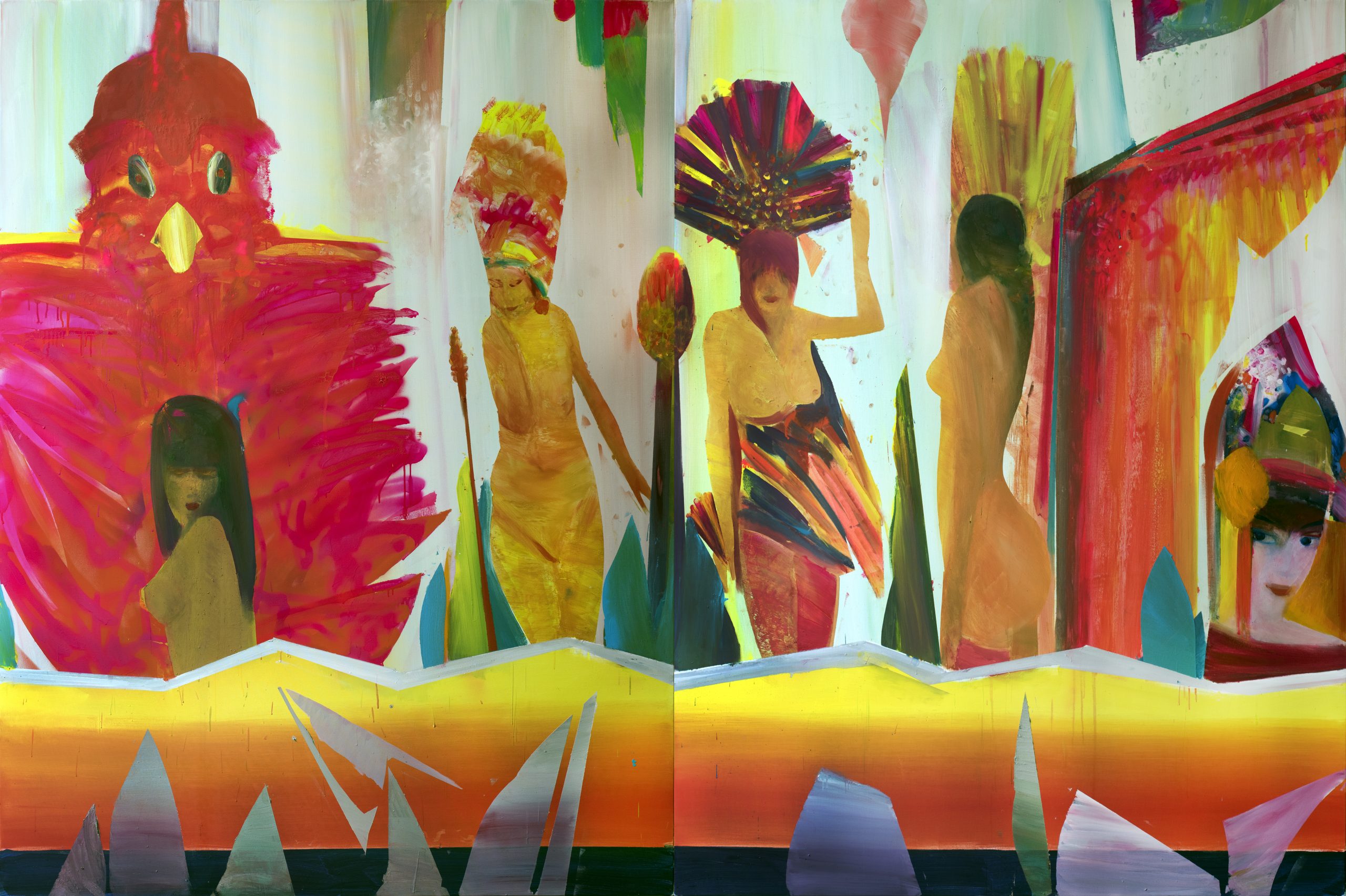
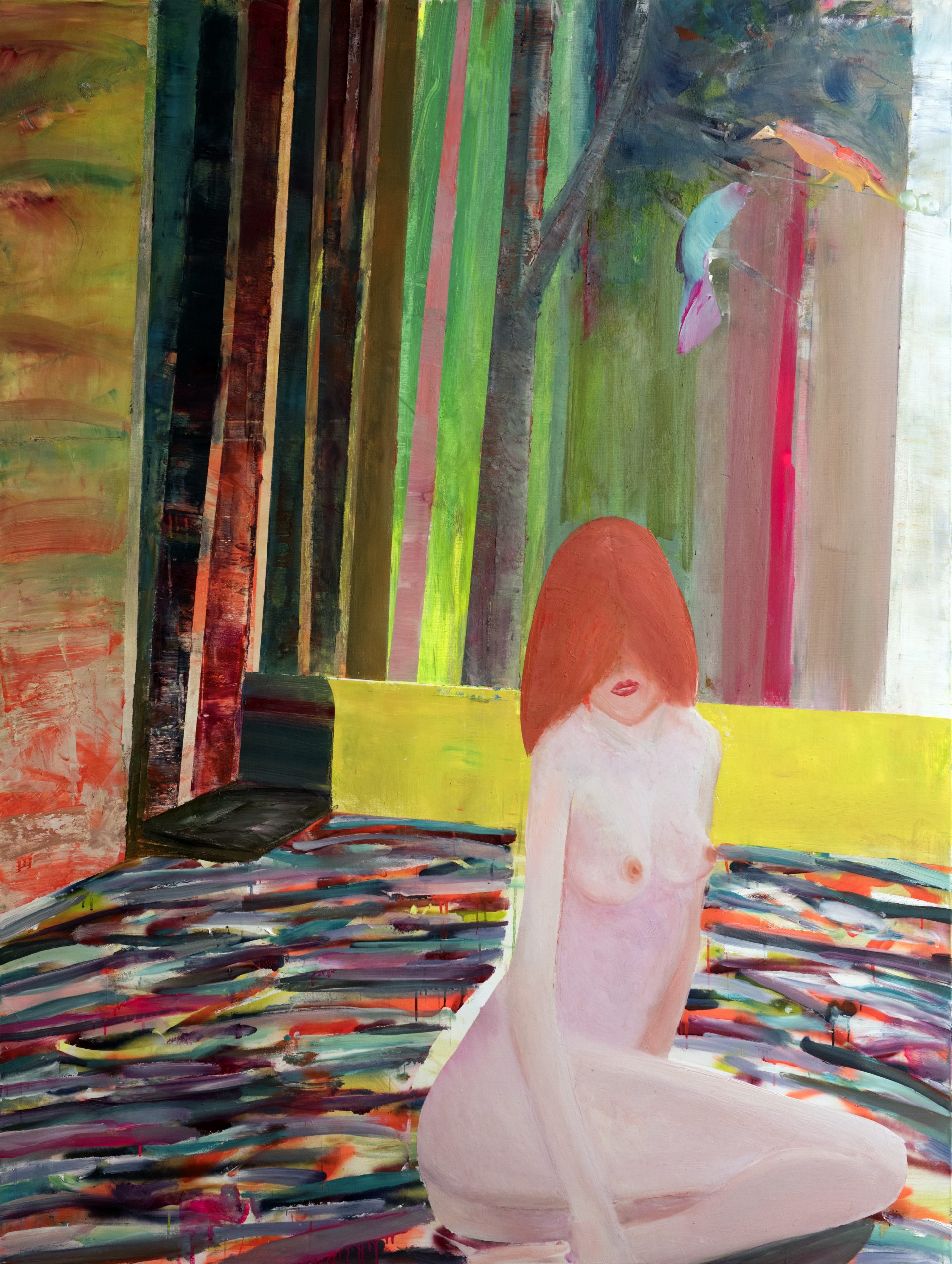
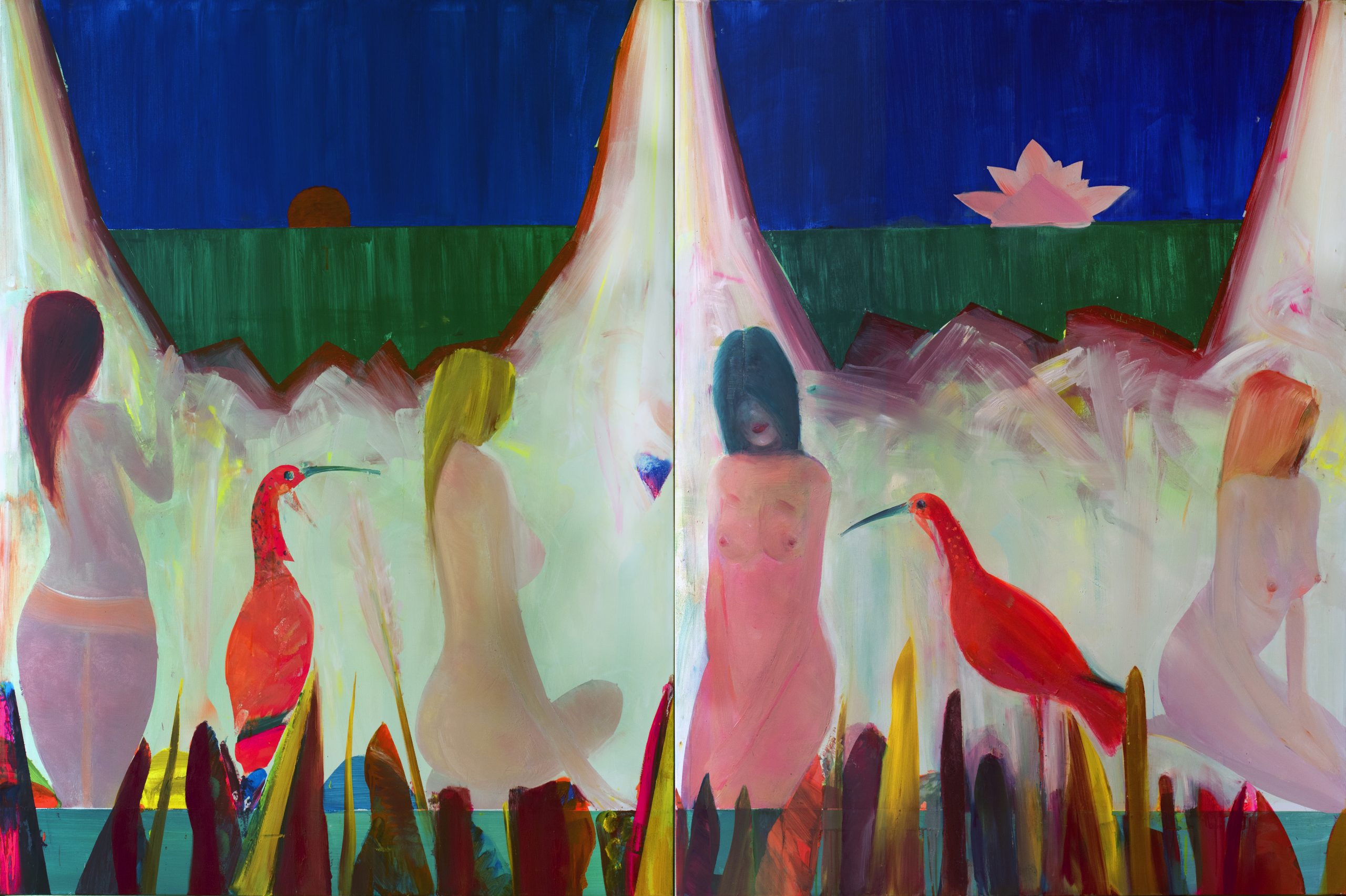
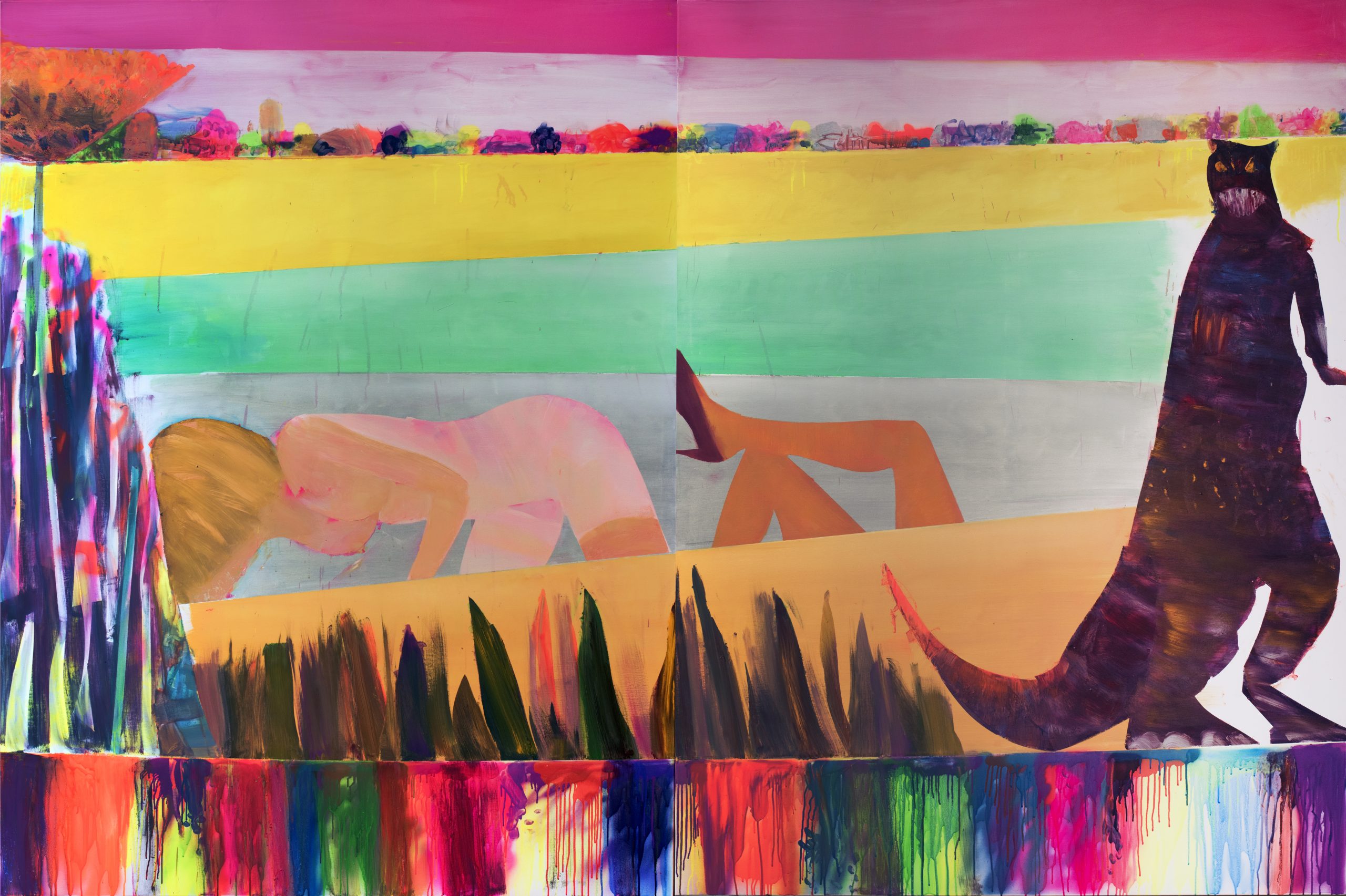
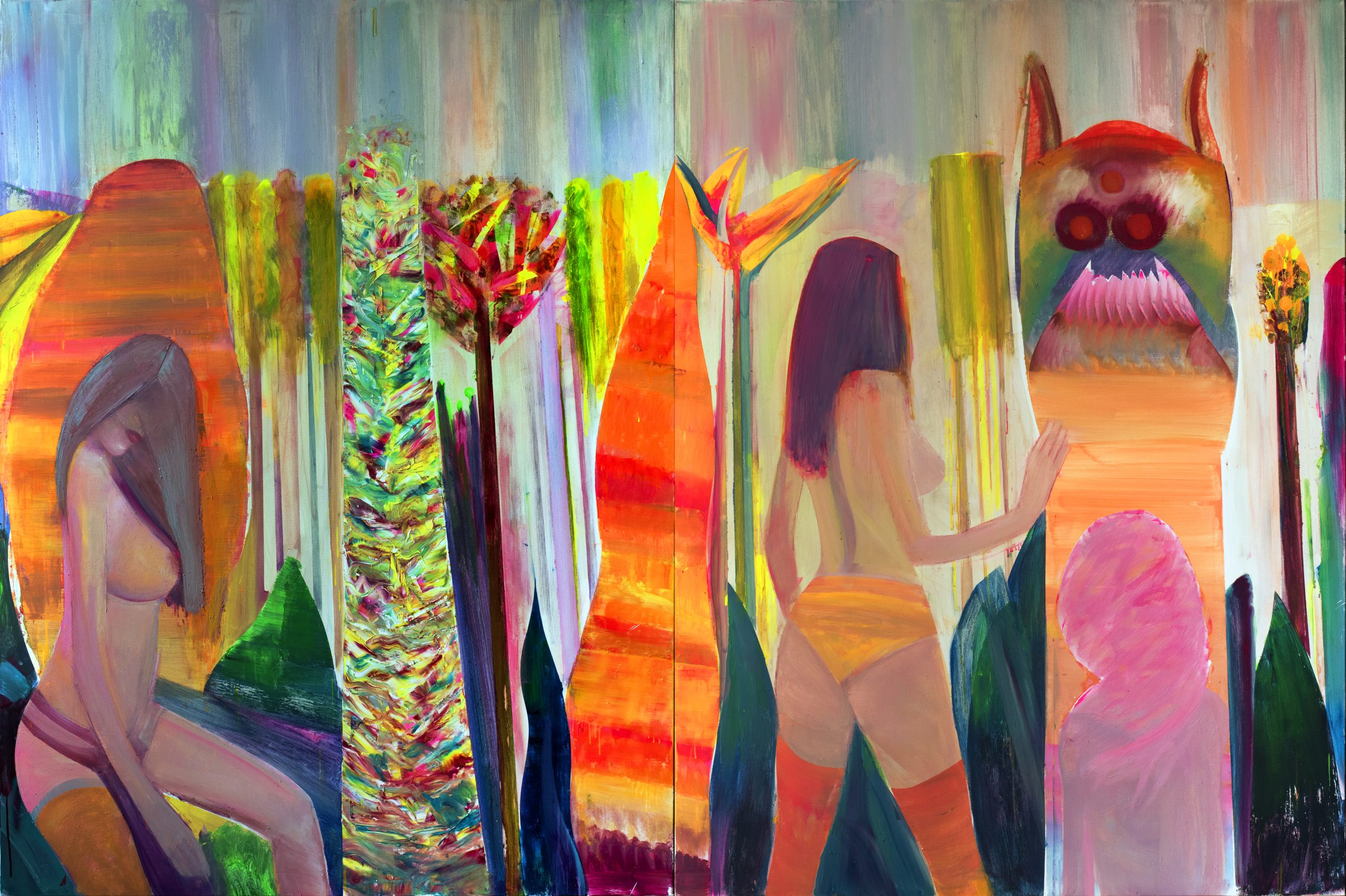
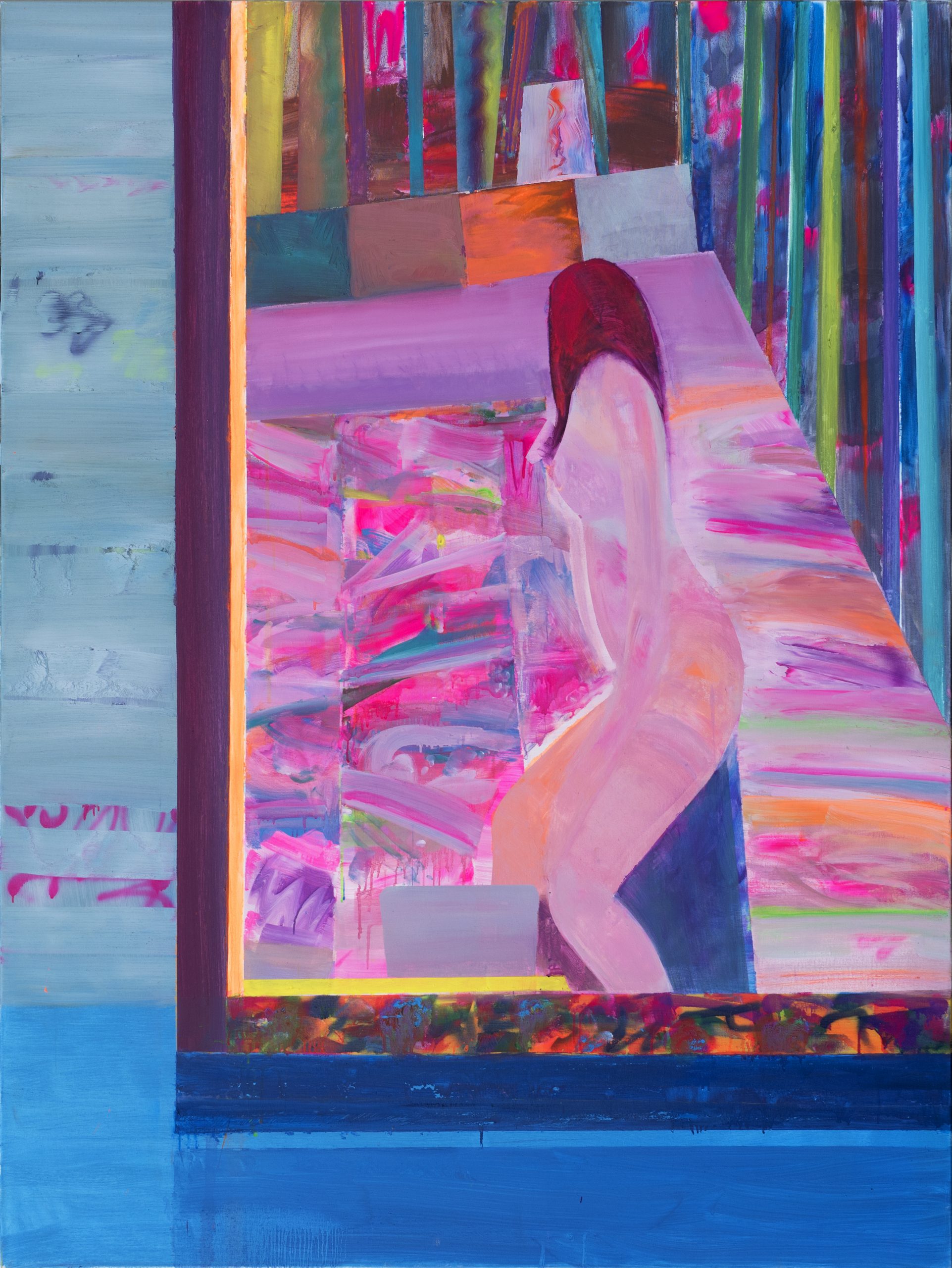
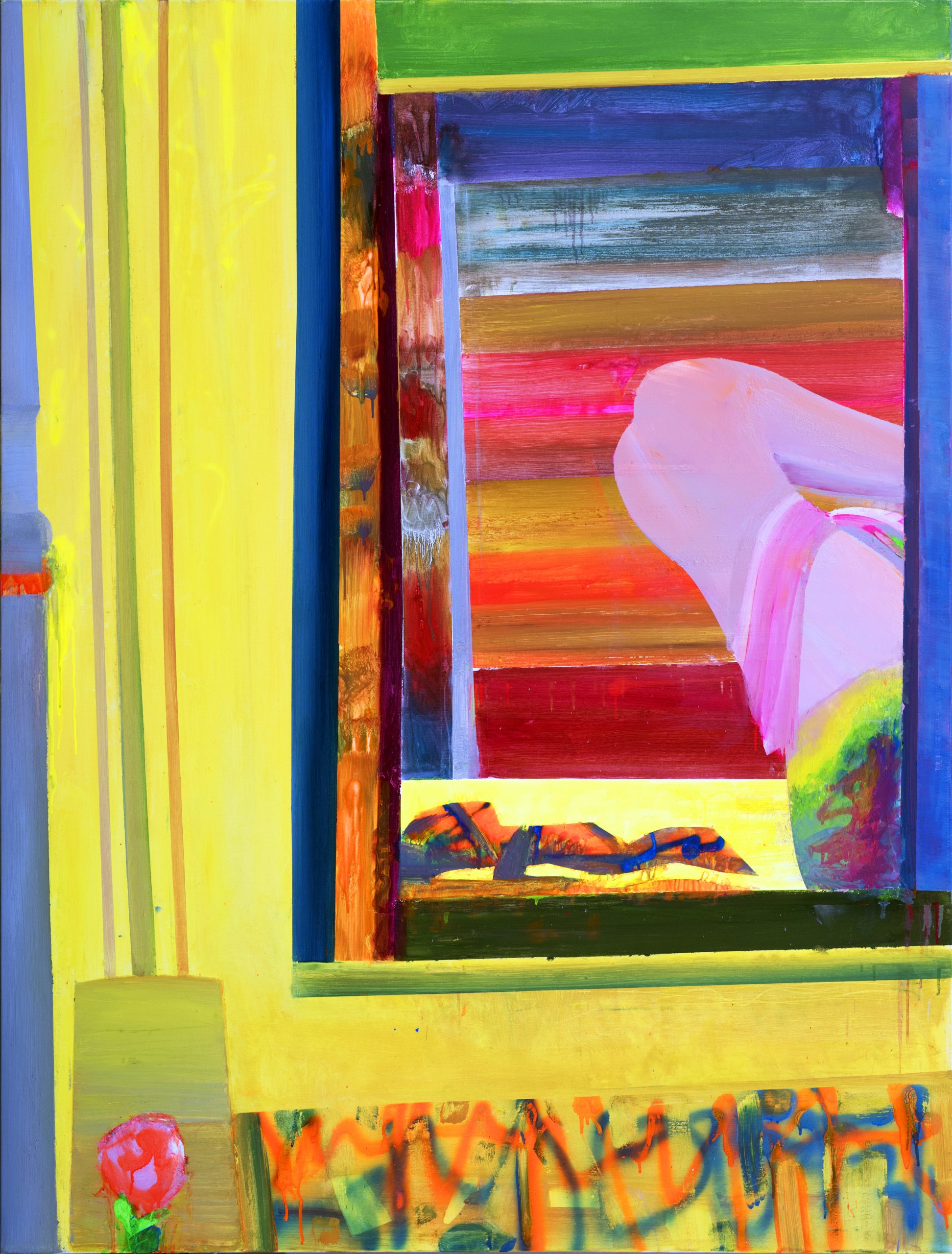
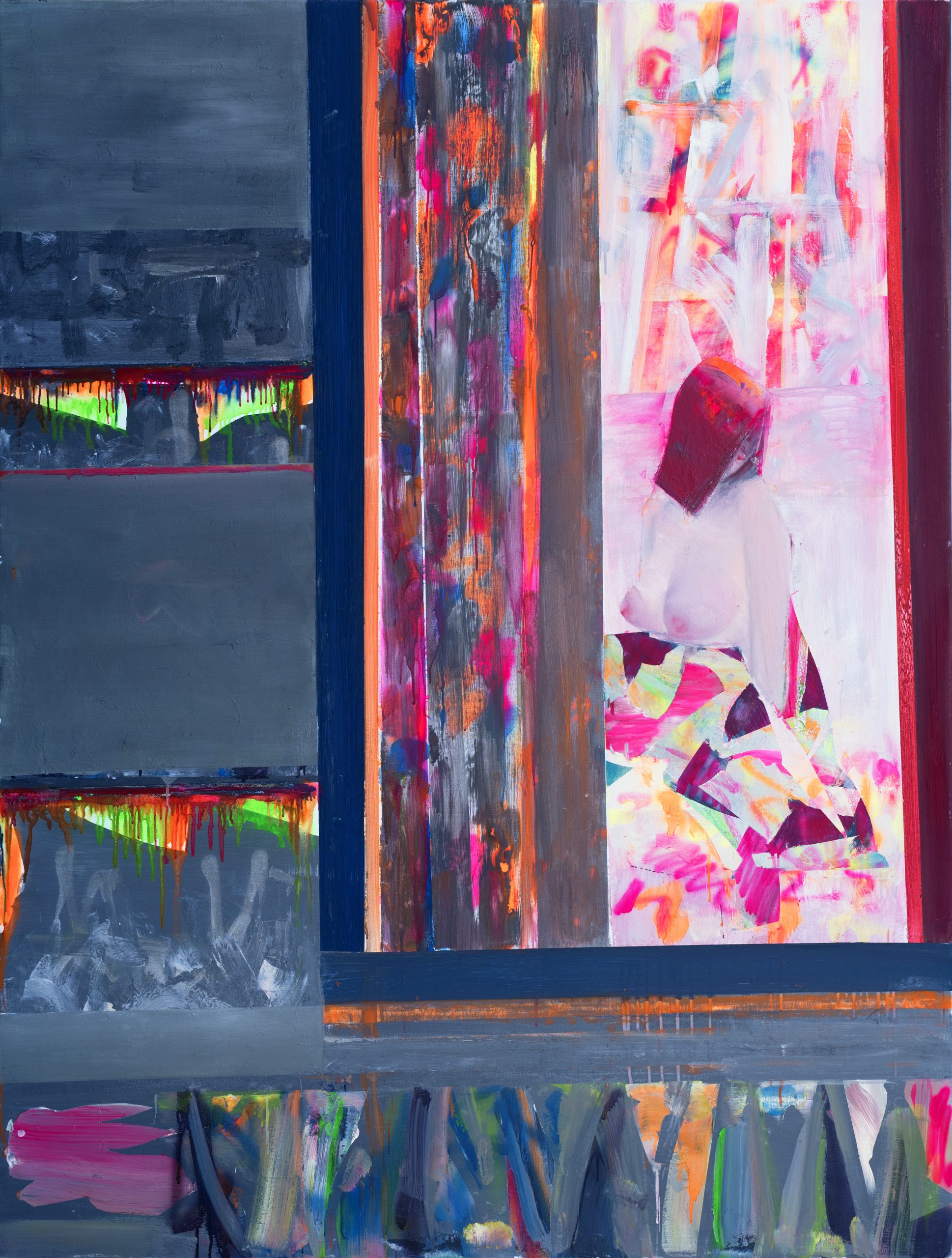
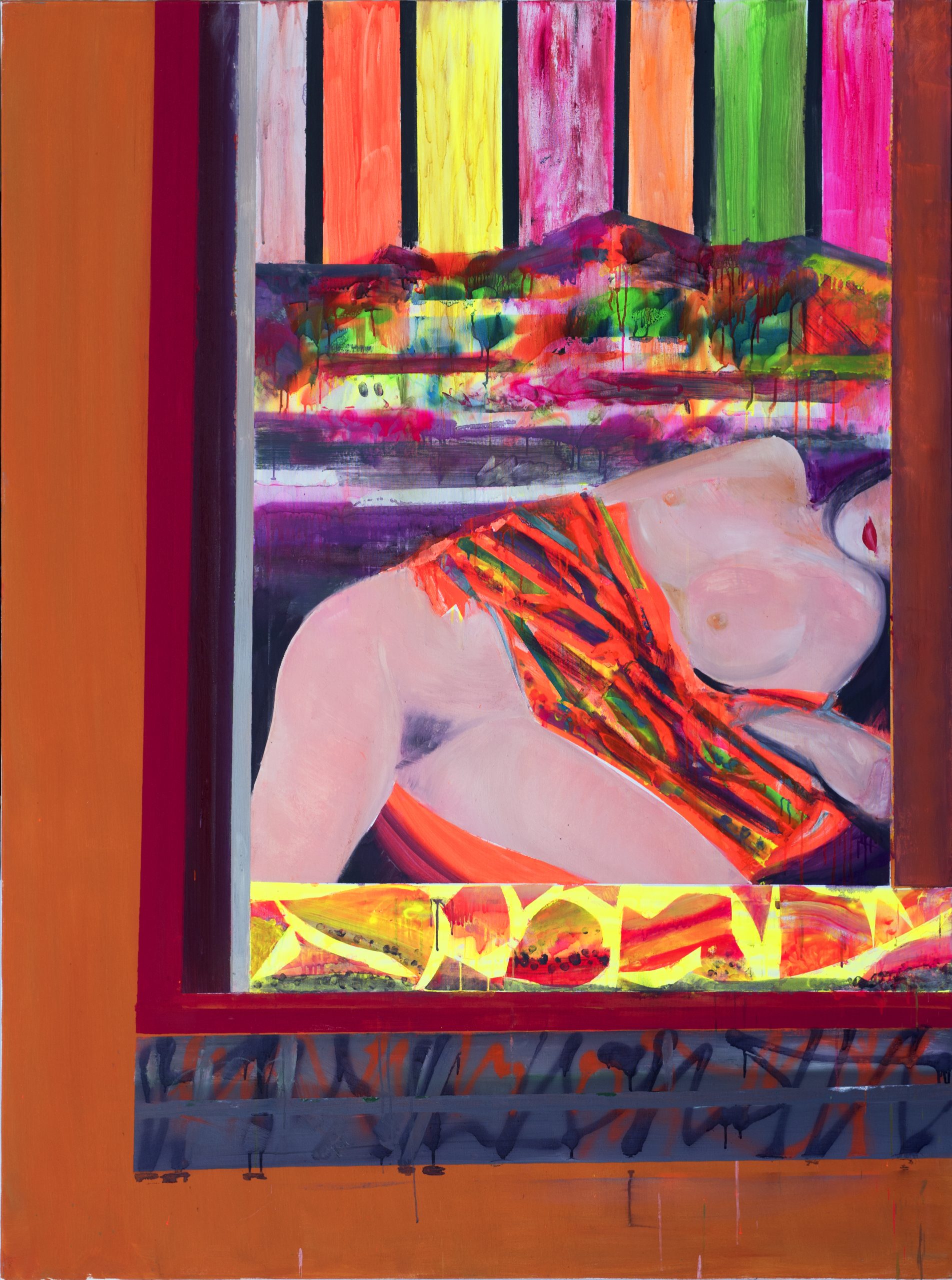
”Eros is the main character of this exhibition that glides between carnality and ideal, between voyeurism, diaphanous, and ingenuous with an easiness that only great artists are capable of. Freewheeling but rational, playing within and with his own imagination, but representing an entire cultural history, in Erotikonia, Ioan Aurel Mureșan gives an answer, in his turn, to a question once asked by Nicolae Steinhardt: “What today’s man hungers for? For love and meaning.” (see below)

Critical references
1. On Love and Sense

Aurel Chiriac

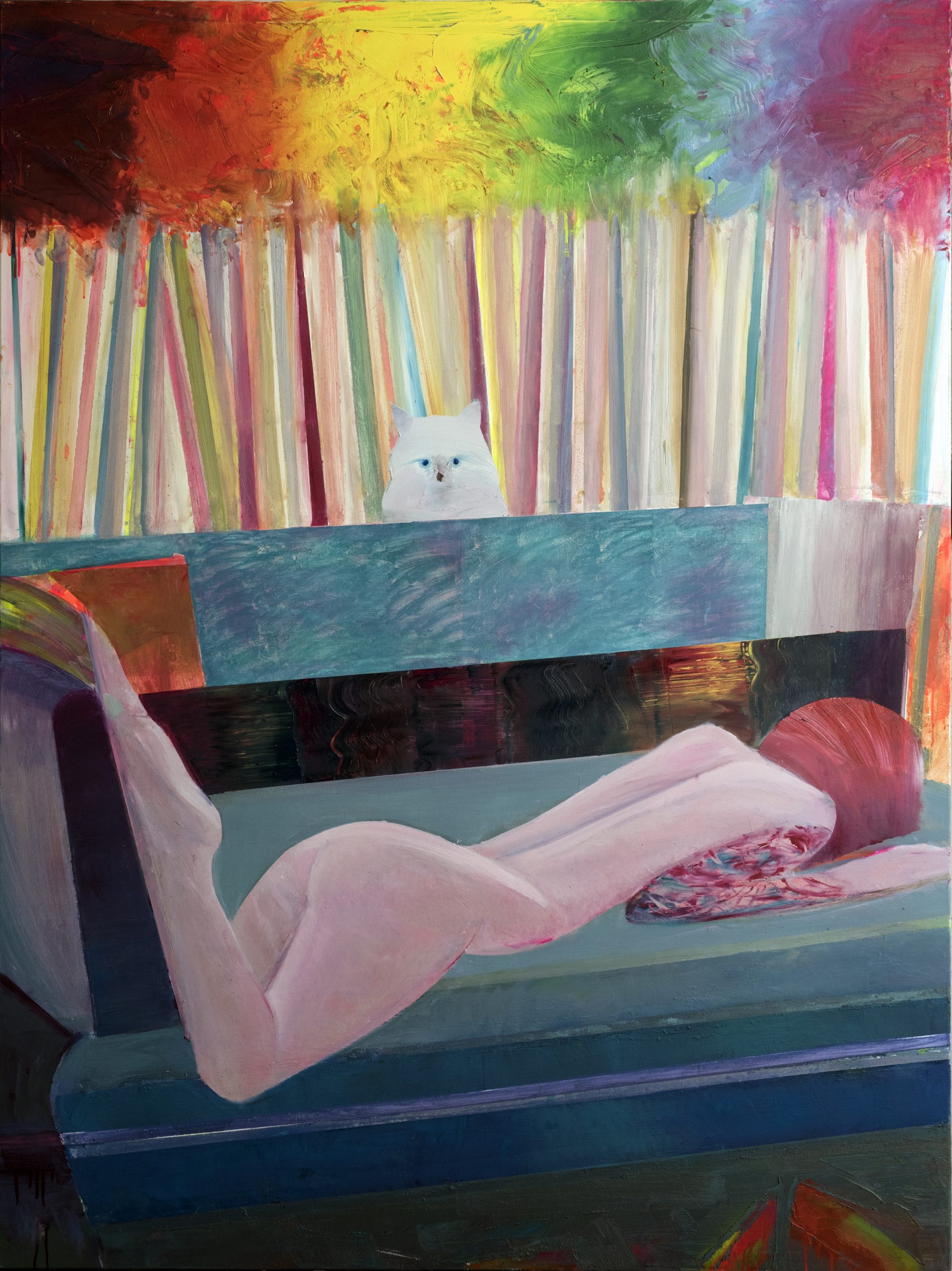
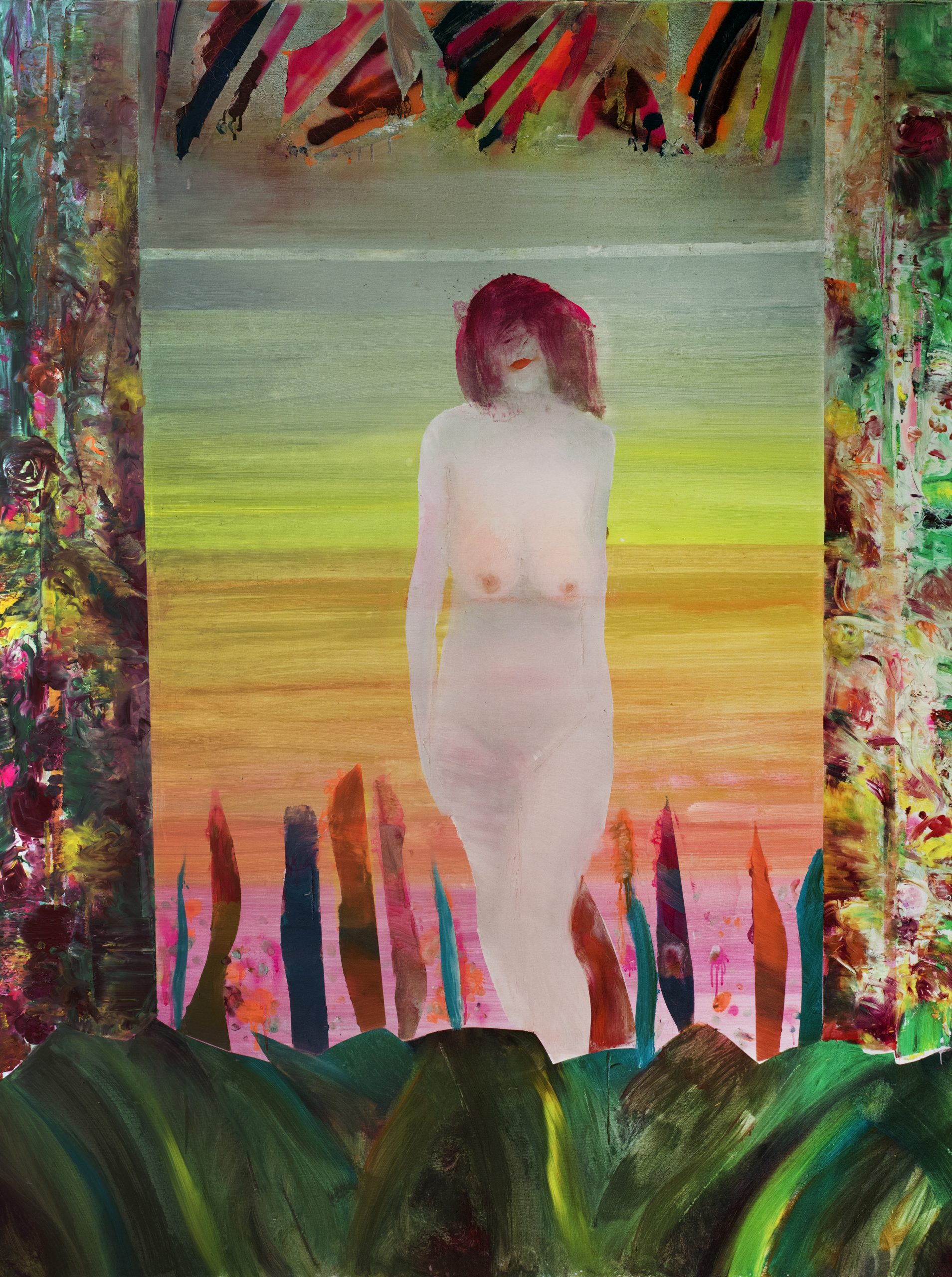
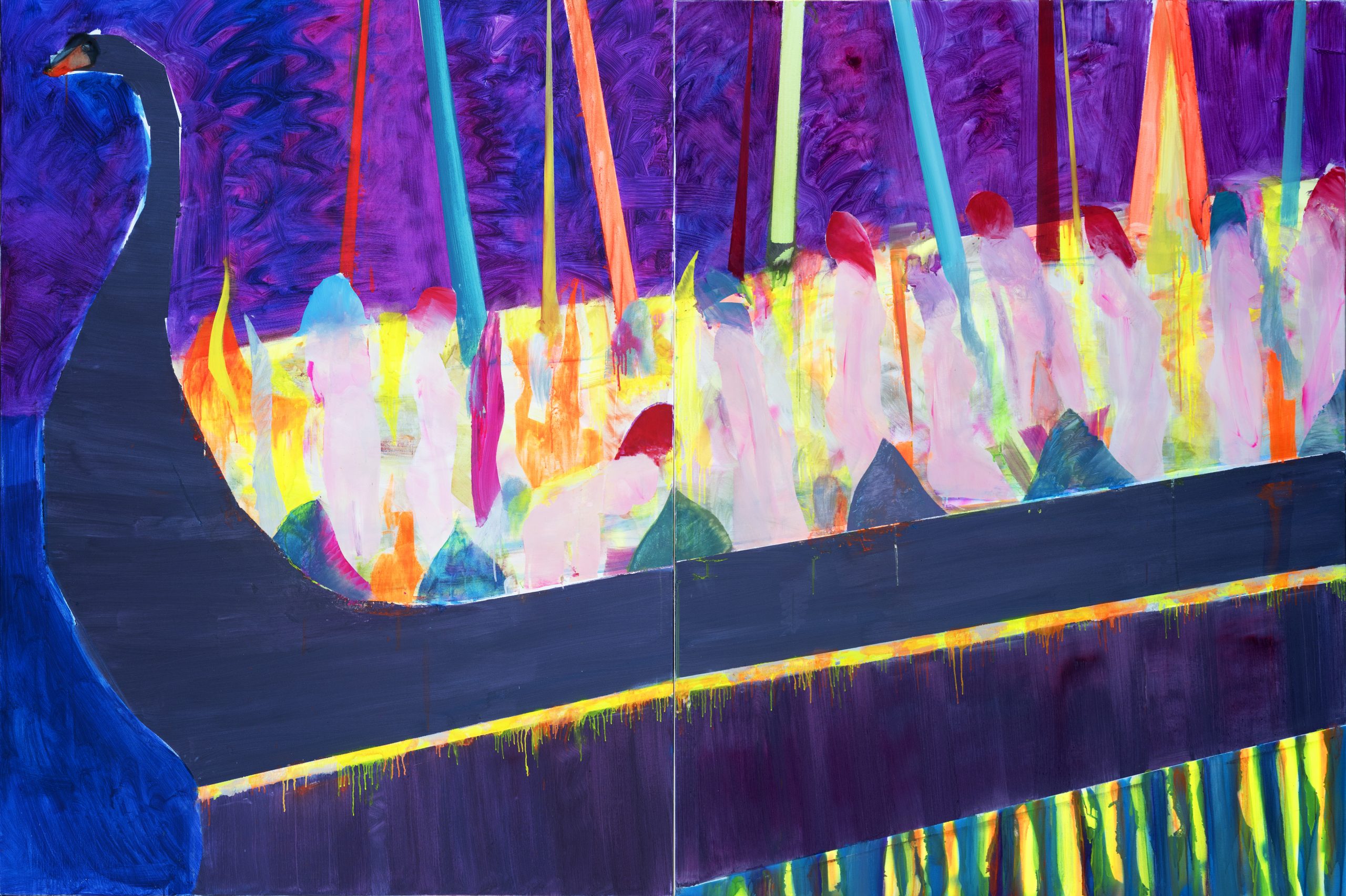
”Ioan Aurel Mureșan has a quality rarely seen in contemporary visual artists – he succeeds in hiding vast cultural accumulations behind his talent. Where others would get tensed up, he manages to handle things casually. He plays within and with the history of art, within and with the history of ideas with a nonchalance that combines certainties and obsessions, essentialities and ostentation, psychological finesse, and ideation solitudes. Each of his artworks is, in fact, a recourse to the entire story of the visual arts. Identifying this constant appeal to what had been going to be is part of the charm of any approach to Ioan Aurel Mureșan’s work. Simply by noticing the titles of the artworks from this exhibition, you realize that some sort of cultural legitimacy is an important constituent part of its message. The Hetairai series brings to mind the Ancient Greek sculpture, going up to Hetaira by Pablo Picasso; La belle jardinière reminisces the work with the same title by Max Ernst; Baigneuse, again to some of Picasso’s paintings; Other Voices, Other Rooms is the title of the debut novel by Truman Capote; The Persian Divan makes you think of Montaigne but also of Cantemir and Sadoveanu; to say nothing of Hure Thallo, a wordplay, which would translate as the Whore Spring, while the Foundation of Youth’s direct reference to Cranach the Elder is made by the author himself. This cultural agglomeration, this abundancy could easily slide into demonstrative, into ideating mannerism, have not Ioan Aurel Mureșan had the capacity to always place them on a secondary plane, to mask them, to transform them into “shades” of the painterly space and mere footnotes of a poetics and of a highly individualized poietics. In other words, it is a game of the history of art, by simply making art. I use the term game (as it was defined by Huizinga) because I find it very close to the spirit of the artist: the game means freedom, it’s something different from the nude reality and, above all, it puts things in order, brings order, even if, in Ioan Aurel Mureșan’s case, it’s an order of a space of the imagination. This flirtation with the cultural order and its civilizational structures translates into an easily identifiable visual show: the artist knows how to create, in visual propositions perfectly balanced, what I would call purifying illusions. The relocation of the feminine body from the grotesque of animality and its (re)turn to the size of the Eros means nothing else than the contamination with diaphanous of the world.

Human body, chimeras, impulsions, imaginary, diaphanous, game, landmark: these are concepts without which you cannot approach Ioan Aurel Mureșan’s art. He has entitled his exhibition Erotikonia, made-up name, with a wide-open semantic palette, as both constituent words are carrying extended meanings – both terminological and cultural: Ἔρως – desire, love and eἰκών – image, drawing, depiction, figure, icon (εικόνα) but also chimera, imagination, apparition, mirage. “The imaginary force of Eros is so strong that it structures almost all symbolic forms of culture”, confesses the artist. This is exactly why the latter meanings indicate the struggle against the limit the artist is involved in, in an attempt – both obstinate and condescend at times – to escape the real, the attempt of an existential escapist striving to break away from a here and now too cynical and too devoid of sense, void of meanings, and a-cultural. From imagined worlds (the above-mentioned constant recourse to the history of art), he manages to build a world in his own imaginary. In fact, he appropriates the collective imaginary as his own good.

In Ioan Aurel Mureșan’s view, the feminine body has two archetypal qualities: desire/offering (the transformation of sexuality into Eros) and the annihilation of the instinct of death, a clear anti-thanatotic dimension. Painterly, these are endowed with the charm of the individual real at a time when we are trying to survive the “desert of the real itself”. You cannot but ask what sphere of meanings the representation of the feminine body can occupy today when the assault of nakedness in all its forms seems to have won the battle for good. We are not talking here about morality and immorality, but about quantity. Does the feminine body hold any more mysteries, does it still have a meta-language that has not been deconstructed by an entire industry of lascivious abandonment? Is it still an interval between us and something beyond us? Ioan Aurel Mureșan’s Hetairai are this very interval, this passage to something else. The painter joins the ranks of those that Henri-Pierre Jeudy was talking about in Le corps comme objet d’art, of those that persist in “holding the original enigma of the body”, persistence that contains the faith in an ever-possible short-circuiting of the stereotypes, allows the perpetuation of the illusion of deconstructing the interpretation models by the covertly return of the cultural heterology of the images of the body. Thus, the body remains the pedestal of aesthetic idealism.

A heteromorphic view of the feminine body is also what Ioan Aurel Mureșan advances. The same body-substance can “crystallize” differently, depending on the visual and cultural characteristics you are endowing it with. Why has the painter chosen the hetairai as main theme? In Ancient Greek, ἑταίρα meant companion. Today we might call them escorts, but it wouldn’t cover the whole original meaning. In Ancient Greece they were offering not only bodily pleasures. They formed a class apart, of educated, cultivated women, able to carry a conversation on equal terms with men. Apparently, they were free women, that managed to be self-sufficient. The masculine hetairoi referred to the groups of men from the elite that took part in the notorious symposia. Its feminine counterpart could not designate simple prostitutes. In the end, it is a visual attempt to restore the rights of the feminine body, with all its attributes, from the simple visual show, going through seduction to the proximity of the revelation. The task is not at all easy, if aberrant ideologies try to rob the body, and particularly the feminine body, of, not much so the mystery, but the sacred dimension it has always had. A sacred dimension which, rigorously speaking, the entire culture is founded on.

Henri-Pierre Jeudy was also noting: The universal principle of recognizing all cultures is sustained by the reference to the sovereignty of the body. . . The body was assigned with the representation of the concept of culture. It serves as an “authenticity certificate”. Ioan Aurel Mureșan is returning to the sublime, to perfection, to enchantment, to spell, even if, apparently, only in a space of the imaginary. The erotic imaginary, ruled by Eros and not (only) the root of carnality is unlimited and open to all the spaces of the culture; it is also a passage between the profane and the sacred, fact that we know already from Platon’s Banquet: Love . . . is intermediate between mortal and immortal . . . a great daemon. . . The entire world of the daemonic is intermediate between divinity and mortality. With obvious psychoanalytical reflexes, Ioan Aurel Mureșan is crediting the Hellenistic tradition according to which Eros is a germinative and driving force, that both creates and perpetuates the things in this world. Visually, there is nothing able to express it more concretely, to contain its essentiality than the image of the feminine body. Eros is a force that “is guiding everything”, a moving prime, a driving force, as I said, obviously forged on a sexual model. Eros is the one that is incessantly conceiving in that space of transition between the material and the immaterial (today we call it imaginary, the Greeks had named it soul) where beauty emerges.

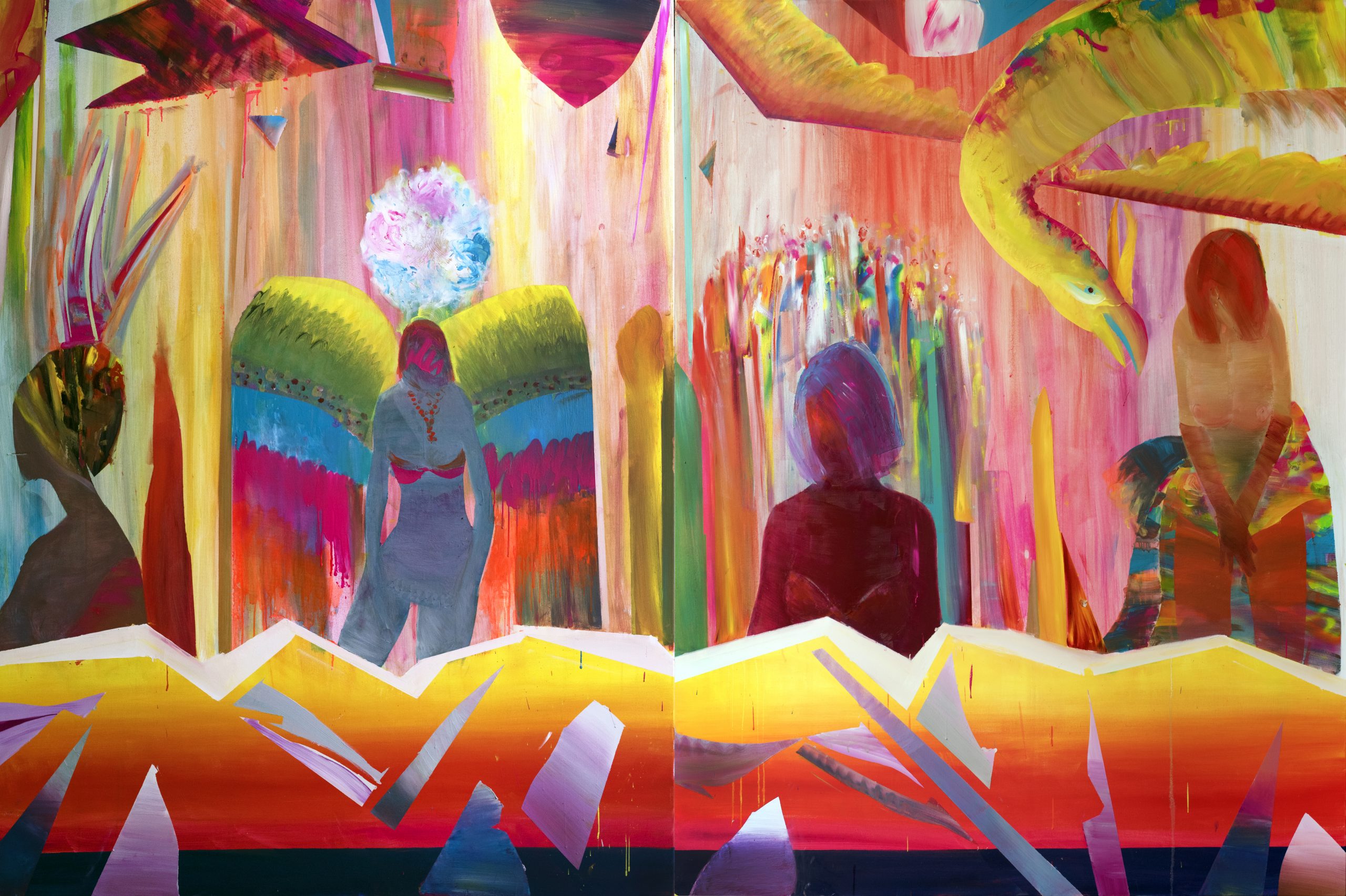
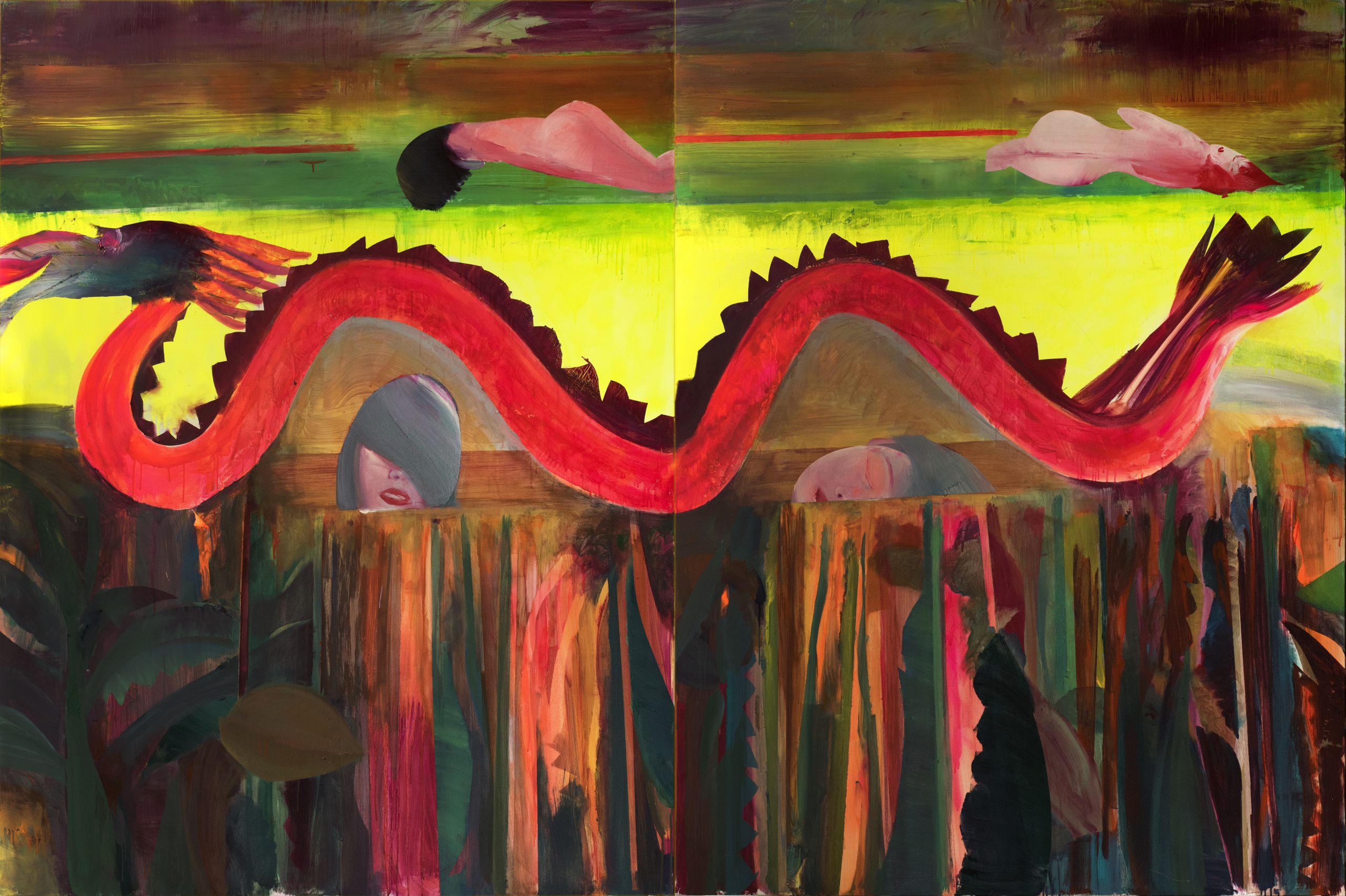
Taking a close look at the artworks that make up Erotikonia, it seems that, in the absence of any certainty – the artist doesn’t even look like to be interested in the grainy, earthy certainties, rather in their reflections in the sphere of that that can be imagined – the meanings that Ioan Aurel Mureșan proposes hide in the lines written by Vladimir Solovyov: Eros’ mission may be only that of transmitting the immortality of that part from our nature which is doesn’t possess per se, as it is usually absorbed in the material veil of procreation and death. And thus, the second term of the binomial enters the scene, Thanatos. The dragons from Ioan Aurel Mureșan’s paintings could be invested with suffocatingly numerous interpretations. In the Make-up As Celebration the creature imagined by the artist looks more like a gryphon. Zeus’ guardians or bearers of the absolute evil? The smashed dragon skulls represent, in the Christian tradition, the victory of Christ over evil and death. Biblically, the resemblance between the body of the dragon and that of the woman (Mondragon, Rosa canina) has an apocalyptical resonance: Its tail swept a third of the stars out of the sky and flung them to the earth. The dragon stood in front of the woman about to give birth, so that it might devour her child the moment he was born. (Revelation 12:4) Instead, Ioan Aurel Mureșan’s dragons have a quite hallucinatory ambivalence – they are thanatology signs, but they also embody a demiurgic principle, the Immortals mounting the flying dragons on their way up to Heaven. Like the feminine body, we can suspect they are too symbols of the passage from the real to the imaginary, from the earthly to the celestial, that eerie celestial, pure and amalgamated, proposed by the painter. The meanings of apparition, mirage of eikona are more here obvious.

But it would be an immense and unforgivable interpretative mistake to see in these paintings nothing else than an attempt to revalue the feminine body and the openings it is the bearer of. We also find in them a fascinating purity of seduction – of carnal seduction, of bodily seduction because, in the end, this is where it all starts from: “‘beauty’ and ‘attractiveness’ are originally properties of the sexual object”. The Voyeurism series comes with a compositional element with powerful erotic connotations: the window (all paintings are highly rigorous in the compositional organization, in the sequencing of the planes; and the frame, the window, the delimitation of multiple independent planes in the painterly space, is a constant in the works that make up Erotikonia). Through the window, which is a limitation of the view by cropping the world, a body of a woman could be seen as standing for the lowest zone, the guilty zone of Eros, but at the same time the window amplifies the desire and the feeling of powerlessness. And, therefore, in the imaginary defined by the painter, a secondary sound is inscribed, another imaginary, that of the one suspected of looking. In fact, isn’t this what we have been doing from the very beginnings, peeping at the idea of good, of beautiful, but without having any direct access to them at any time? Nothing that is human is foreign to us. Neither the strive for holiness, nor the longing for a body of a woman-mirage.

Compositionally flawless, as I have said, the paintings have a powerful force of expression born out of a fanciful mix, from both a stylistic and a symbolic standpoint. It is this very mix, misleadingly chaotic – because the artist works with ideation structures by no means accidental – that the solitude derives from, the singularity of Ioan Aurel Mureșan’s art. You cannot dislocate anything from the symbolic complex deployed without lessening the whole. The images only have a hybrid appearance, without being so at all. Endorsed by enduring colors – particularly the Pompeian red, which, in turn, adds a supplementary layer of the imaginary to the already existing ones –, the symbols are hidden and, at the same time, revealed in all the artworks: fantastical flowers, carnivorous plants, animals (some hybridized), strange birds, the shadows of bodiless creatures, rivers, backgrounds made up of hills, knolls (all having more than a compositional role). Everything could be a bearer of Eros or part of it, everything is molding the world imagined by Ioan Aurel Mureșan. The style is an almost conceptualized mix of styles, ranging from the abstract to the figurative, from symbolism to neo-expressionism, with direct references to street art.

Eros is the main character of this exhibition that glides between carnality and ideal, between voyeurism, diaphanous, and ingenuous with an easiness that only great artists are capable of. Freewheeling but rational, playing within and with his own imagination, but representing an entire cultural history, in Erotikonia Ioan Aurel Mureșan gives an answer, in his turn, to a question once asked by Nicolae Steinhardt: “What today’s man hungers for? For love and meaning.”

(“Despre iubire și sens. Ioan Aurel Mureșan”, in the exhibition catalogue Ioan Aurel Mureșan. Erotikonia: Expoziție de pictură /Festménykiállitás /Painting Exhibition, Muzeul Țării Crișurilor Oradea, 19.11.2019 - 02.02.2020, Oradea: Editura Muzeului Țării Crișurilor, 2019)

2. Rrose_ikonia

Ramona Novicov

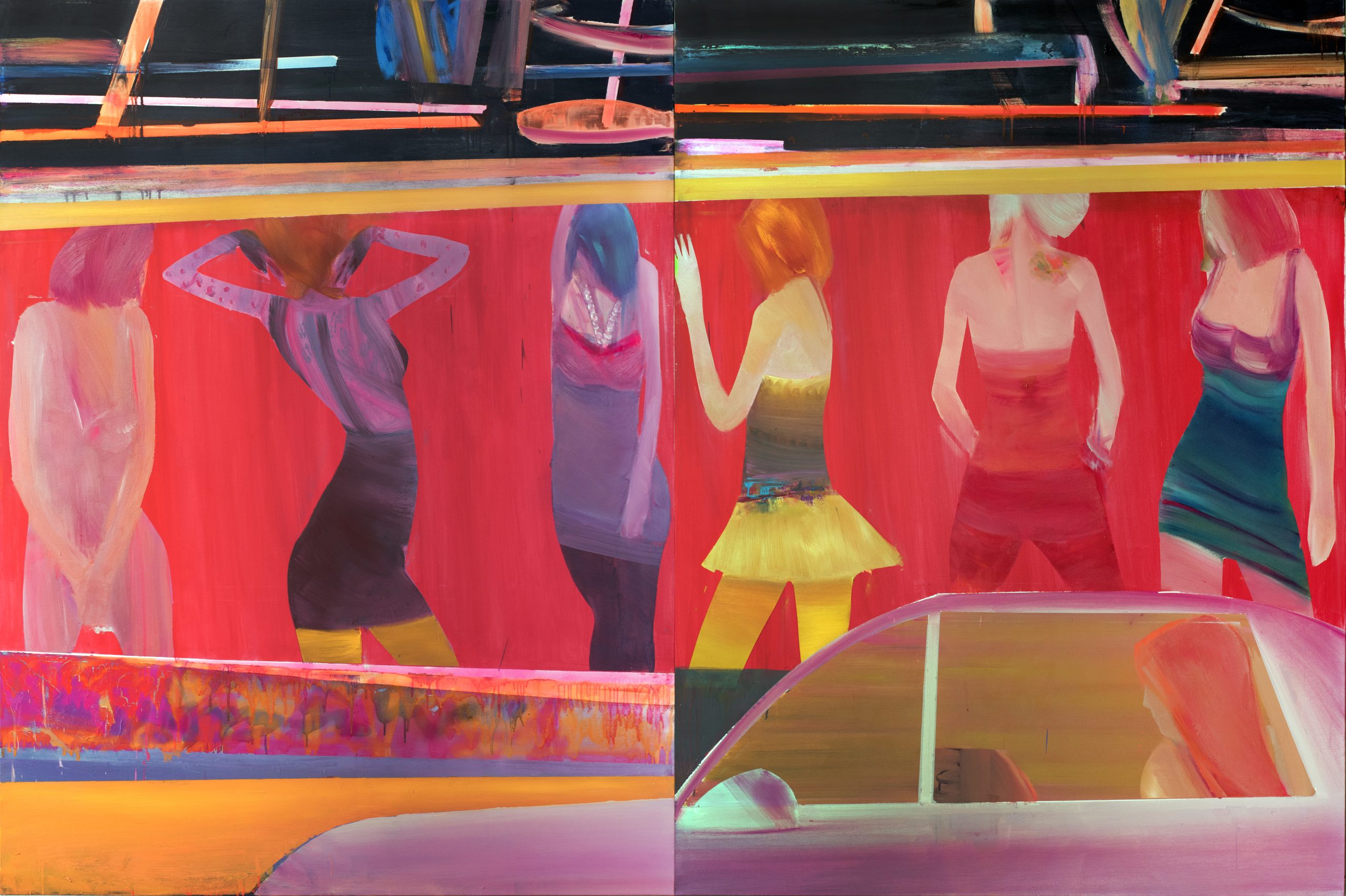
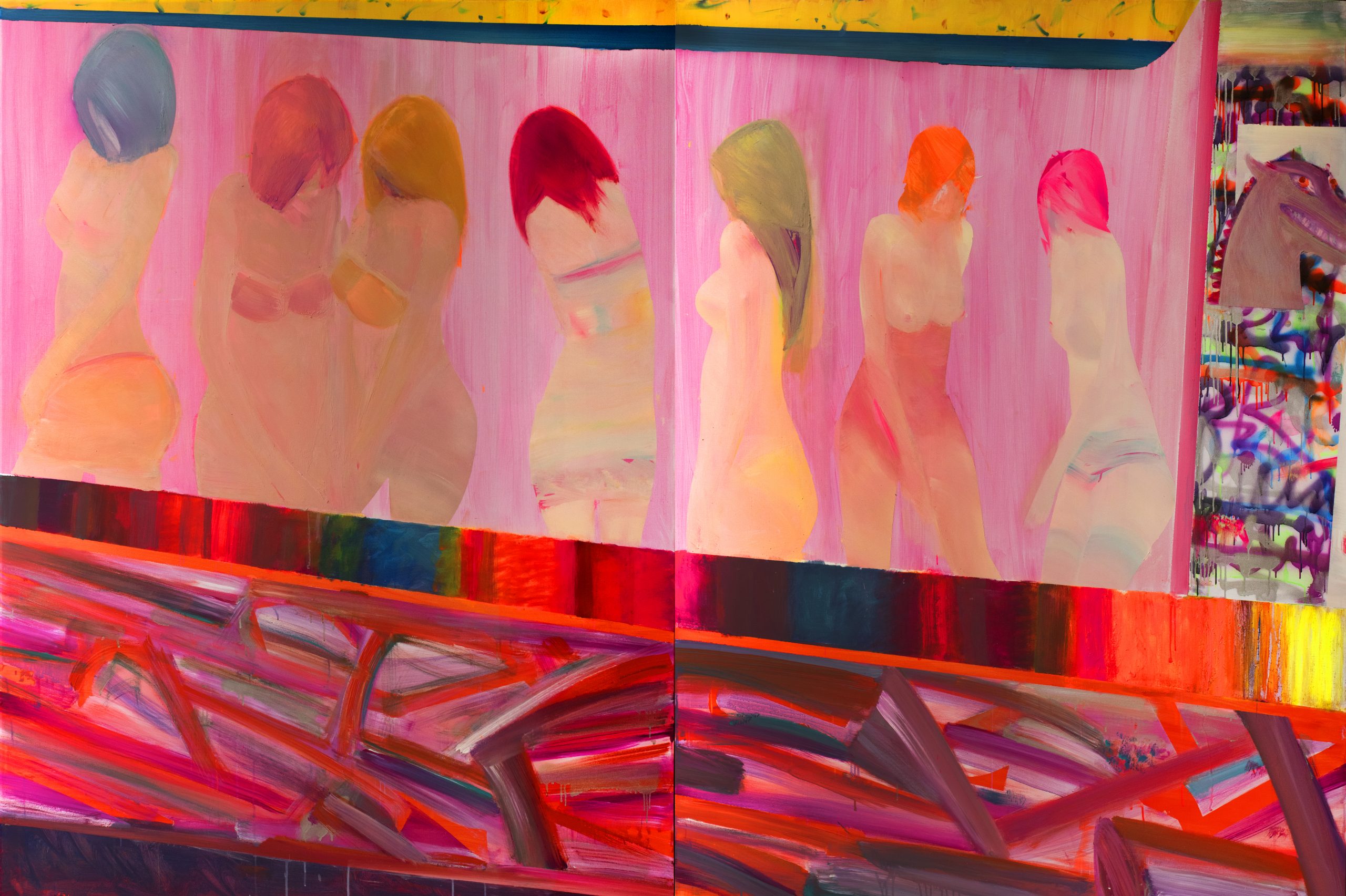
”Undeniably, toujours du Duchamp, toujours du Baudelaire. Lux, calm, and gliding between planes, worlds, fictions. Painted by a master of seduction and, at the same time, a devout visitor of the Library of Babel, the multiple canvas painting overflowing with erotism of Ioan Aurel Mureșan , seems, at a first glance, an endless epithalamium. But the tents of Scheherazada’s stories from the Magical Travel of Duke d’Ivry are gone, as are the flickering landscapes of Ultrasilvania. We only find here the ideograms of the Escorts, captured here, like cabochons, in a painting completely different from the one that preceded it. The landscapes have scattered into dreams about landscapes, the bodies have been transfigured into dreams about love. And maybe this very plane of the unseen, only dreamt loves, confers such an intense poetic substance to the saraband of nymphs, hetairai, escorts, ladies of company, ephemerids – all these fabrications that, no matter by which euphemism we would call them –, have no identity, because they don’t have a face, they don’t have a gaze. With only one exception, that can be invested with a symbolic role, absolutely all other creatures of this sort are represented aprosopos, without a face, like the slaves. They don’t have an existence of their own, they are merely companions, creatures of the interval. They are nymphs, as the Painter calls them, and can only fly in daydreams and in sleep. They are the prisoners of the interval in which they are allowed to move, that is in shop windows of Bluebeard’s castle from the red-light district. Their world is closed, hortus closus with barcodes, sliding doors of glass, and flashy spotlights. We are not being told anything about them, and the bitter light, powdered evenly, like the rice flour on the face of the geishas, makes them even more spectral, more untouchable. The pattern of the silhouettes, despite looking as if they have been cut out with a surgical knife, making a triple d’après Cranach-Ingres-Matisse, become chromatic fields of ineffable grace, whose pearly, lilac, rosy penumbras, displaying a palette of ochre of an unbelievable transparency, luminosity, and delicacy, recall the nudes of Bonnard or Pallady. Pushed to the limit of chromatic representation, a silhouette profiled against a totem is almost pure evanescence.

Sequentially, the girls are taken, brought in, and exhibited on a closed circuit, that slides on the horizontal of the invisible shop windows. We are not allowed to step across the threshold: the magnificent peep show is trenchantly separated from us, the viewers, by sharp thresholds made of blades of broken mirrors and hedges of thorny plants, not at all friendly. The bodies of the nymphs are guarded by a security zone of a terrible and wild painterly outburst. The vitality of the polished bodies in the rarefied air of the dioramas is pushed by the centrifugal force to the painterly areas from the sides of the paintings with the intensity of a cyclotron. Everything is re-absorbed, exploded, and put to order with a terrible martial force, unfolding across the palette of nuances and accents comprised in the interval between the informal, figurative visual language and the geometric, abstract one, and the syncope and dissonances aggregate in a painterly show with closed circuit, put with tender irony under the royal and sacrificial sign of magenta red”.

[1] The personal exposition of Ioan Aurel Mureșan entitled Erotikonia, was opened at the Criș Country Country Museum in Oradea between November 2019 and February 2020

(Ioan Aurel Mureșan. Rrose_ikonia, „Arta” Magazine, nr. 42-43 /2020, pp. 72-73.)

3. Erotikonia

Maria Zintz

Erotikonia: imagini într-o abordare figurativă a temei, cu figuri simbolice, mitice, dintr-o viziune postmodernă, care îi pune în valoare în continuare artistului înclinația spre fabulos, spre imaginar, admirabilul simț compozițional,  calitățile sale de mare colorist.

Dacă în literatură și muzică erosul a fost prezent încă din Antichitate și până astăzi, în artele plastice a fost mai dificil de tratat. Cât poți fi de explicit pentru a nu cădea în vulgaritate? Ioan Aurel Mureșan, așa cum a procedat în toate etapele sale de creație, recurge și acum la metafore, la simboluri, chiar la un realism magic. Curtezanele… femei care au tulburat și stimulat lumea masculină de-a lungul vremurilor. Phrine, iubita lui Praxiteles, a devenit încă o dată nemuritoare, oferind trupul său ca model de frumusețe și grație zeiței Afrodita din Cnid, sculptată de celebrul sculptor, fiind una dintre primele reprezentări la dimensiunea de corp viu a modelului feminin din sculptura greacă, în secolul al IV-lea. Libertățile de care se bucurau curtezanele din Antichitate ne fac să spunem că ele au fost primele femei libere. Multe erau inteligente, culte, nu numai frumoase, în casele lor având loc cenacluri, concursuri de poezie, se discuta filozofie. De altfel, filozofii și poeții au protestat împotriva condiției de inferioritate a femeilor, iar Socrate și Platon au susținut egalitatea naturală a celor două sexe.

Deci, o temă în care probleme de antropologie erotică se conjugă cu  cele de sociologie, filozofie, psihologie, într-un complex de metamorfoze mentale și schimbări de optică. Nu cunosc în arta postmodernă din România o abordare de această amploare, aducând în prim-plan aspecte ale eroticului, cu accent pe latura sexual-senzuală a imaginarului erotic odată cu ieșirea în lumină a valorilor ce țin de corpul uman și de imaginarul plăcerii și al dorinței. Este o căutare (febrilă) a sensului și a locului erosului în viața cotidiană, a semnificațiilor ontologice, etice, estetice pe care acesta le instituie într-un imaginar polivalent. Conceptualizarea temei, investigarea ei într-o formulă diacronică, în comparație cu modelele deja consacrate, clasice, ale erosului, deplasările de accente, de interpretări originale într-o lume unde universul intim capătă o pondere tot mai mare și o autonomie tot mai pronunțată, se impune cu stringență.

Poetul Ioan Moldovan afirma la vernisajul expoziției că: „S-ar putea zice că pictorul îşi realizează conceptul cu deplină conformitate. Se întâmplă însă şi în acest caz acel fenomen miraculos în virtutea căruia opera nu se limitează la traseele intenţiei, ci îşi oferă propria sa aventură artistică, mult mai bogată în orizonturi şi reliefuri artistice decât programul prealabil, oricât ar fi acesta de subtil şi cuprinzător. Primul contact vizual cu lucrările lui I. A. Mureşan te sensibilizează şi, în acelaşi timp, te pune în gardă  prin intensitatea cromatică. Ea  corespunde unei viziuni plastice în ecuaţia căreia poeticile expresioniste, fauviste şi surealiste sunt asimilate de artist în chip profund şi original, caracteristicele fiecăreia nemaifuncţionând artificial şi artificios în actul de creaţie, ci la modul organic, firesc, încât trimiterile didactice la atari resurse ar fi fastidioase. (…)”.

Ioan Aurel Mureșan are o atitudine mai curând constatatoare. El observă personajele, le urmărește curios, cu înțelegere, cu condescendență uneori, le dezvăluie seducția ce înseamnă ambiguitate și un joc al disimulării, pune sub semnul vizibilului ceva din viețile lor și, recurgând la „magic”, le salvează farmecul. Sunt curtezane într-un regat al roșului, al roșurilor care primesc valori nuanțate simbolic, mai ales roșu carmin, un roșu care arde până la carbonizare. Hetairele din tablourile lui Mureșan nu au aproape nimic de-a face cu anticele curtezane erudite. Sunt femei preocupate de trupul lor, de postură, deși au fețele ascunse ori sunt neindividualizate. Aparțin mai curând unei societăți consumiste, hedoniste, postmoderne, lăsând totul la vedere sau aproape totul. Lipsa de iluzii, de vise, de aspirații spre certitudini a transformat locul într-o lavă încinsă, de un roșu intens, care pare să curgă, ducând cu ea resturi, poate ființe topite, sugerând distructivul, haosul. Hetairele contemporane așteaptă, în poziții și mișcări provocatoare, pe consumatorii de eros fugar, iar o mașină tocmai s-a oprit, pentru a lua sau prelua o femeie-marfă. Fundalul de un roșu intens contribuie la sugerarea atmosferei de febrilă, de nerăbdătoare așteptare.

Lucrările sunt gândite pentru a exprima stări, dar mai ales situații, incluzând și pulsiuni refulate, mituri, arhetipuri, dar și reverii, vise prin forme simbolice, mitice, dar și prin forme care fac ca mesajul să fie unul tranșant. O deconstruire și reasamblare a toposurilor erotice tradiționale, pentru că semnificațiile imaginarului erotic propus de pictor se adresează timpului prezent, dar purtând o raportare la forme antice, ancestrale.

Escorte, curtezane, hetaire…, imagini vizuale ale „discursului” său despre erotic. Ioan Aurel Mureșan nu abordează erosul prin mitul androginului, povestit de Aristofan în Banchetul, a iubirii ca împlinire ontologică prin celălalt, ci din orizonturile unei postmodernități actuale, chiar contradictorii. El a preferat o exprimare în care a folosit o diversitate de „grile”, de la cea psihologică la cea psihanalitică, având dealtfel de-a lungul timpului o relație specială cu simbolicul și imaginarul.

Chiar dacă tema e evidentă, conceptul de erotism însumează o gamă largă de sensuri, imagini și simboluri fundamentale. Însăși tema presupune situarea erosului între iluzie și realitate, între așteptare, vag, împlinire ori neîmplinire, între interdicție și dorința de transgresiune a interdictului, creând tensiuni pe care le valorifică ontologic și cărora le conferă putere simbolică. Mureșan aduce în prim-plan corporalitatea în ficțiuni erotice în care rămâne important consumerismul și hedonismul. Sânii, coapsele, simboluri ale erosului, sunt măriți, figurile nu sunt individualizate, trăsăturile faciale sunt „șterse”, escortele nu au identitate proprie. Mișcările lente, pozițiile, atitudinile transmit stări, surprind momente ale existenței lor anonime.

În lucrarea Rosa canina, femeile sunt văzute parțial, dar în poziții sugestive, provocatoare. Apare ispita, iar flăcările fac totul scrum, sunt distrugătoare. Iubirile efemere, ademenitoare și promițătoare aduc eșecul, teama, așteptarea unui anume „ceva” mai autentic, care însă s-a transformat în ceva ce pare pierdut. În Avis amores, femeile cu forme planturoase, având alături păsări roșii cu valoare simbolică, cu chipurile ascunse așteaptă, privind spre formele cu înțeles erotic simbolic. Totul e așteptare, poate resemnare…

Divanul persan e adus în peisajul urban tentacular, cu blocurile înalte din ultimul plan. Tânăra femeie, aflată într-o poziție explicit erotică, privește formele cu aspecte masculine, statice, reci, cu ochii ascunși de ochelarii roșii, o lume primejdioasă, din care sentimentele tandre sunt excluse, iar iubirea inexistentă. Blocurile în roșu, lumea masculină în roșu-roz sunt amăgitoare, ascund pericolele inevitabile. Timpul trece… În centrul unui tablou (La belle jardiniere) apare o femeie nud — în atitudine de vampă, cu forme planturoase. Cadrul redă schematic o grădină, este atrăgător, dar femeia a trecut de prima tinerețe. Și totuși, încearcă încă să provoace. Cine nu și-ar dori să-și prelungească tinerețea, frumusețea? Mureșan a creat o parodie după Fântâna tinereții, pictată de Lucas Cranach. Fântâna are aspectul unei piscine înconjurate de forme rudimentare, ce amintesc de o năruire, iar apa e roșie, sugerând sacrificiul, bineînțeles și erosul. Femeile care se îmbăiază cu speranța de a fi iubite în continuare, văzute din spate, par ascunse în propriile lor vise neîmplinite. Au încă mișcări languroase, senzuale, deși tot ceea ce este în jurul lor e ruină. Iluziile vor pieri și ele. Șarpele este în lucrarea Mondragon simbol al erosului, de un roșu aprins. Trecerea lui sinuoasă transformă totul în lavă încinsă, periculoasă, de neoprit. Personajele feminine sunt neputincioase în fața lui, purtate în spații imaginare, topite sub dogoarea mișcărilor lui. Sub trecerea lui totul devine fluid până la curgere, descompus, dezagregat. Tușa e și ea lichefiată, vitalizată de roșul-lavă, de contrastele cromatice.

Fardul ca o sărbătoare e realitatea existenței escortelor. Ele trebuie să pară frumoase, să atragă consumatorul. Femei exotice în peisaje exotice, mișcări și atitudini ce au legătură cu profesia lor, aceea de a atrage, însoțite de animale ca simbol al erosului — iar roșul-flacără încinge și apoi va devora prada. De altfel, o lucrare se numește Camera magentă: personajul feminin e înconjurat de forme cu aluzii erotice, camera e pregătită, șarpele e prezent, aruncând flăcări mistuitoare. Patul a devenit lavă încinsă care topește corpul femeii. Roșul-magentă, intens, cel mai intens, a devenit  devorator. Dar viața continuă. Cu forme planturoase, fanate, femeile își așteaptă în continuare căutătorii de plăceri ușoare, rapide. Par obosite, singure (Alte glasuri, alte încăperi).

Tablourile spun o poveste cu mijloace figurative, simbolice. Regatul roșului din aceste picturi este plin de primejdii, de drame. Iar mesajul? Fiecare privitor poate să aibă propria părere într-o lume marcată de dezordine. Corpul poate fi locul interior al libertății sale, o construcție simbolică și totodată suportul concepțiilor și practicilor unei epoci. Deci, corpul nu este accesibil într-o formă pură, ci doar în urma unor analize care conduc la perceperea lui într-un ansamblu cultural de civilizație. Trebuie observat că niciodată obsesia corpului nu a fost mai vie și mai puternică decât în perioada contemporană. Se poate vorbi despre dezvoltarea unui discurs creat în jurul expunerii infinite a corpului, susținut de o adevărată aviditate a privirii. Corpul poate fi considerat un vector esențial de expresie, un mediu privilegiat al artistului, devenind un „teritoriu vizual” (Carolee Schneeman). Efectul poate însemna însă confuzie, multiplicare… Deci, cu atât mai mult tema abordată de Ioan Aurel Mureșan este actuală, chiar dacă el doar o reprezintă pictural, dar cu înțelegerea artistului care a ajuns demult la maturitatea intelectuală și creatoare a unui magician al culorilor. O pictură figurativă într-o tratare sintetică, în care formele nonfigurative, abstracte contribuie la expresivitatea lucrărilor, cu forță poetică. O pictură care ne invită la meditație, la călătorii în adâncul nostru, în care mirajul nu lipsește nici de această dată. Cromatic, predomină roșul, într-o multitudine de nuanțe, cu semne mărunte, încărcate energetic, și în funcție de sensul imprimat imaginii apare și verdele, negrul, griurile colorate, griurile violacee, pasta fiind mai densă, tremurătoare, aspră, dar uneori și mătăsoasă, delicată. Ioan Aurel Mureșan este un magician al culorilor, care nu încetează să mă uimească prin felul în care exprimă, fără ostentație, cu mijloacele picturii, accesul la valorile infinite ale vieții, printr-o sugestivă acomodare a operei între figurativ și abstract. A pornit de la o idee post-modernă, dar imaginarul și implicit pictura și-a urmat drumul propriu, într-o călătorie în care, prin recurgerea la trupul feminin, a depășit primele intenții de abordare a eroticului. La fel ca în viață, drumul începe pentru a-și urma destinul, prin numeroase trasee, adeseori uluitoare, de unde nu lipsește fabulosul. Fascinantă această lume, mai ales datorită cromaticii, dar și simțului componistic coerent. Această amețitoare poveste, în care protagonist este nudul feminin, erosul, înseamnă până la urmă pictură, și putem afirma încă o dată că Ioan Aurel Mureșan este unul dintre marii pictori români contemporani.

(Erotikonia, „Arta” Magazine, nr. 42-43 /2020, pp. 72-73)

Ioan Aurel MUREȘAN © 2022. All Rights Reserved
Privacy policy / Terms and conditions

English