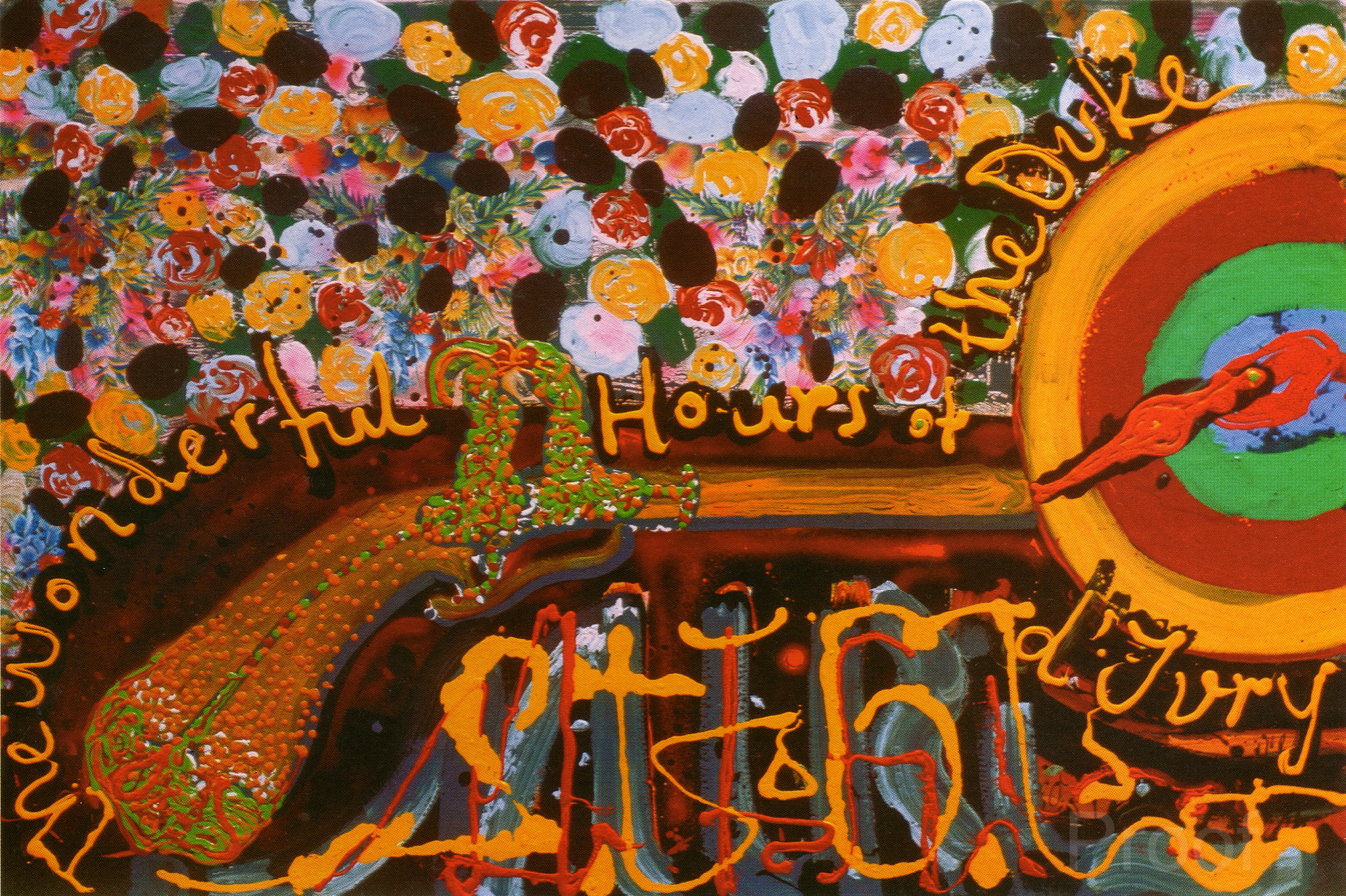
Unexpected curve has the painting of Ioan Aurel Mureșan drawn on the firmament of his generation in those more than ten years that have passed since he made his debut.
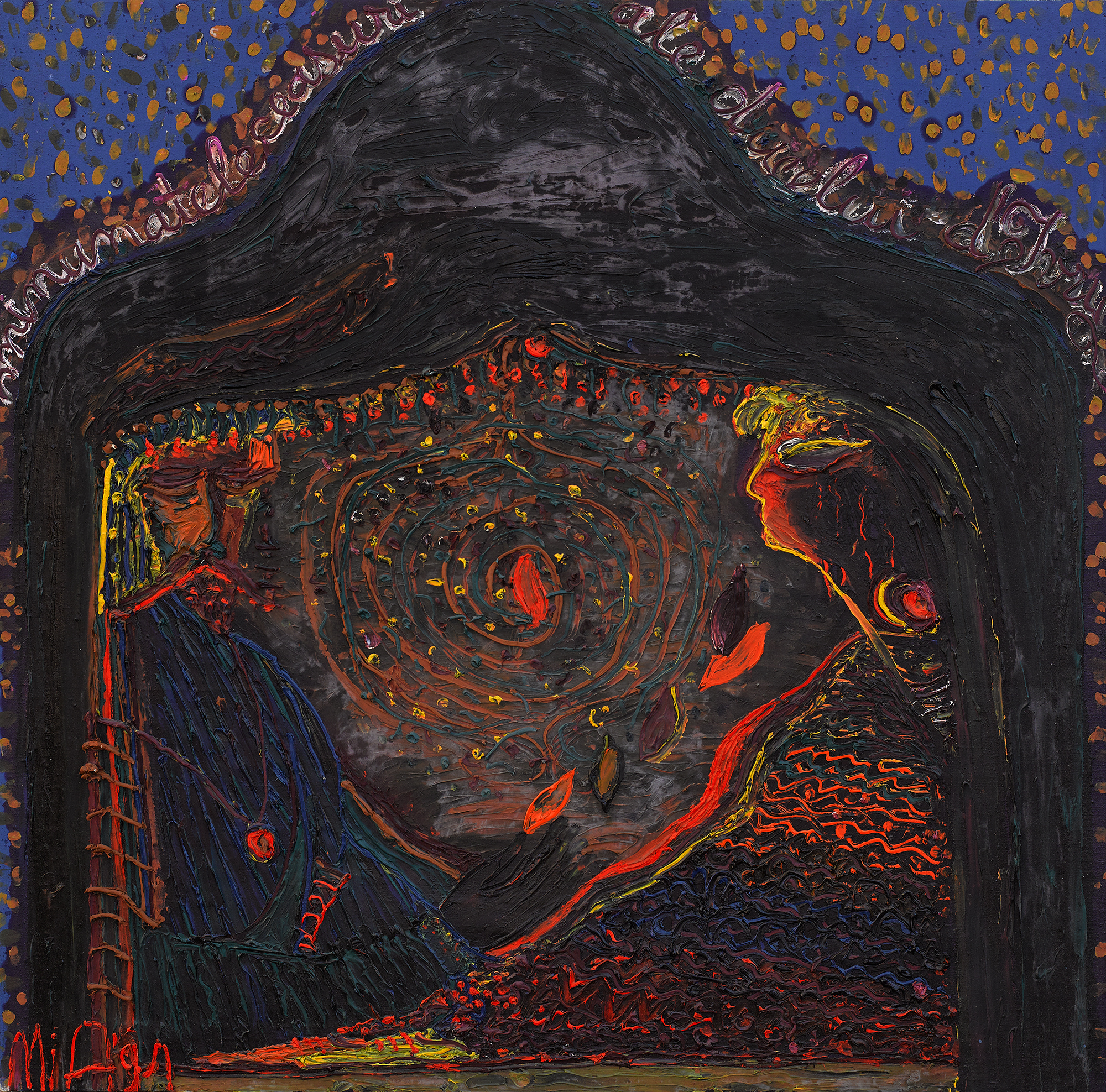
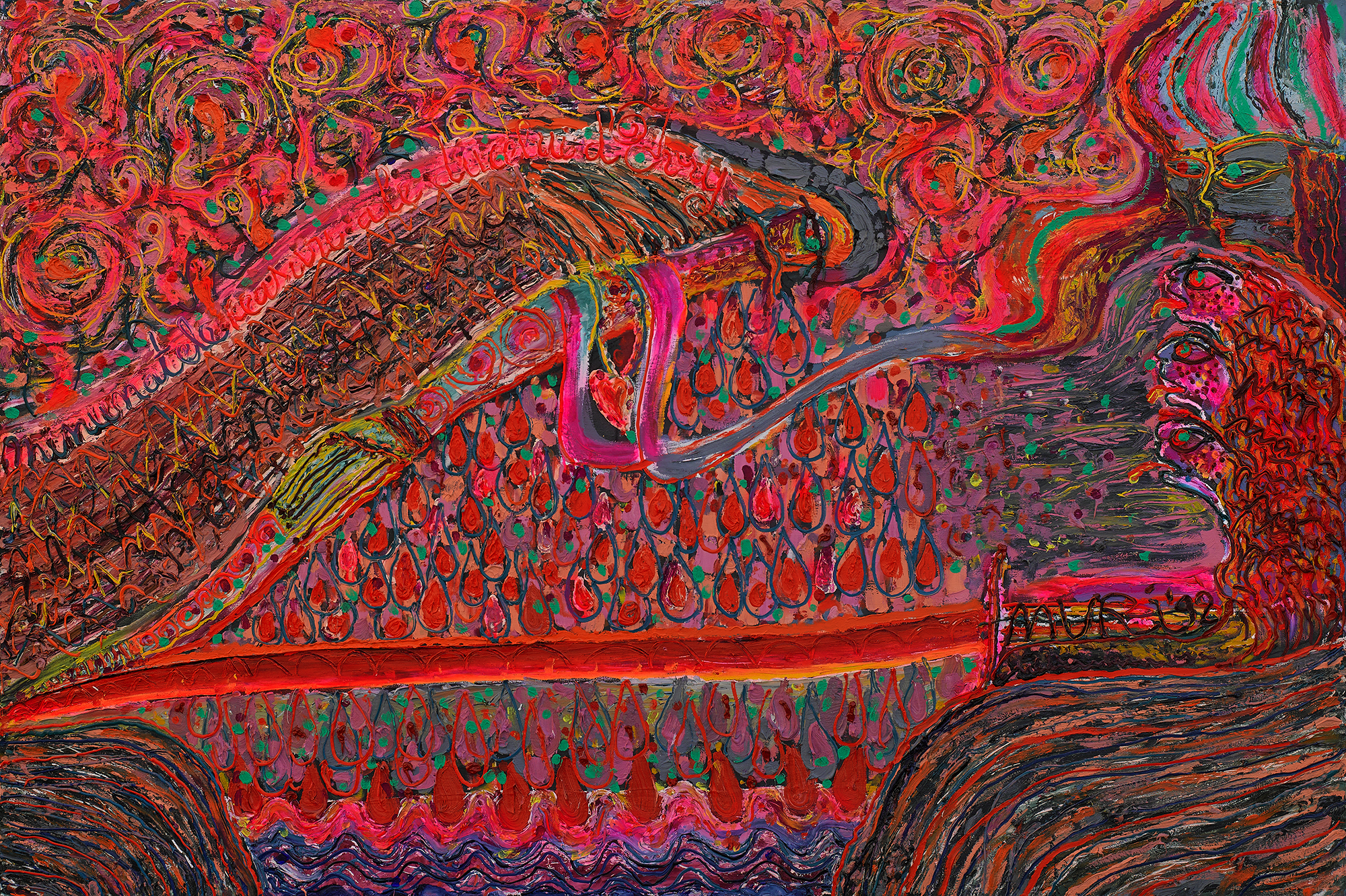
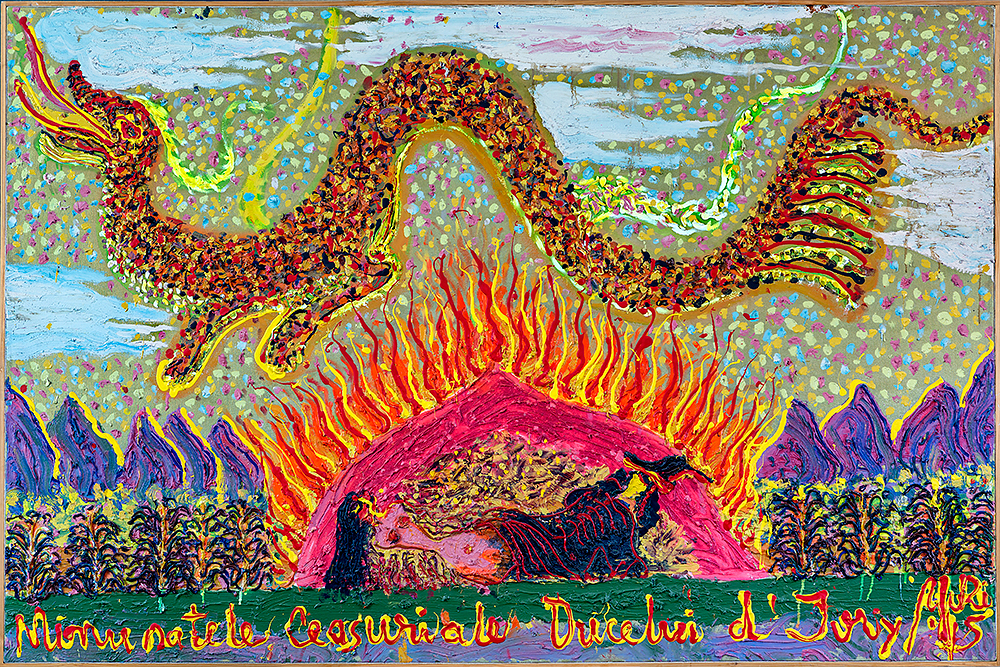
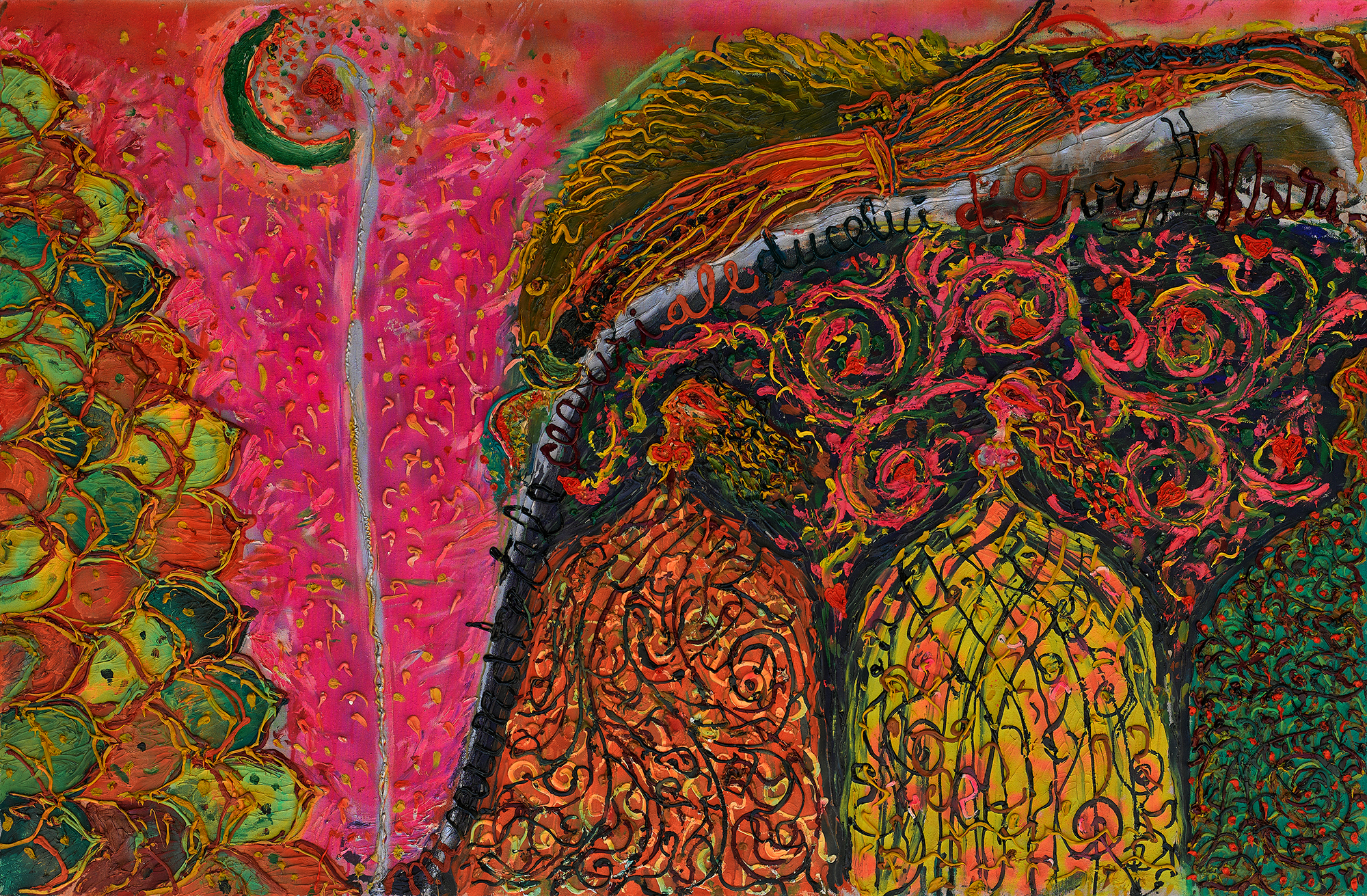
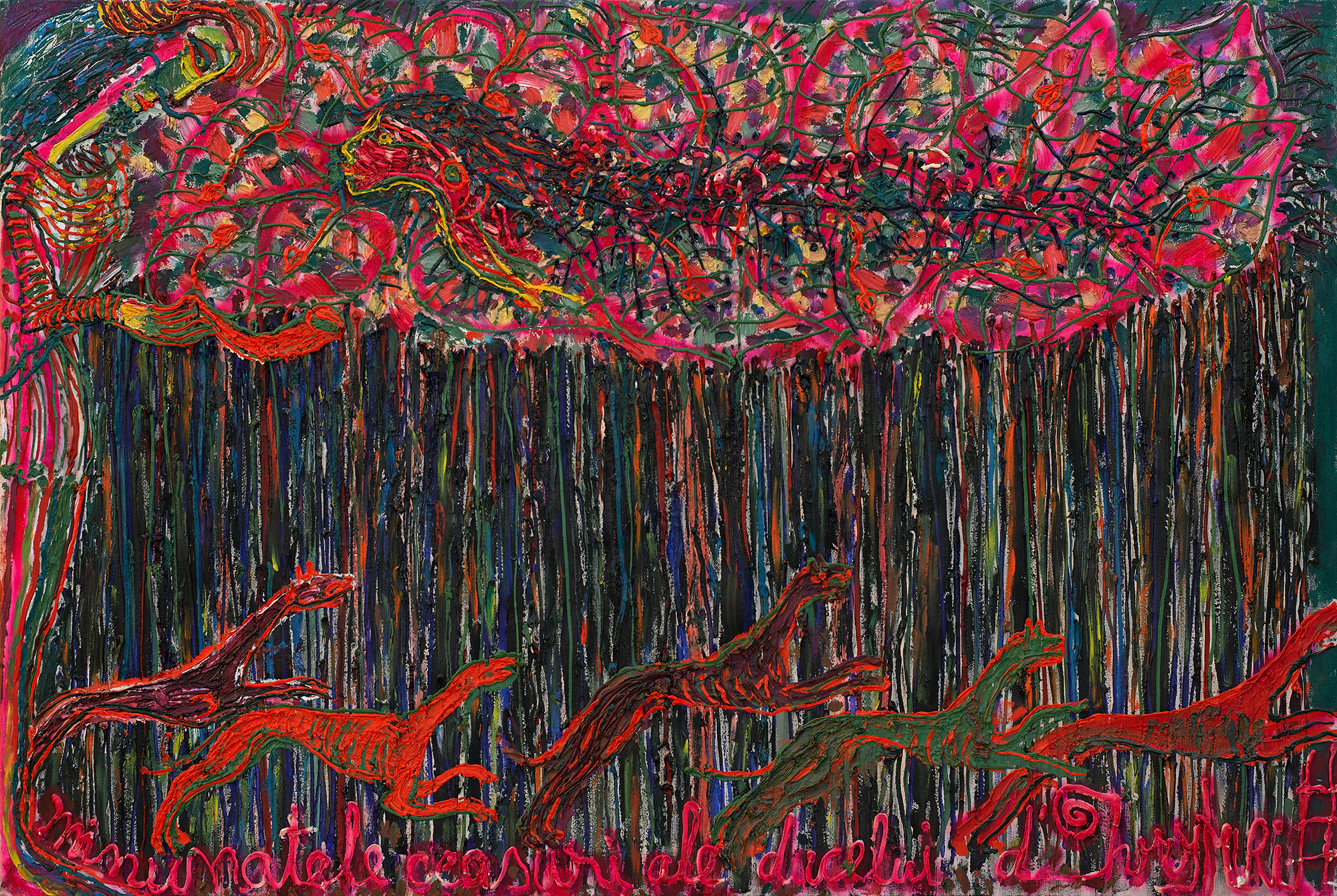
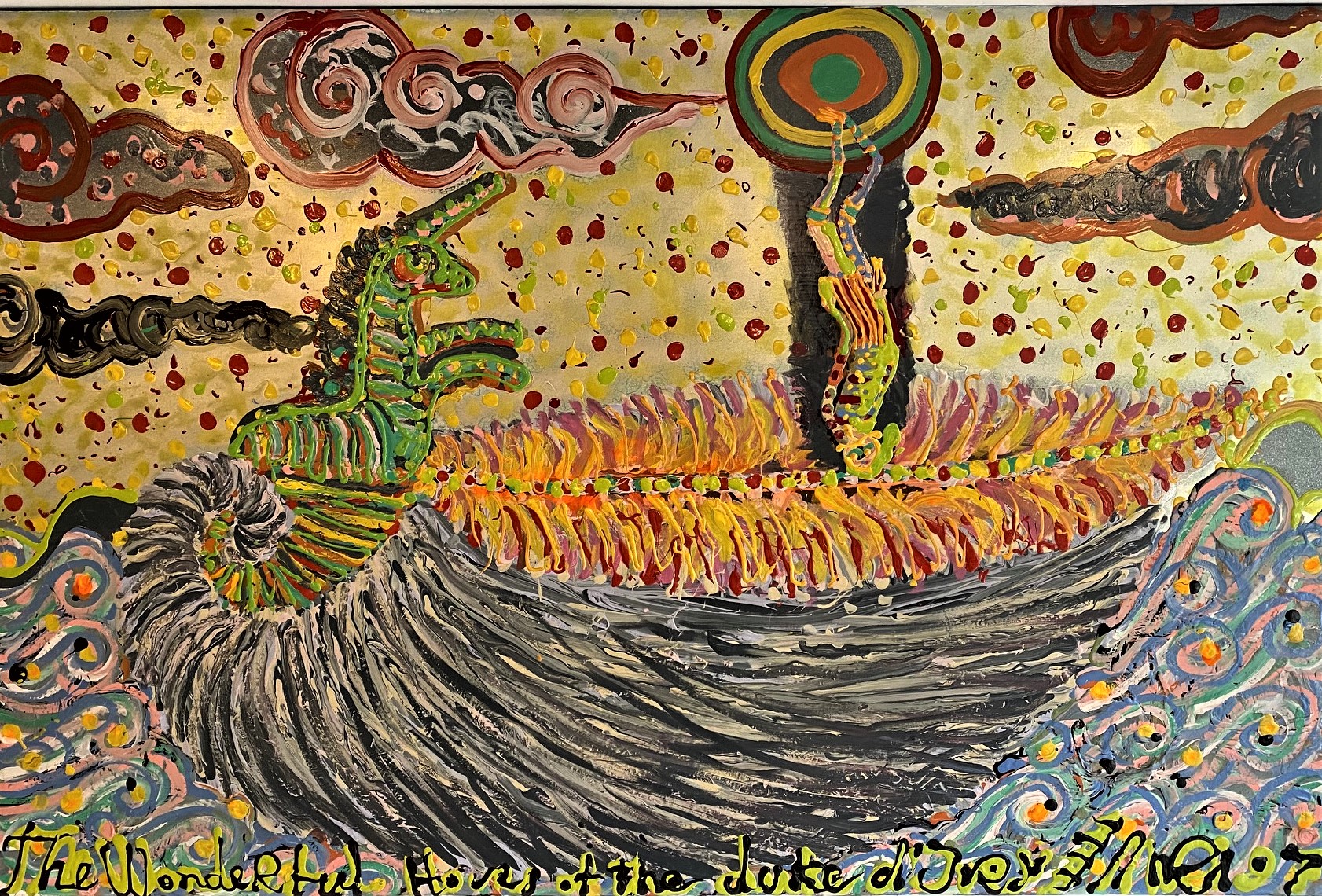
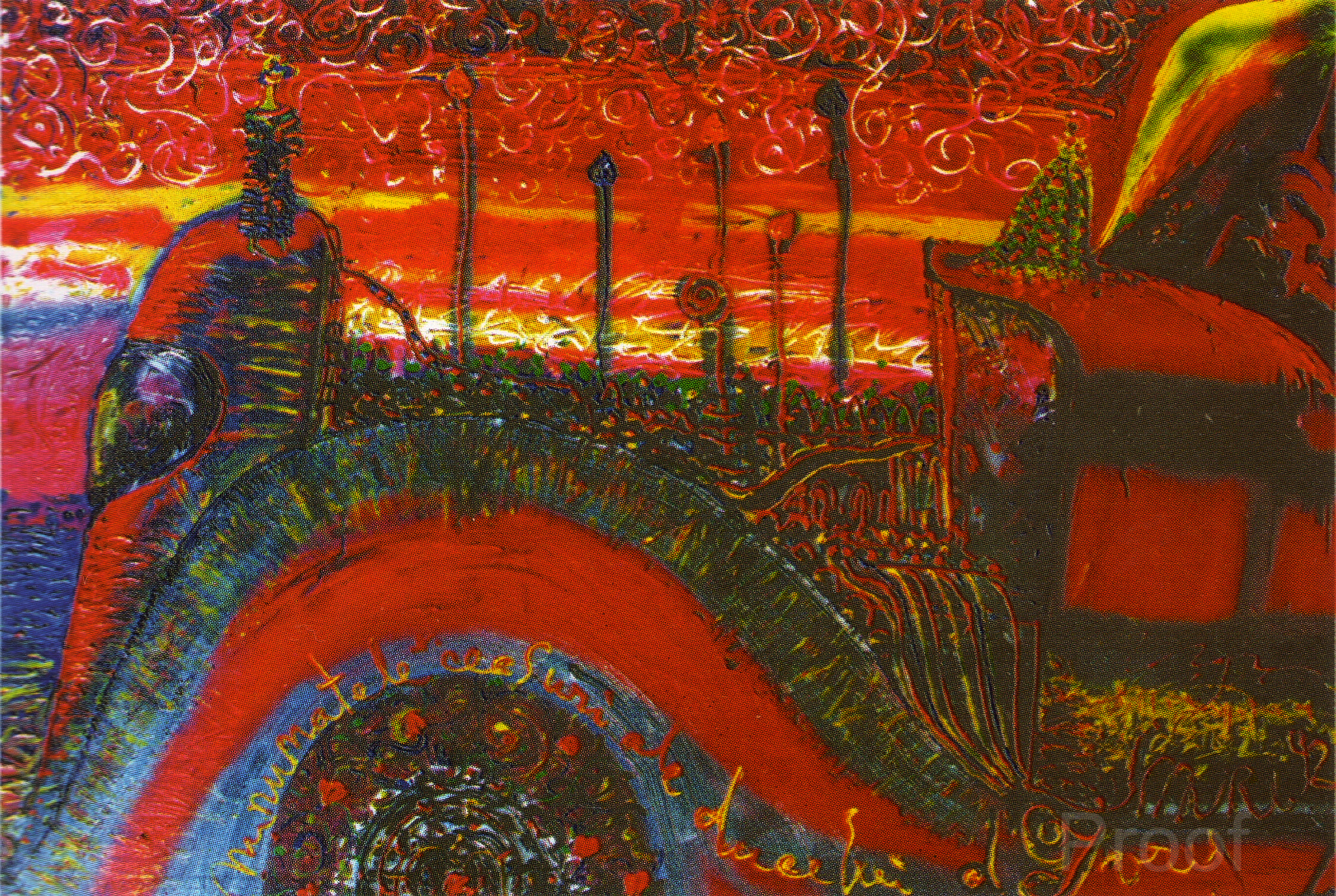
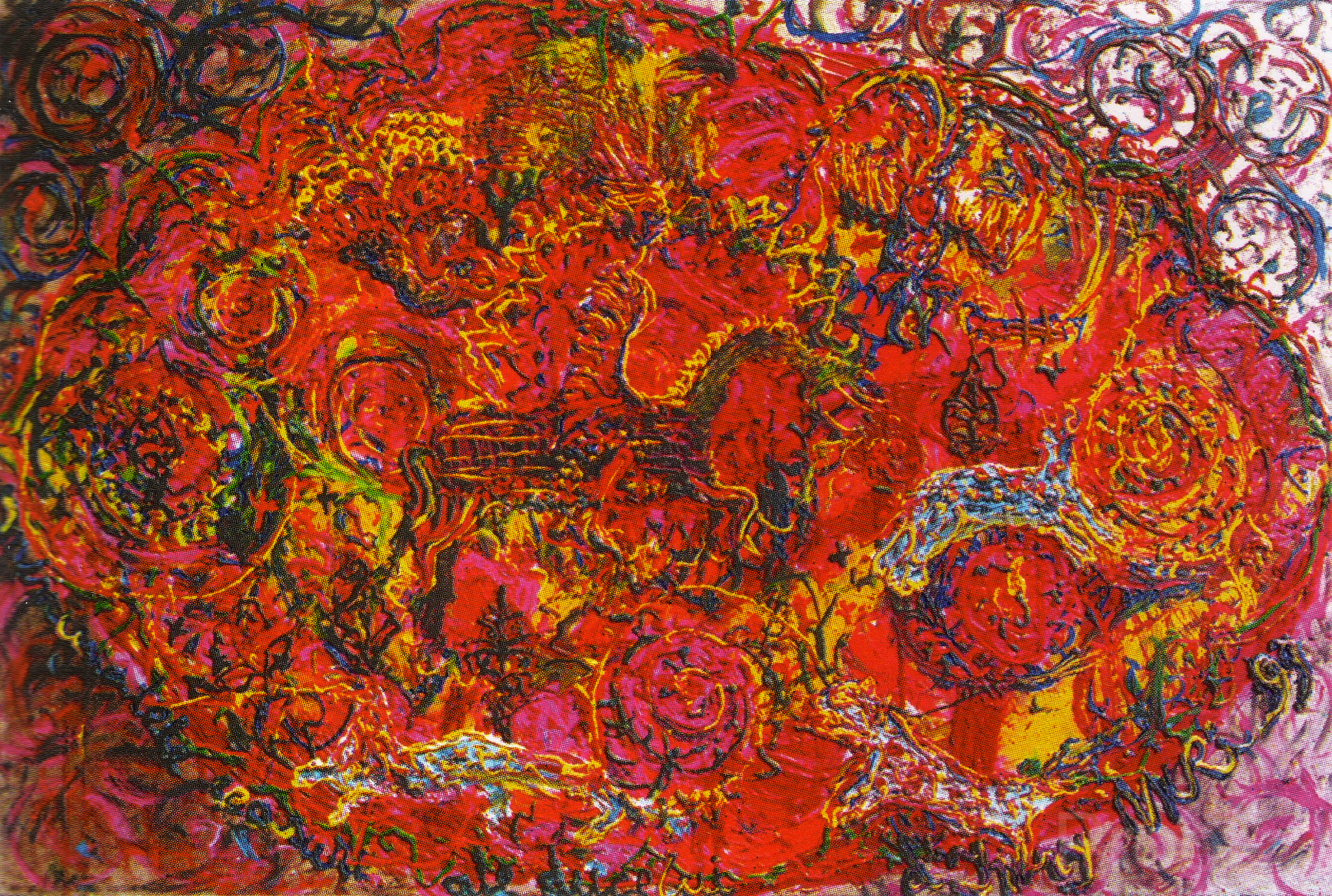
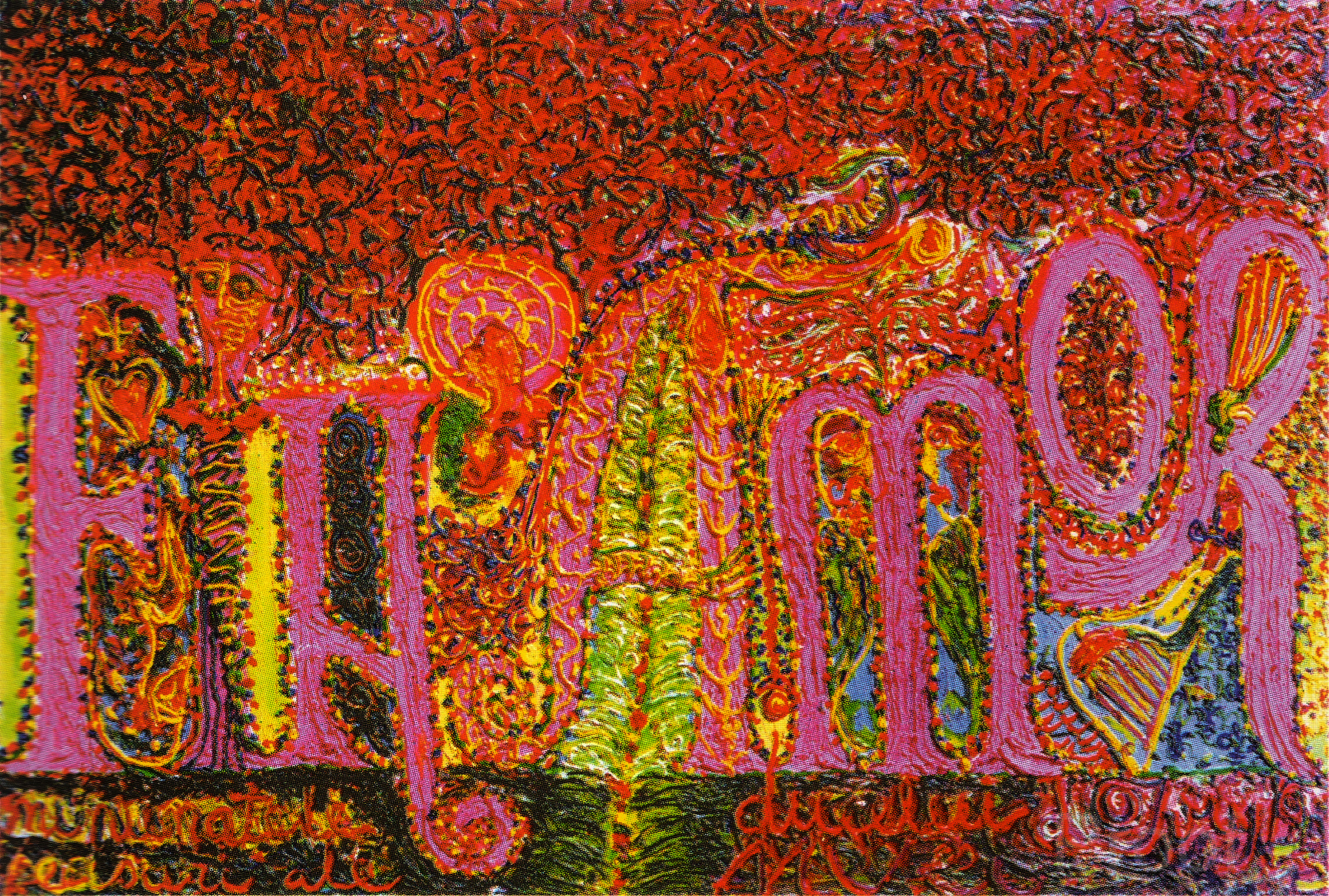
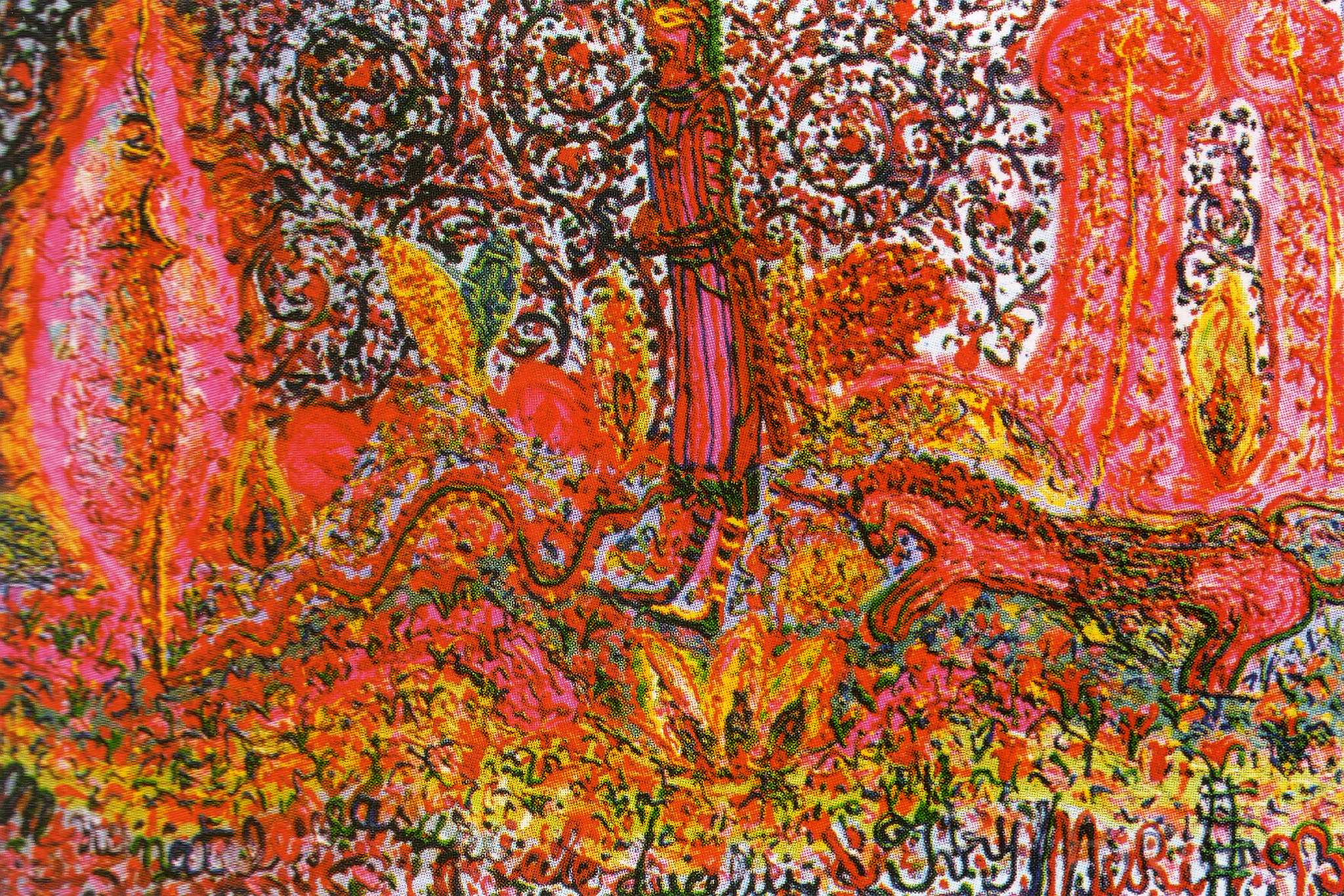
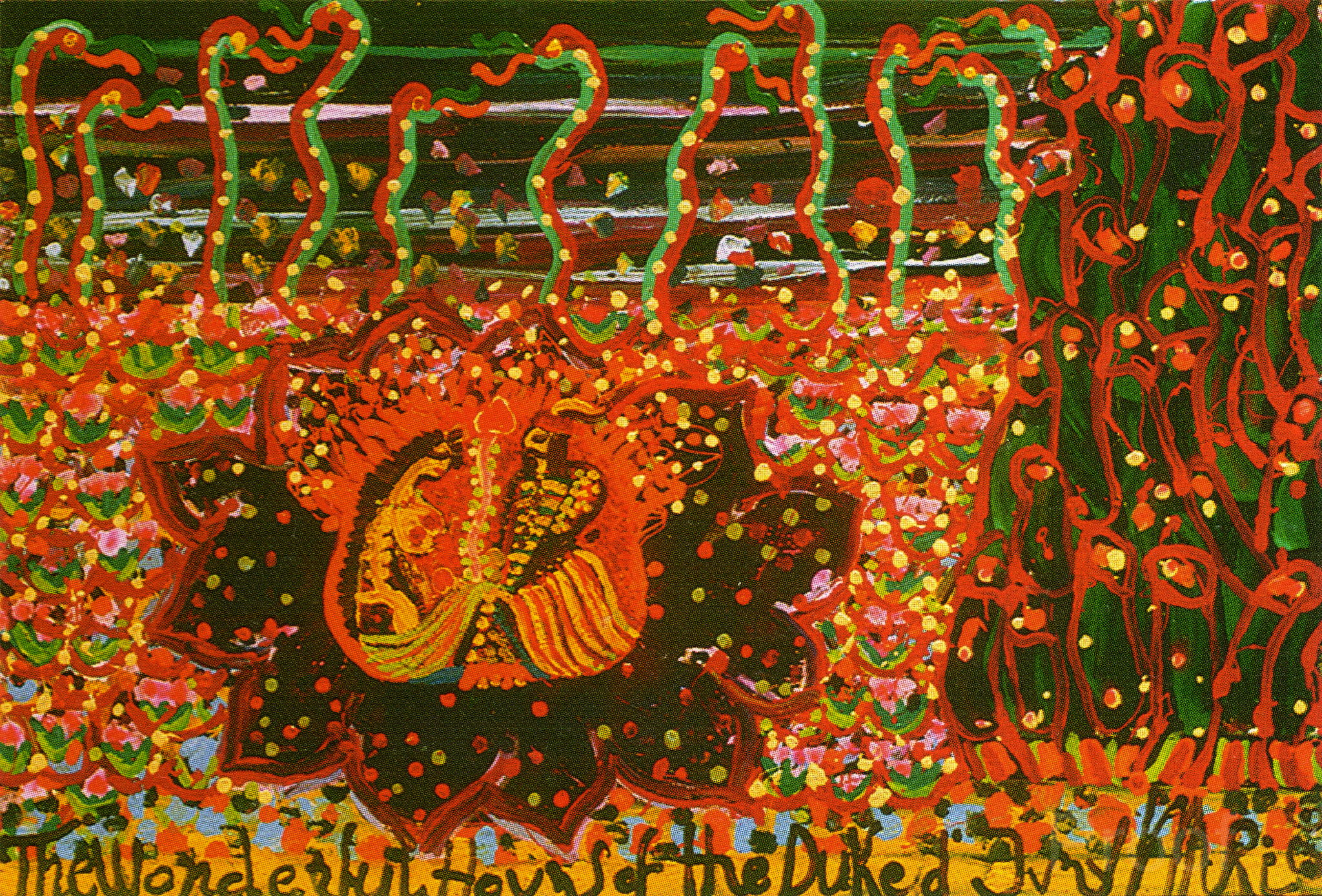
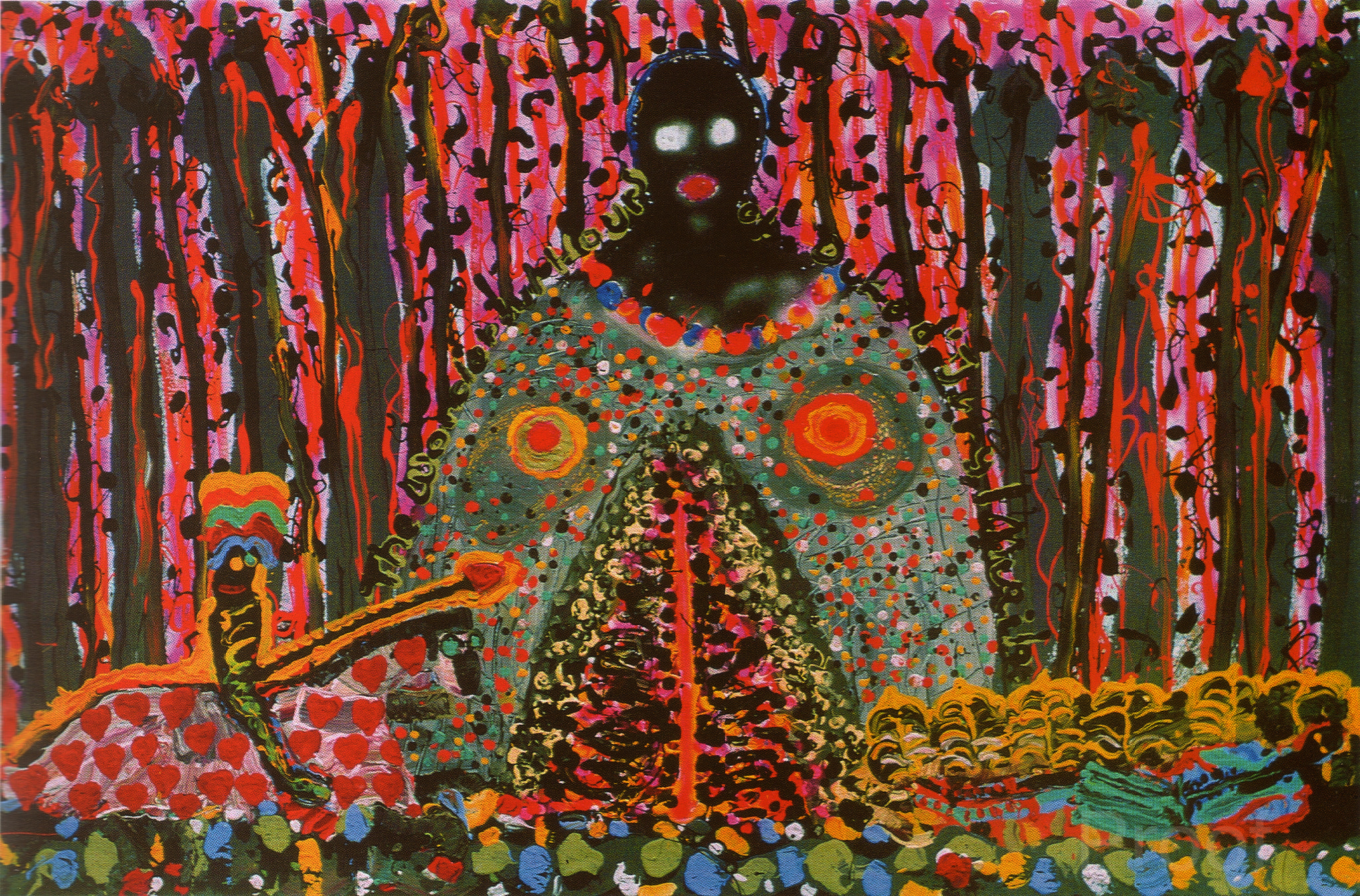
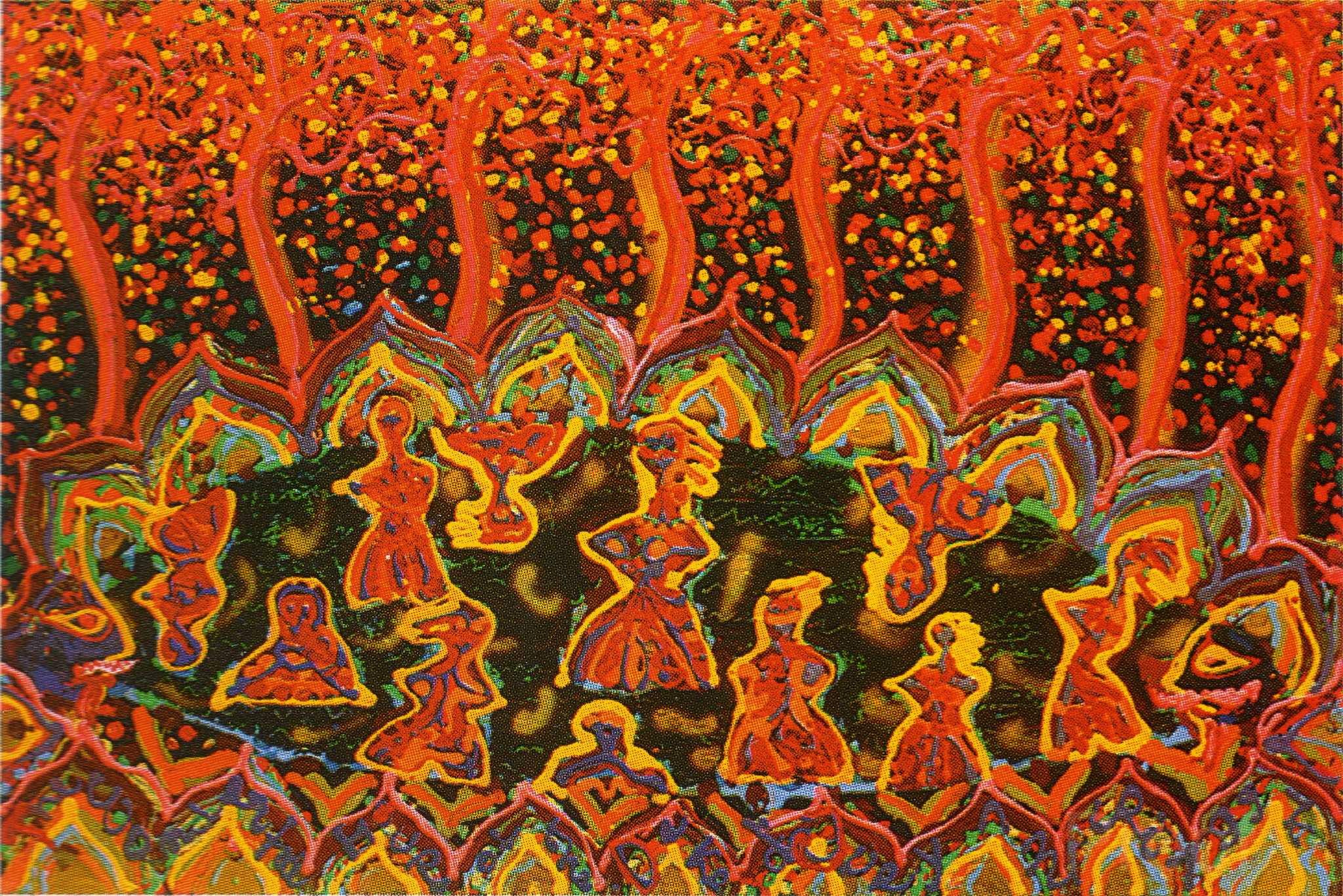
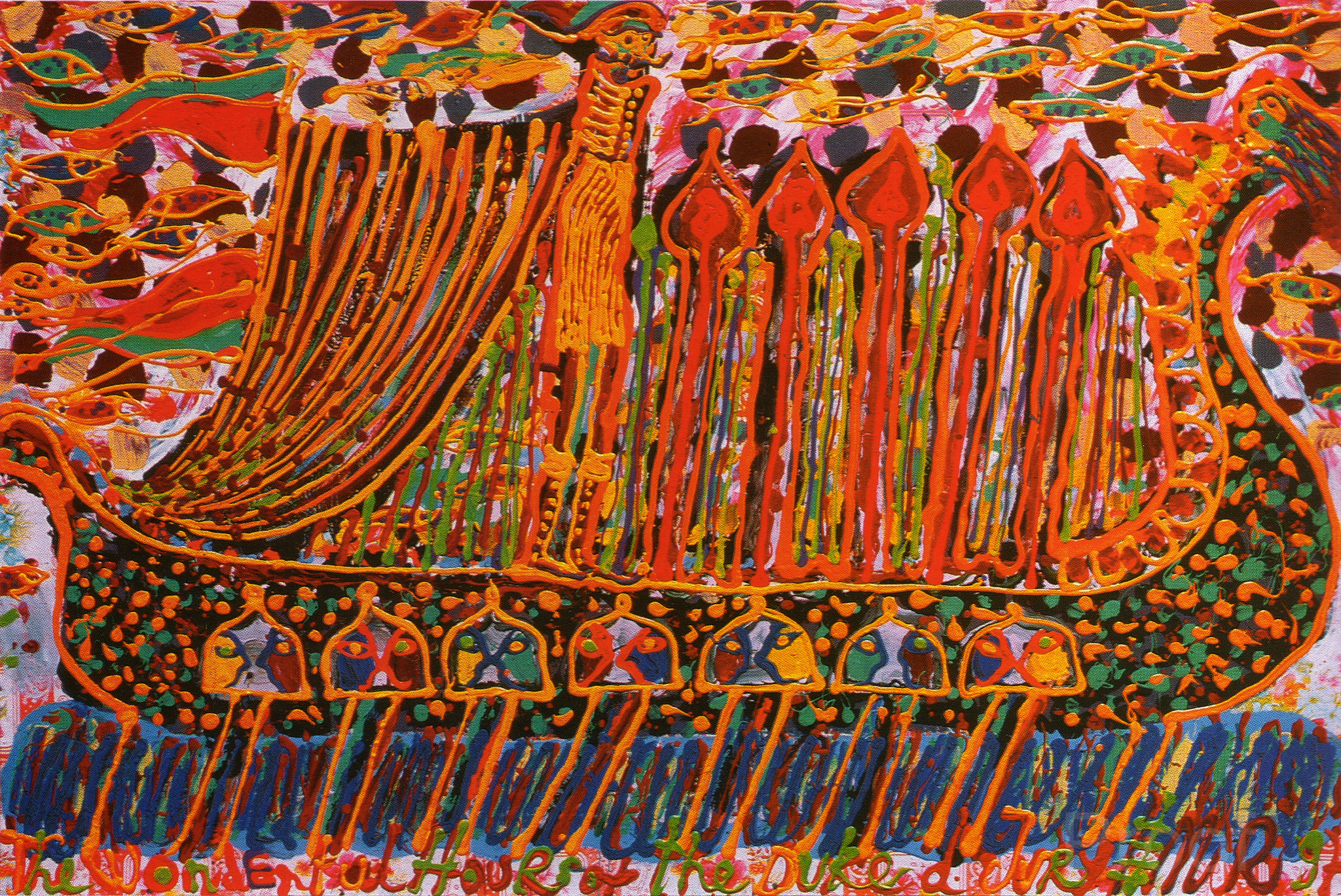
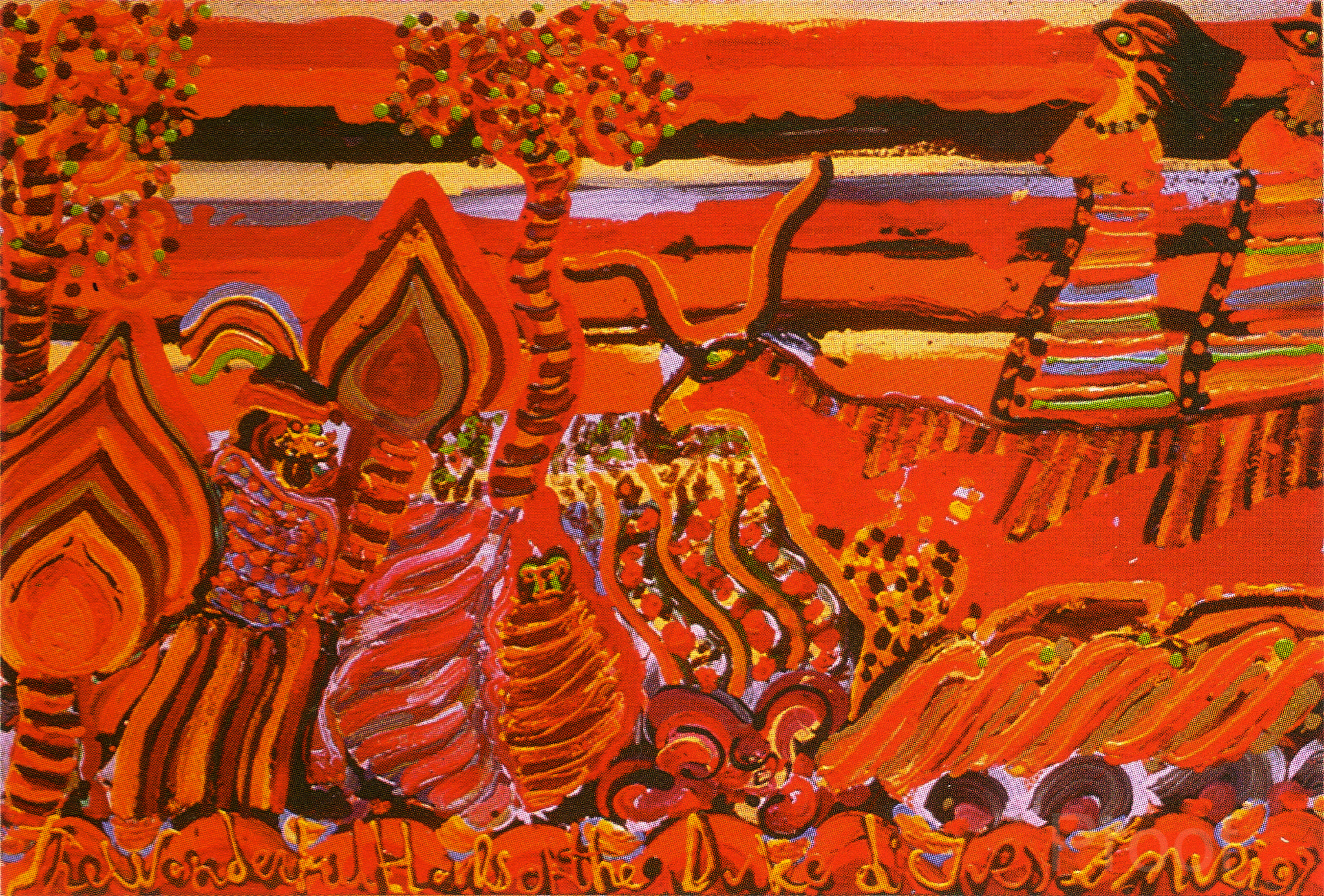
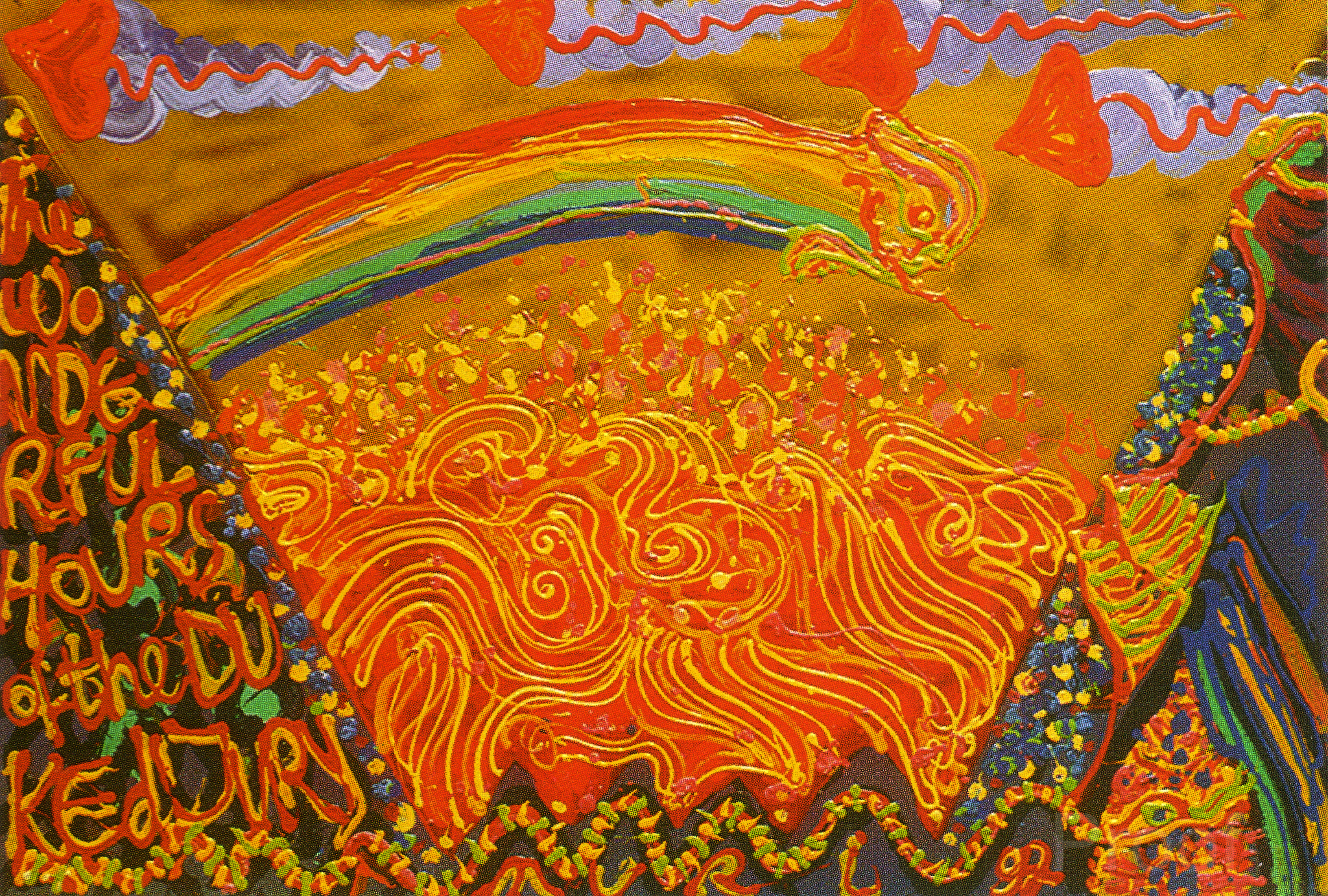
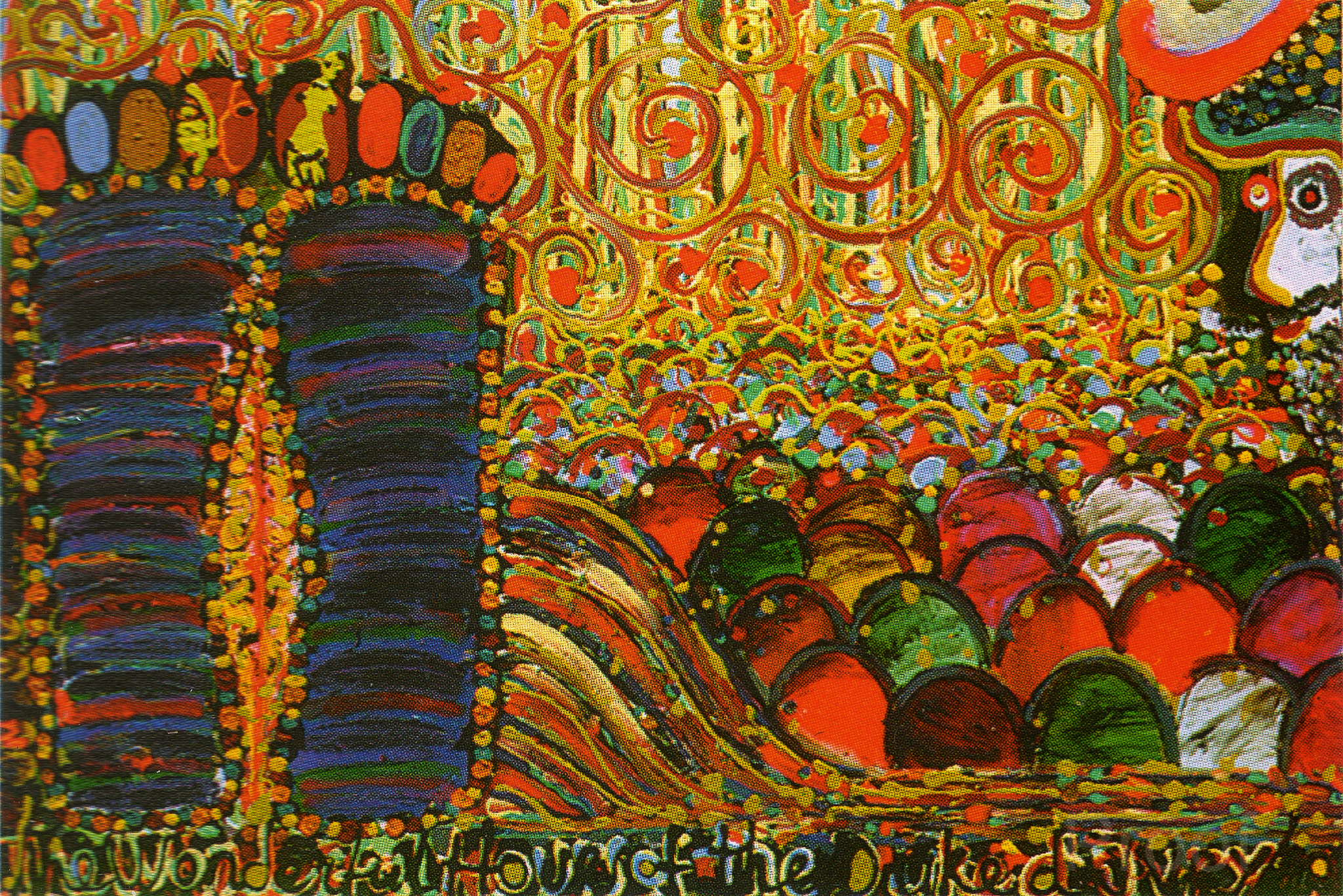
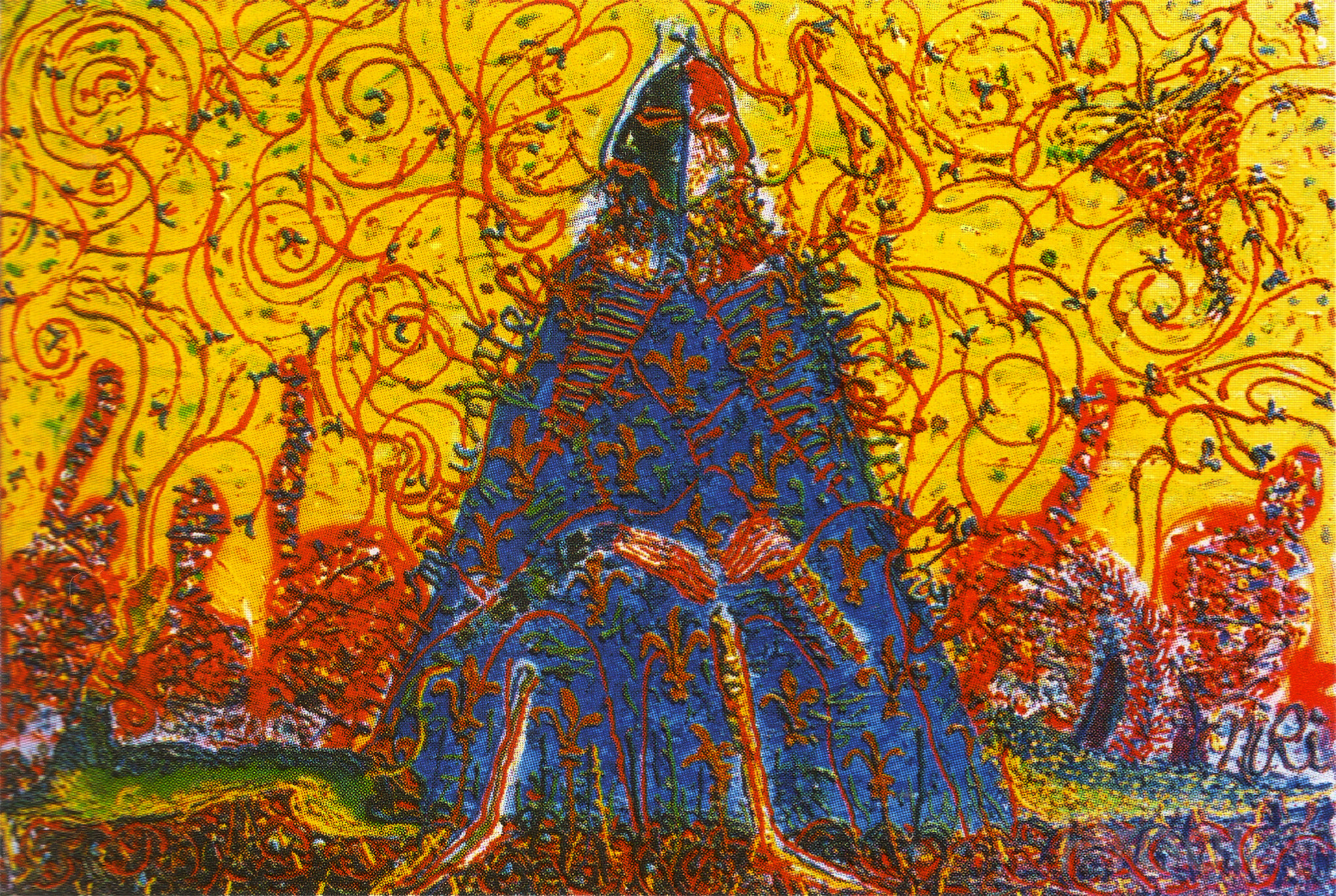
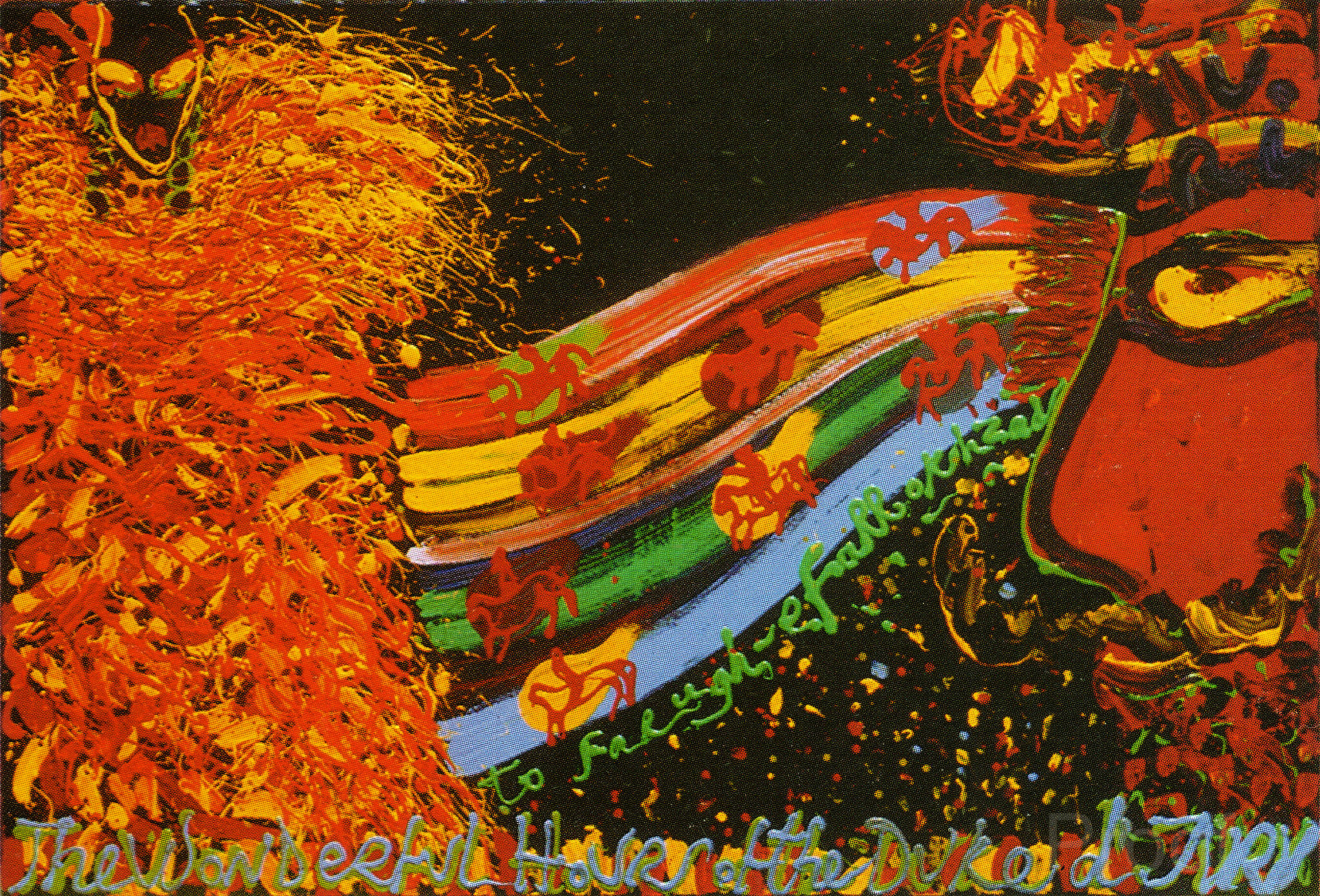
The curve is as skyrocketing as it is dazzling, because now Mureșan seems to have reached an upper level of the psyche, that of the unleashed, fairy-like, overflowing imaginary. It is as if – in a necessary dialectic for the evolution of the individual –, after the early beginnings still bounded to the opaque materiality of the world, after a descent into the psychical inferno, with its individual and collective malebolge, the painter’s spirit have paid his duties to tradition and formation, to himself and to the world, and have reached the clear altitude of freedom. Detached from contingency and fears, liberated from influences and mimicry, the artist’s spirit would find itself in the magical interior of his own unlimited imagination, where everything that has previously been lived and absorbed melts in an unpredictable magma, from which emerges the luxuriant efflorescence of true, spontaneous creativity. The Wonderful Hours of Duke d’Ivry introduce us spectacularly, explosively to the atopic realm of a fabulous “garden of relish”. In a “fractal” topography, following only the non-Euclidian laws of the inner space, the artist-spirit relieves itself in rainbow-like bursts of visual alluvium fraught with various cultural deposits, historical rhymes, and innuendos. Following the model of the famous medieval series of Duke de Berry, a sort of unending visual story unfolds, with episodes and moments that seem to allude vaguely to the legends of the Western European Middle Ages, the Mogul miniatures, the poetry from Provence or One Thousand and One Nights, and even of the autochthonous folk stories.
Like in a mirage, the canvases unfold vividly the film of those “hours” of inner solitude, “epiphanies” in which the artist-spirit delights itself in exploring the spectacular reliefs of an imaginary adventure. A never-ending adventure, because – needless to say – it pursues enthralled an eternal, archetypal love story… The irresistible lure of these canvases come, in my opinion, from the very sensation that, by reaching a first stage of inner freedom, the painter attains, by means of artistic intuition, something more than his own imaginary: getting in touch with the spheres/monades/universes of some cultural worlds, apparently vanished, but still lingering in the collective memory, the painter creatively comes to the common imaginary denominator, gets at the collective archetypes, entering therefore the mysterious zone of the more-than-imaginary, the “imaginal”.
The energy freed by this impact is so big, so radiant, that the painter is living a sort of happy frenzy, translated into a chromatic exuberance and gesture freedom, appropriating without any complex all the happy moments from the history of the visual, from the celestial purity of the medieval miniature to the Rococo refinement, from the fabulous Oriental art to folk ornamentation, graffiti, and kitsch. The sparkling, spectacular stylistic cocktail that results from this visual “melting pot” radiates as much intense attraction as the imaginary/imaginal adventure that nourishes it.
This artistic adventure may be “postmodern”, but what a splendor!