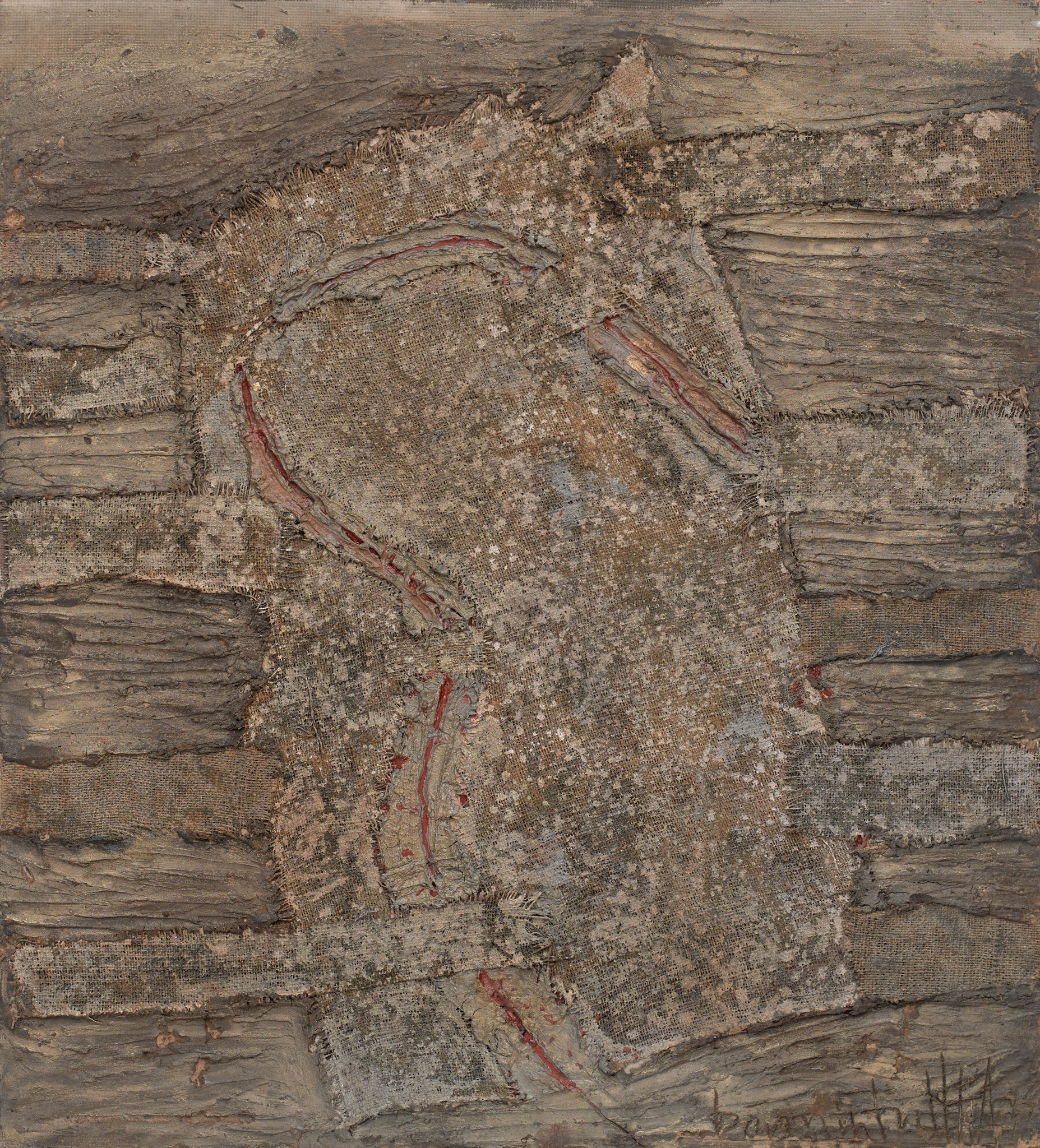
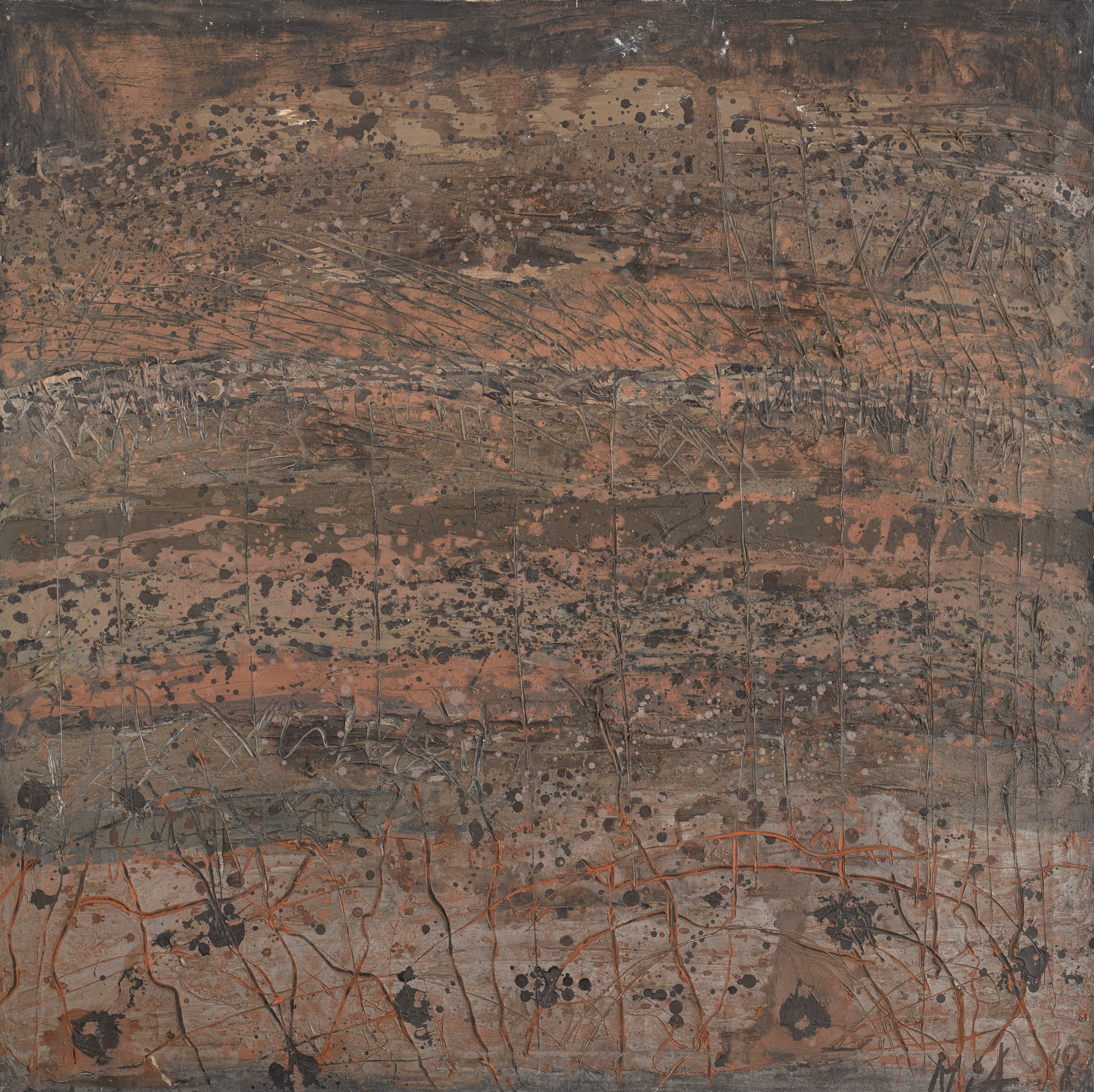
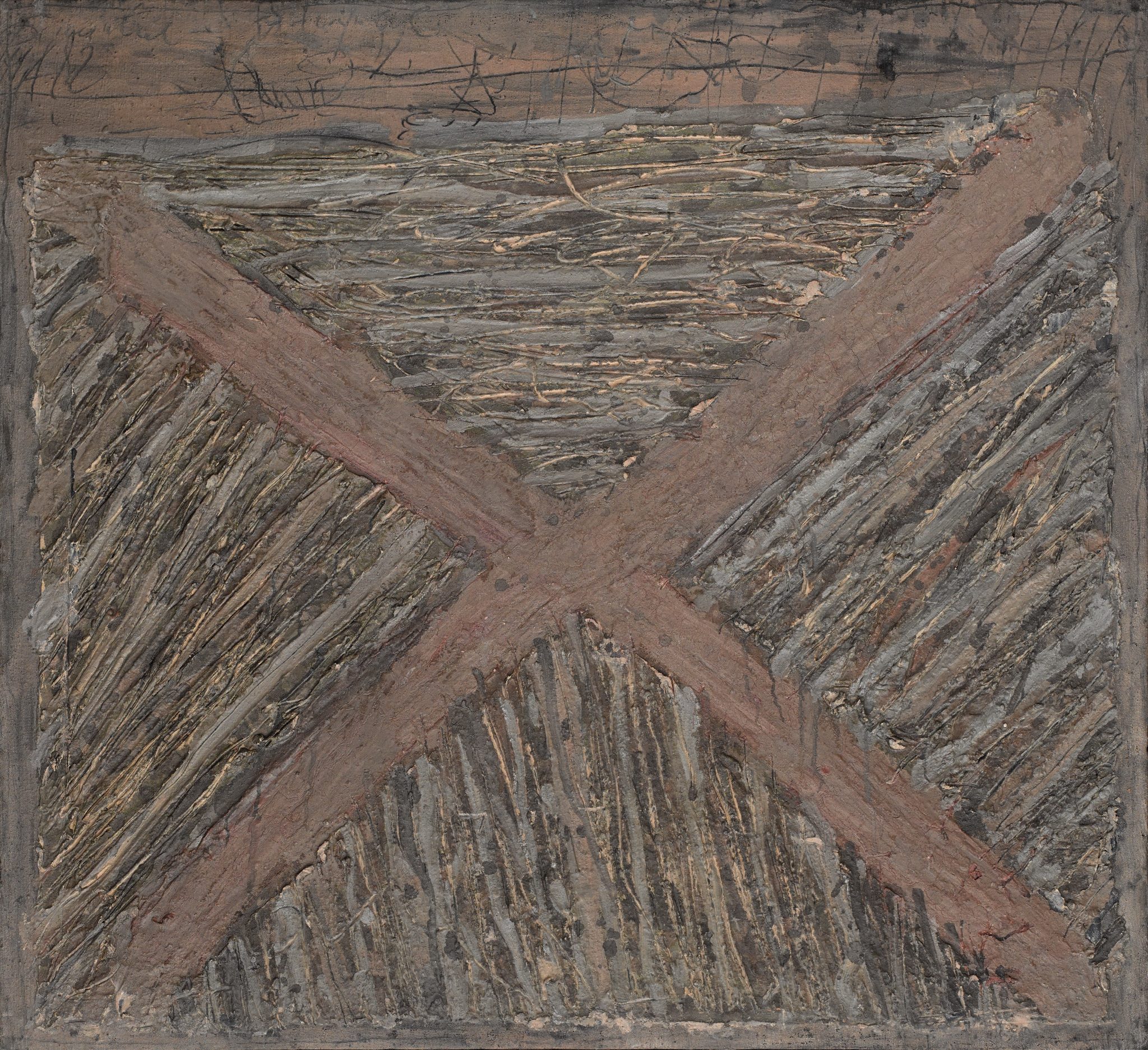
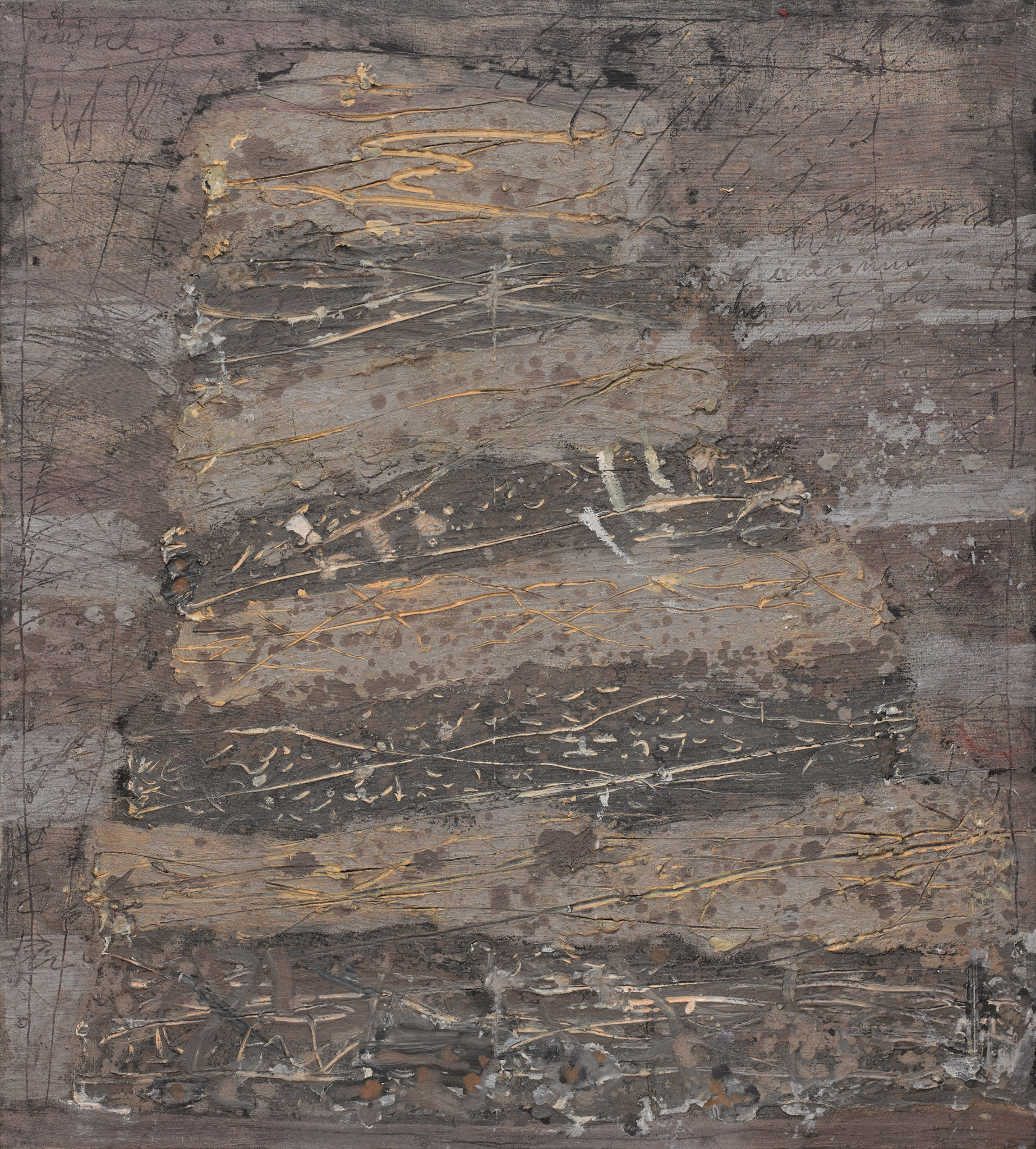
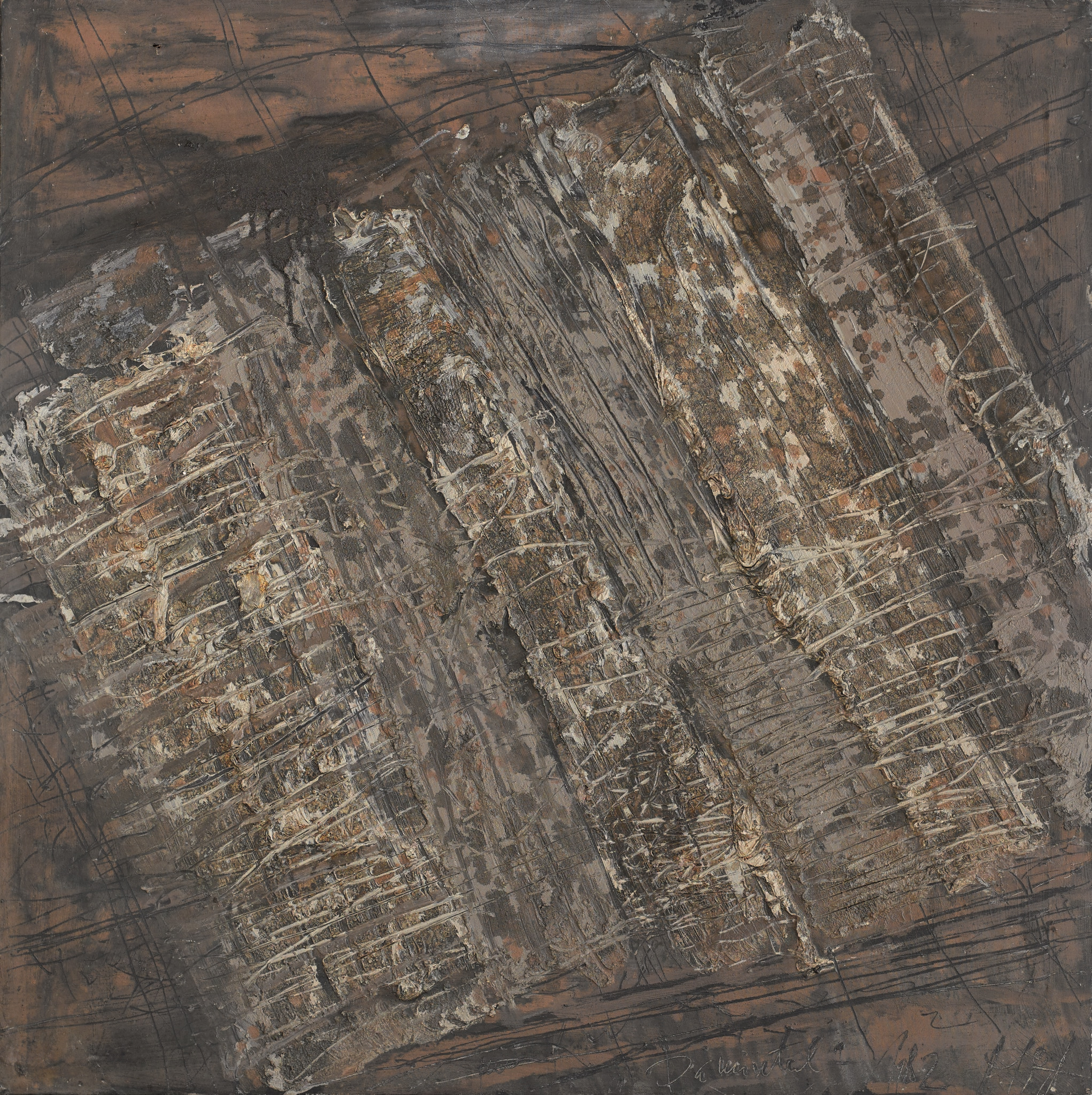
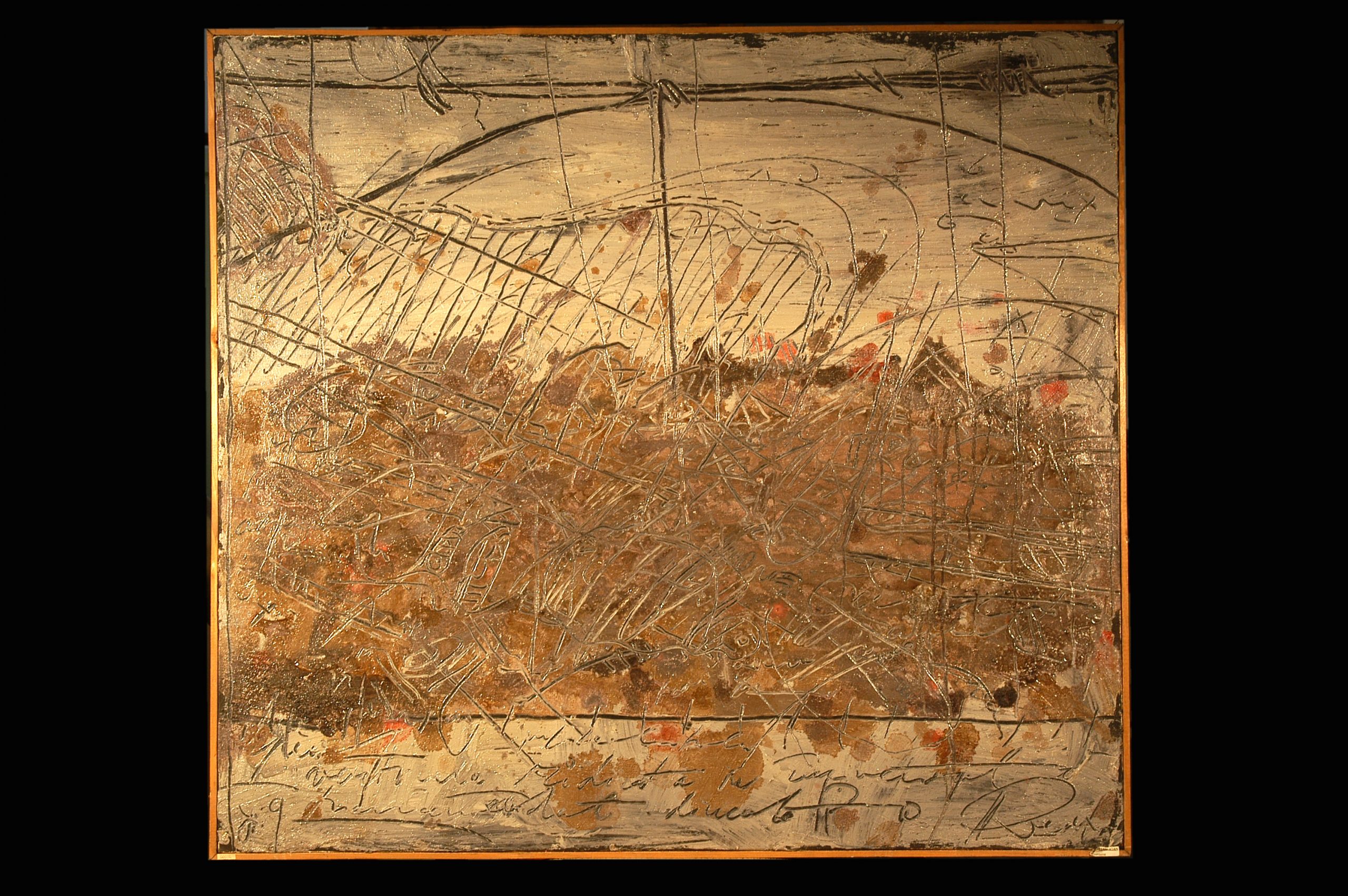
”Informal, action painting is not a common practice in the current landscape of the Romanian visual arts. The existential experience it is predicated upon, by its very limitation, does not align with the operating data of the balanced autochthonous meaning of the visual. Its informal experience, although initially inseparable from the existential and ideological motivation, is nevertheless an achievement already attained and outdated. We could say that, in the Romanian space, the informal experience is appropriated and likely to be appropriated based on the expressionist, but also impressionist associations it evokes, which make it is assimilable to the local stylistic structures.
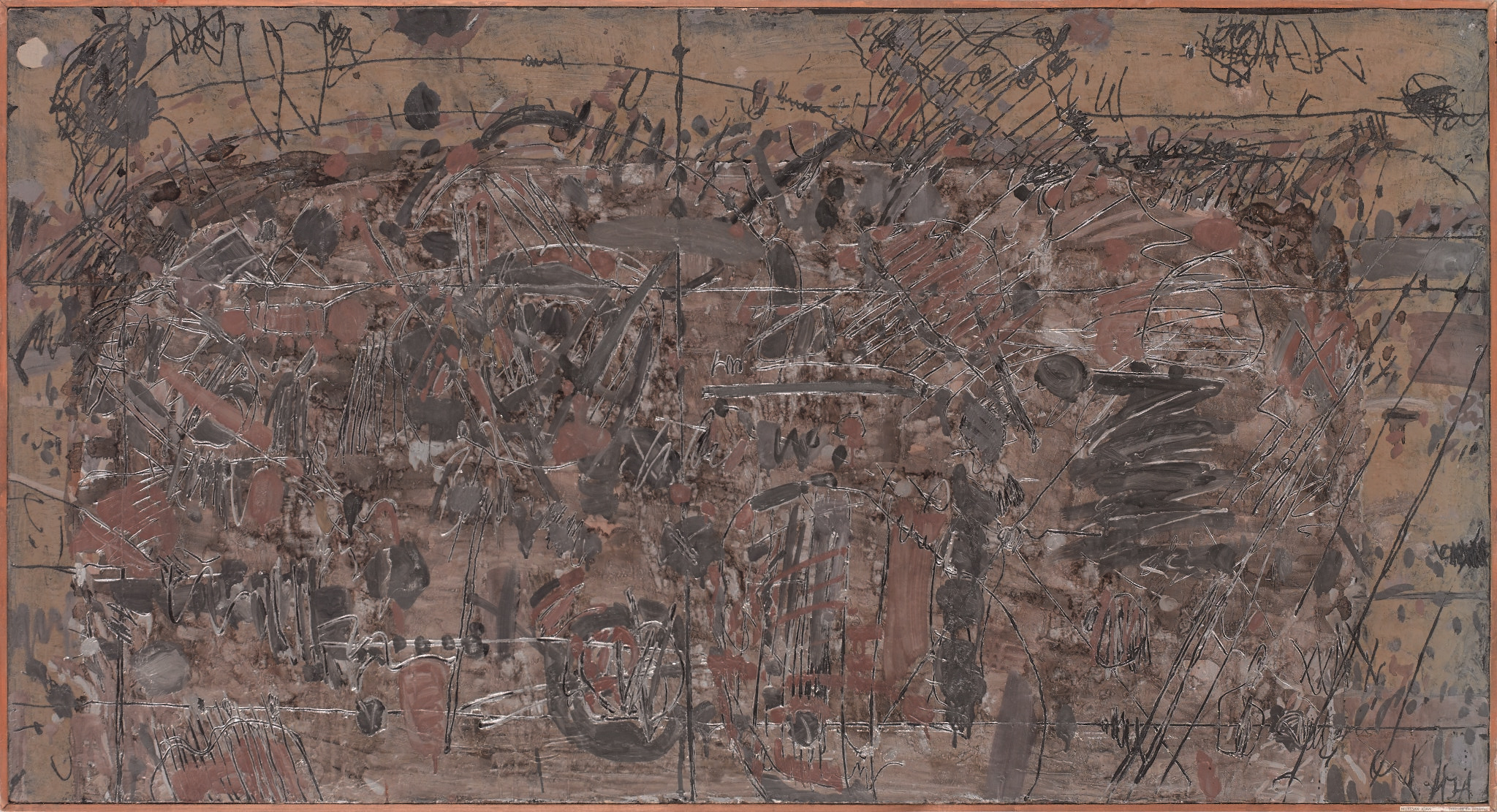
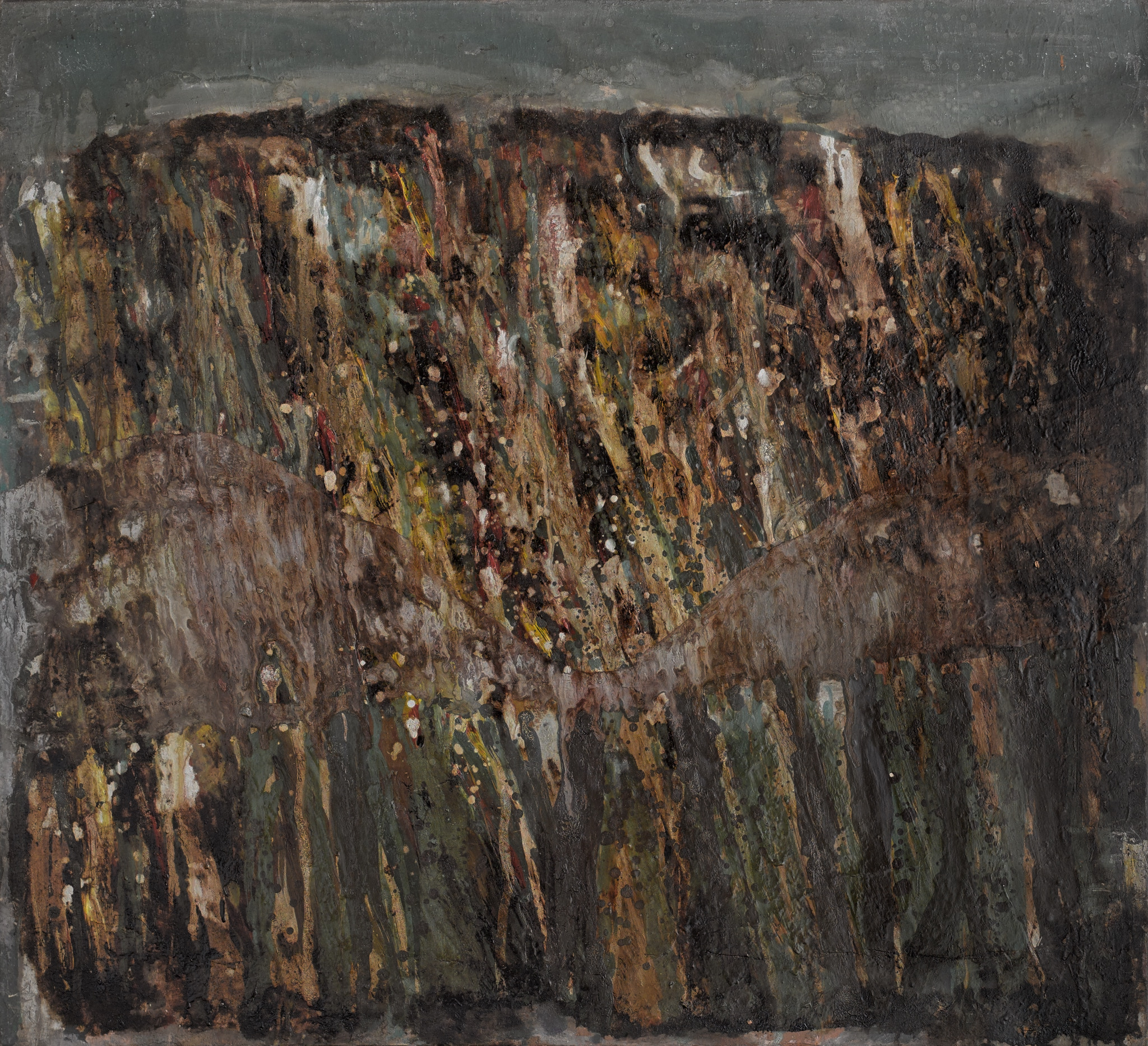
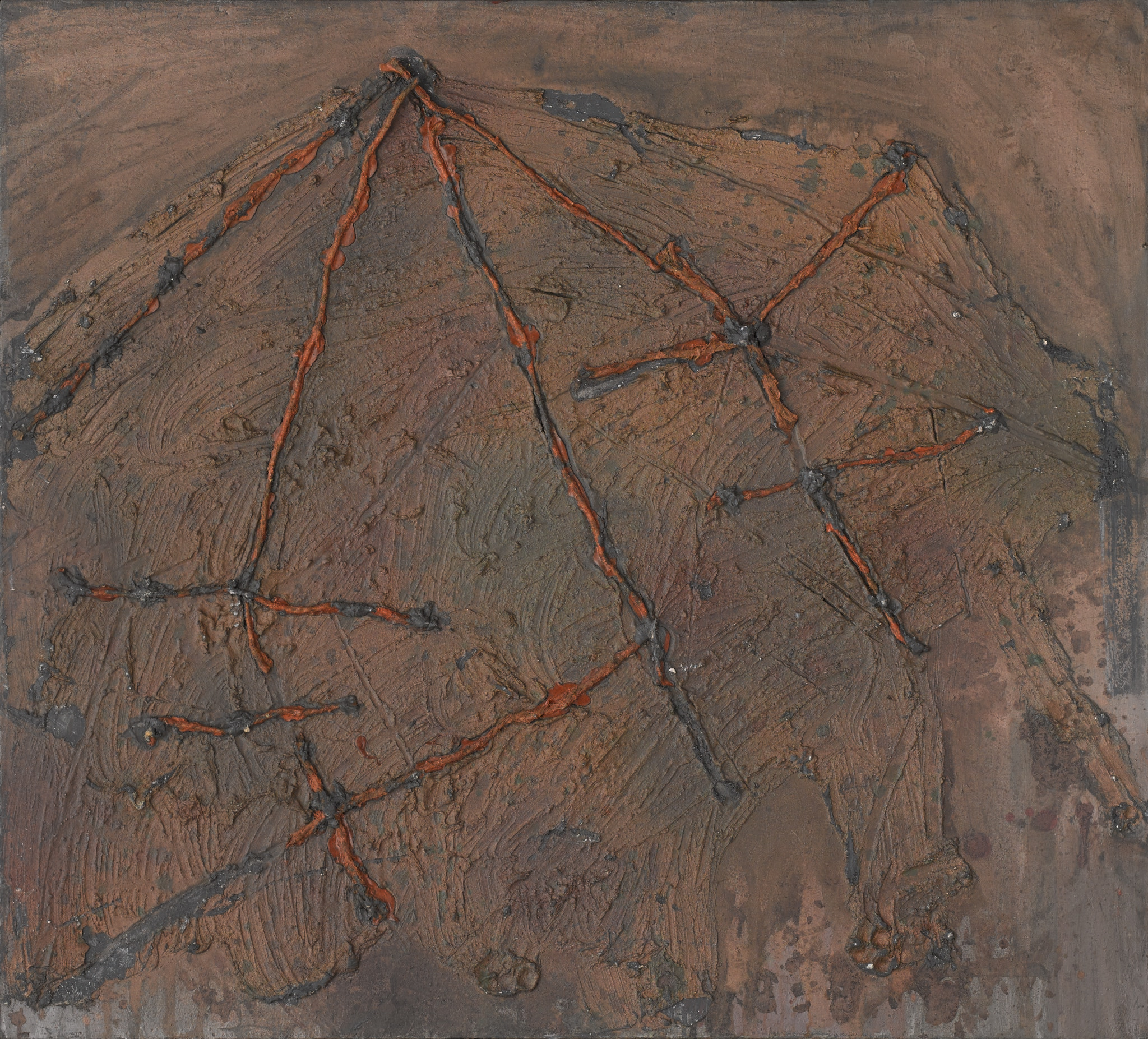
From the older series of Masks to the more recent one of Earths, Ioan Aurel Mureșan is the compelling proof of an evolution that demonstrates not only the graduation of the informal course, with all its illimitations and limitations, but also a personal solution for its eventual surmounting.
In the case of the young painter, everything is still happening inside the confines of figuration: the total annihilation of the image doesn’t take place, it is not possible. The image, as ultimate presence, which insists on the experience in action of the painterly gesture, remains an active principle of these artworks. But by overcoming the mere consumption in the act itself, the painting doesn’t draw from here a negativity of communication, but a principle of fervor and maximum intensity, the illusion of a complete liberation, of an absolute purity of the painterly gesture. As instant crystallization of an inner burning, without any determinations and deformations, the painterly gesture counters however the complete informal indetermination with the presence of a form, be it vague and indistinct, a pretext for both the eruption of the gesture and its coalescence from nothingness.
Equating the image with the technique of the gesture triggered by it results not in the refusal of formulating a sense, a form “foreign” to the pure painterly gesture, but in a more direct line of knowledge, exploration, and assumption of the very painterly materiality, stimulating and freeing its inherent expressivity – a more pure, more direct form of reaching the physical, ontic substrate of the visual experience.
These images never simply reproduce the “matter” as such, its emergency and its opaque, suffocating, irrefutable aggressivity; they never get stuck in the amorphous and absolute vague of it. There must have been an earlier moment in the experience of the artist, the moment of pleasure and dread of merging with the matter, of blending in, a moment that we can only guess from the freedom let, at times, out of full control, the occasionally facile, yet “beautiful” expressivity of the first series. Warding off the danger of an art “without images”, this “passive” genesis (to let yourself being expressed by the expressivity of the matter itself) is constantly countered by an active genesis – the immersion in the informal plasma of the generic materiality is followed by the coming to shore, by the clotting of the face, by the solid ground of the form.
And so, the titles of the series disclose themselves by no means accidentally. From “masks” – to remain in the inherent sufficiency of the colored “trace”, of the painterly gesture as such, in the vague indetermination of materiality as a screen of the essential – the young artist arrives necessarily to “earths”. The subsumed vagueness, the easiness of the pure expression confined to the rigor of spatial ordering – and the matter starts clotting, keeping untainted the tactility of the presence, takes on a face and a sense, not at all accidental.
Inevitably humanized, bounded again to form, significance, and time, impregnated with a subjectivity simultaneously individual and vast, it becomes therefore memory…”